The Case for Contouring Before Foundation
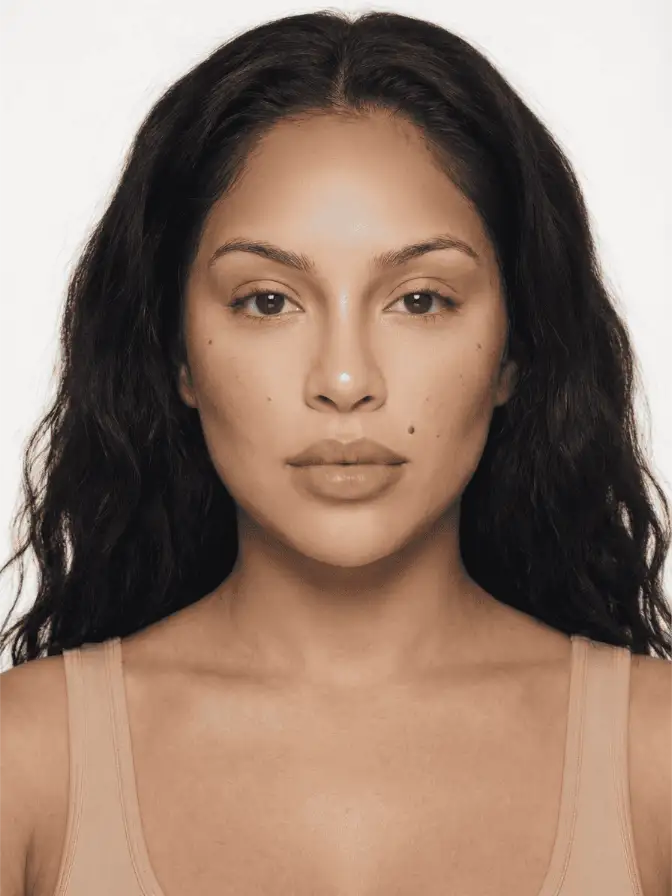
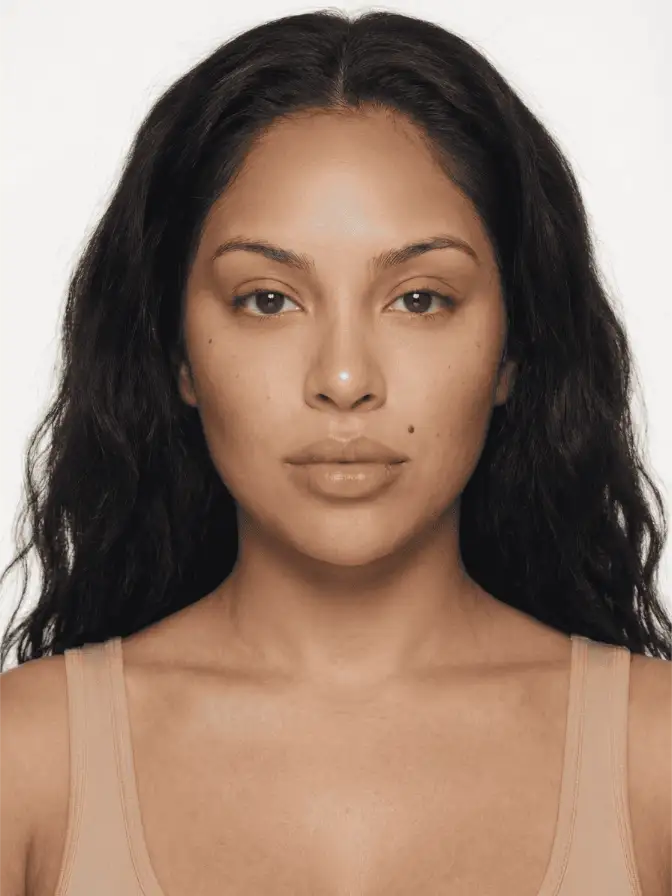
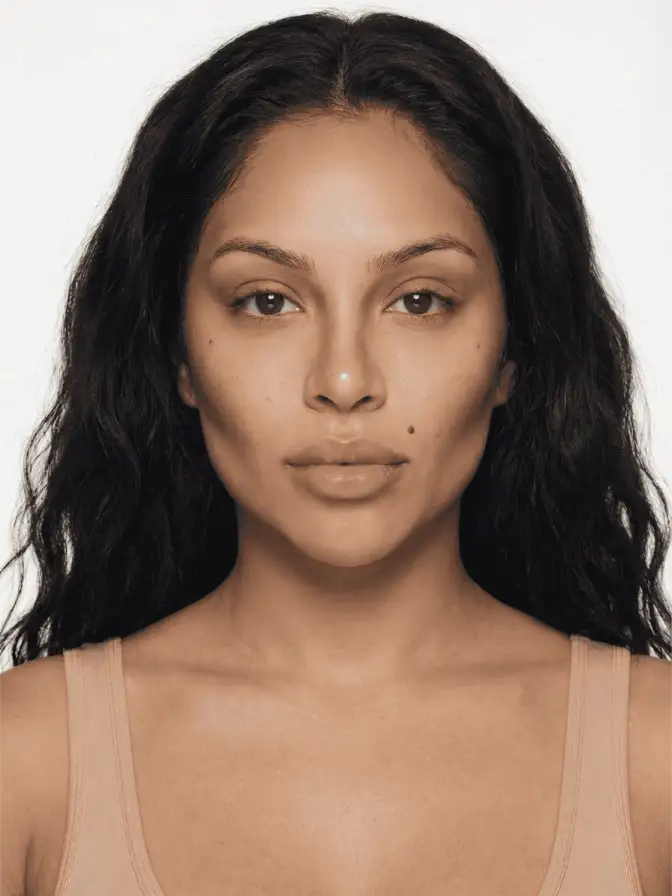
Underpainting flips the order: contour and highlight first, sheer foundation on top. The result is a sculpt that reads as bone, not product.
Hailey Bieber’s most-photographed faces from the past two years share a quiet trick. The cheekbone shadows look like they belong to her bone structure, not her makeup bag. Mary Phillips, the makeup artist behind those faces (and Kendall Jenner’s, and Jennifer Lopez’s), has been very open about how that effect is built. She calls it underpainting, and the order of operations is the whole point.
In a traditional base routine, foundation goes down first, then concealer, then powder, then contour, then blush, then highlight. Underpainting reverses the middle: contour goes down on bare or moisturised skin, highlight follows, and a sheer foundation goes over the top to blur everything into one continuous surface. “It’s like laying down the bones under the skin,” Phillips told W magazine in 2024. “The contour and the highlight being the bones and the skin being the foundation.”
That description is more literal than it sounds. The foundation, applied thin, acts like a translucent glaze over an oil painting’s underdrawing. You see the sculpt through the layer rather than on top of it.
Why traditional contour reads as paint
The reason Instagram contour looked dated within about two years is mostly physics. When you put a brown stripe on top of an opaque foundation, the only thing softening the edge is your blending. If the brush isn’t perfectly clean, if the contour is even half a shade off, if the foundation has any pigment of its own, the line stays visible. Stage lights, flash photography, and the front camera on a 4K phone all amplify the seam.
A 2024 New Beauty piece on Phillips put the case bluntly: contour applied on top of foundation will always read as a separate product, because it is one. The eye registers two surfaces. With underpainting, there is one surface. The contour is underneath the same translucent layer as the rest of the skin, so the brain reads it the way it reads a real shadow: a tonal shift, not a stroke.
This is also why the technique tends to fail with full-coverage foundation. A formula like Estée Lauder Double Wear, which is built to sit on top of skin and not budge, will lock out the underpainting entirely. The contour goes in, the foundation goes over, and the shadow disappears. Phillips pairs underpainting almost exclusively with skin tints (Tom Ford Soleil Glow, Armani Luminous Silk diluted with skincare, Hourglass Vanish on a damp sponge) so the colour beneath stays partially visible.
The actual order
Set aside the physics for a second. Here is what underpainting looks like as a sequence on a normal face, before any product names get attached:
- Moisturiser and SPF, fully absorbed.
- Cream colour-corrector under the eyes if needed (peach for blue-grey shadows, the lightest possible touch).
- Cream contour in the hollows: under the cheekbone, along the jaw, the sides of the nose, the perimeter of the forehead. A shade or two darker than the natural skin, never grey or red.
- Cream highlight in the high points: down the centre of the nose, the brow bone, the tops of the cheekbones, the cupid’s bow, the chin.
- Optional, a wash of cream blush on the apples, kept very sheer.
- Sheer foundation or skin tint over everything, pressed in with fingers or a damp sponge.
- Concealer in the under-eye triangle and on any blemishes.
- A whisper of translucent powder, only where you actually get oily.
That’s it. Eyes and lips happen after.
The blush placement is worth a note. If you want the round, lifted, slightly young-looking flush that’s been everywhere in 2026, the blush goes higher: just under the eye and across the top of the cheekbone, what Marie Claire UK has been calling under-eye blush. Cream blush takes to underpainting better than powder, because powder breaks the seamless quality the technique exists to create.
What you actually need
The Mary Phillips palette (m.ph beauty’s Underpainting Face Palette, $48 at Sephora in three depths) is the obvious purchase, but underpainting predates the palette by years. Tower 28 Sunny Days bronzer in cream, Westman Atelier Face Trace cream contour, and any liquid highlighter that isn’t loaded with chunky glitter will get you the same effect. The point is the texture, not the brand.
If you want to try the method without buying anything, start with what you have. Take whatever cream blush is in your drawer and use it as the warming step. Use a darker concealer or a brown lipstick (yes, really; a dark, cool-toned matte lipstick blends out as a passable contour) for the sculpt. The proof of concept costs nothing.
For a step-by-step that actually shows the placements on a face, the underpainting tutorial breaks down where each cream goes before the foundation comes in. The longer-form underpainting technique walkthrough covers the blending order, and the contouring tutorial is useful if you want to compare how the same shadow placements work in the traditional, powder-on-top approach.
Where it falls apart
Underpainting is not a universal upgrade. A few honest caveats.
If you wear full-coverage foundation for a reason (rosacea, post-inflammatory pigmentation, a job that wants you airbrushed), this method will look like nothing on you. The contour gets buried. You either accept the tradeoff and use a sheer base, or you stick with traditional contour on top.
If you have very oily skin and skip powder entirely, the cream products underneath can migrate by hour six. A targeted dusting of a fine translucent powder (Laura Mercier Translucent, Charlotte Tilbury Airbrush Flawless) over the cheek hollows after foundation goes on will hold the underpainting in place without breaking the soft finish.
And if you’ve never contoured at all, underpainting is a hard place to start. The placement matters more here than in the powder-on-top version, because the foundation will diffuse but won’t relocate the colour. Practice the placement traditionally first. Then flip the order.
The takeaway
The most modern thing about underpainting isn’t the inversion itself; it’s the assumption underneath it. The whole approach treats foundation as a glaze, not a covering. Skin is meant to come through. The sculpt is meant to live with the skin instead of on top of it. Once you’ve seen the difference in a mirror, every “natural-looking” base routine you used to use starts to look painted.
Frequently asked
What is underpainting in makeup?
It's the practice of applying contour, highlight, and sometimes blush before foundation rather than on top of it. The thin layer of foundation that goes over the colour blurs the placement, leaving a sculpt that reads as the natural shadow of bone instead of brown stripes.
Does underpainting work on oily skin?
Yes, but the foundation choice matters more than usual. A thick or matte foundation will smother the underpainting and the colour will look muddy by midday. A skin tint or sheer fluid foundation is the move, with a translucent powder set only over the T-zone.
Can you underpaint with powder products?
Powder underpainting is harder to blend invisibly, since powder doesn't merge with the foundation that goes on top. Cream contour, cream blush, and a liquid highlighter are the textures Mary Phillips and most underpainting evangelists actually use.
Continue reading
- technique Stained Blush Without the Blotch: Applying Watercolor Cheek Tints Liquid and water-gel blush goes patchy because of speed and prep, not the formula. Here is the small-area, damp-finger method that fixes the blotch for good.
- technique Puppy eyeliner: the downturned wing for rounder eyes Puppy liner drops the flick instead of lifting it, the opposite of a cat eye. Why the downturned wing flatters hooded and downturned eyes, and how to draw it.
- technique Eyeshadow by Eye Color: The Complementary Rule, Used Well The color wheel says wear the opposite of your eye color. That is true and incomplete. Here is why complementary shadow works, and the nuance for each eye.