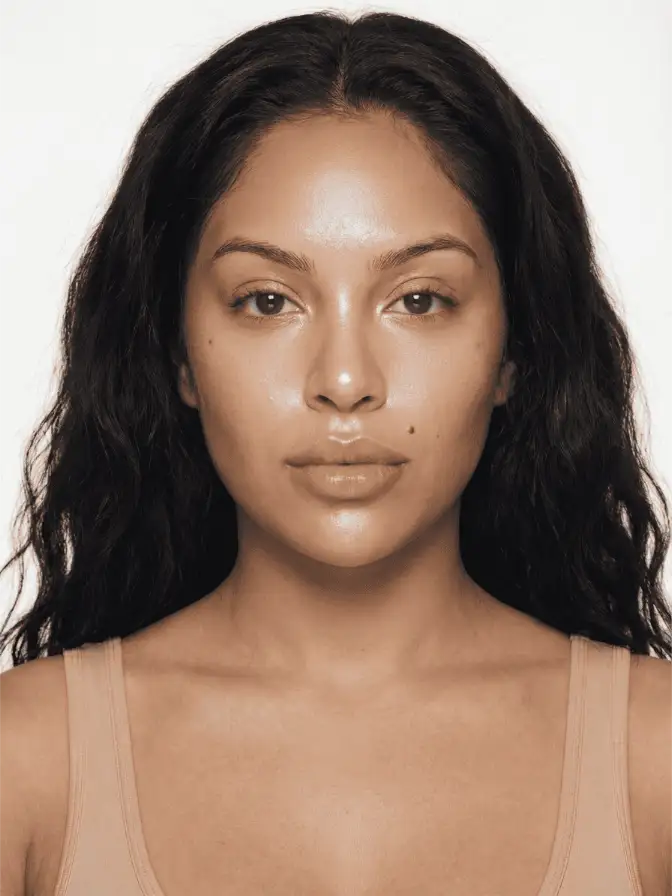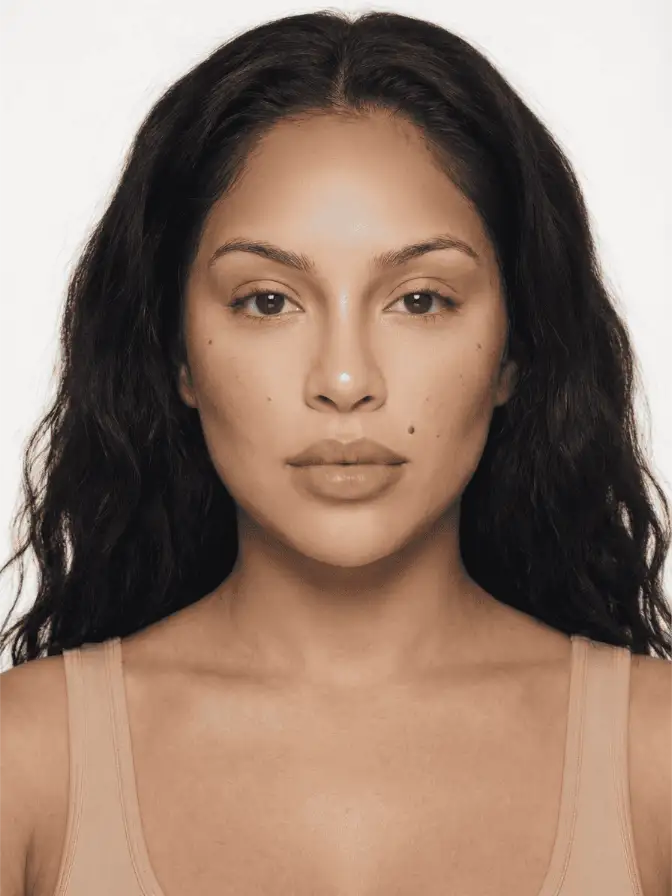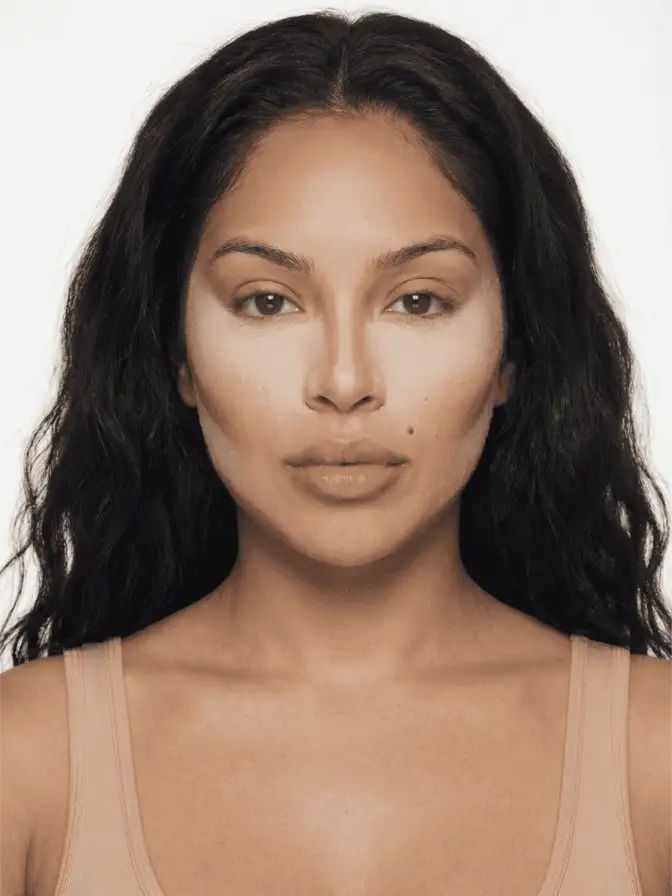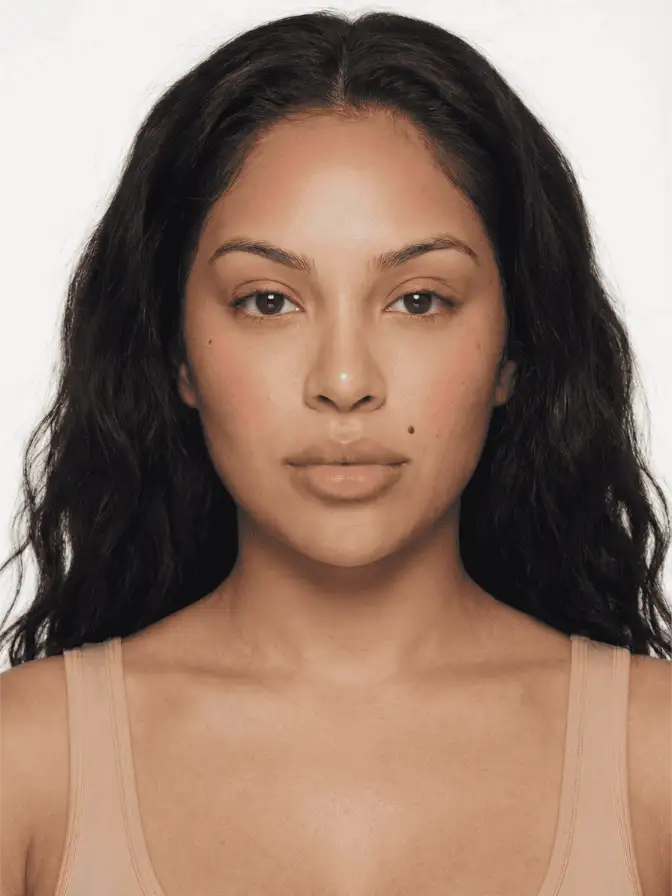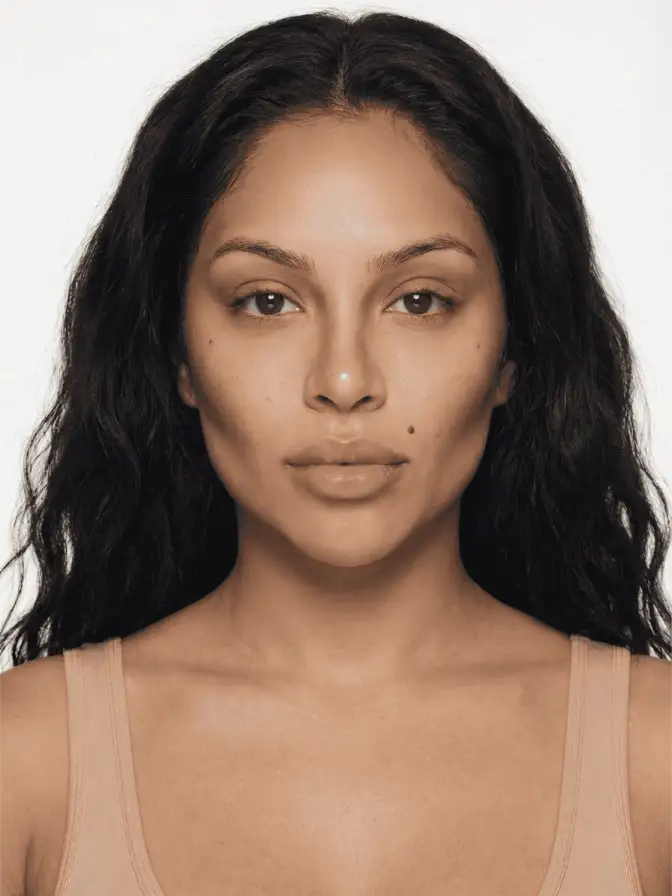
Application Techniques
Contouring
Using cool-toned dark shades to create shadows and recede features (cheekbones, jaw).
Contouring is a structural makeup technique that uses cool-toned, matte products to mimic the natural shadows of the face. By strategically receding specific areas like the hollows of the cheeks, jawline, and perimeter of the forehead, this method dramatically enhances and defines the underlying bone structure. Originally popularized by stage and drag performers, it has evolved into a sophisticated staple for achieving a chiseled, glamorous complexion.
To create Contouring, strategically apply a cool-toned matte product to the natural hollows of your cheekbones, the perimeter of your forehead, and your jawline. Blend the cheek and forehead shadows upwards to lift the face, while softly sweeping the jawline contour downward. Lock the sculpt in place with setting powder.
The Kit
- Cool-Toned Matte Cream Contour
- Angled Contour Brush
- Matte Contour Powder
- Translucent Setting Powder
- Makeup Sponge
- Fluffy Powder Brush
How to Create Contouring
-
Map the Shadows
Locate the hollows of your cheekbones, the perimeter of your forehead, and your jawline. Lightly dab a cool-toned matte cream contour onto these areas to build natural depth.
-
Blend Contour Upwards
Using an angled contour brush, buff the cheek and forehead product using upward and outward sweeping motions. This technique lifts the facial features and prevents the shadows from dragging the face down.
-
Sculpt the Jawline
Blend the contour placed along the jawline straight down towards your neck with the same brush. This creates a sharp, seamless shadow that defines the bone structure without leaving a visible stripe.
-
Set and Sharpen
Lock the cream in place with a matte contour powder, then press translucent setting powder directly under the cheek contour using a makeup sponge. Dust off the translucent powder with a fluffy powder brush after a few minutes for a sharp, glamorous finish.
Pro Tips
- Always choose a contour shade with cool, taupe, or grayish undertones rather than warm orange hues, as true shadows cast a cool tone on the skin.
- To avoid muddying your complexion and dragging the face downward, never blend your cheek contour further inward than the outer corner of your eye.
- Customize your placement based on your facial architecture; for example, round faces benefit from steeper cheekbone contouring, while long faces look best with a more horizontal placement to add width.
Common Questions
What does Contouring look like?
What products and tools do I need for Contouring?
Is Contouring good for beginners?
What is the difference between contouring and bronzing?
You've Got This
Ready to Master Contouring?
See exactly how this look appears on your face before picking up a brush. slaye's AI shows you in seconds.
Try on slaye