Isamaya Ffrench: from kids' party face paint to Burberry beauty
She painted tigers at children's birthday parties at 22. Twelve years later she runs Burberry Beauty and her own brand. The route Isamaya Ffrench took, and why it worked.
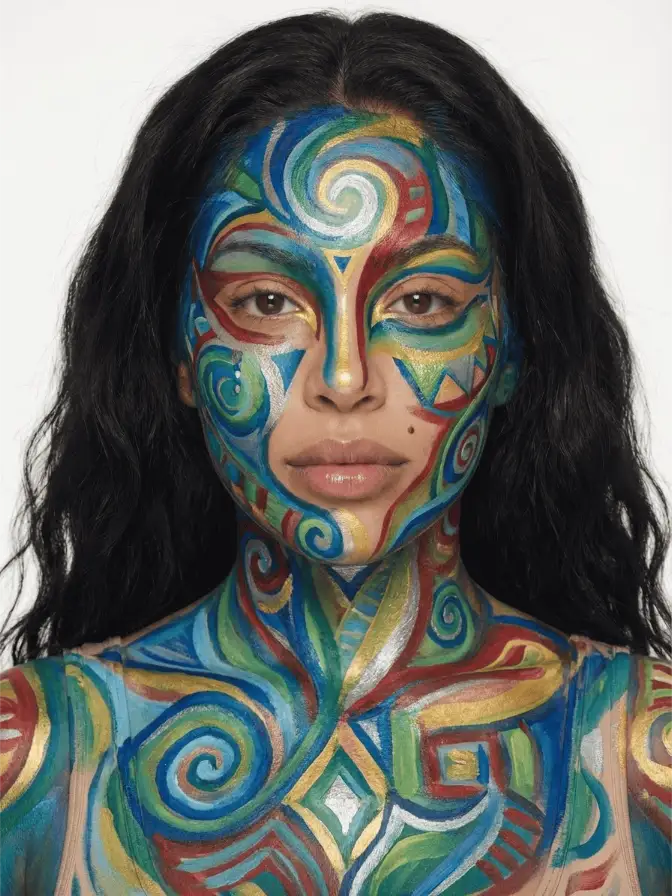
The biographical sentence that gets repeated about Isamaya Ffrench is that she started by face-painting at children’s birthday parties. It is true. She spent her early twenties earning weekend money turning small humans into tigers and butterflies in north London. The sentence usually gets framed as quaint origin-story decoration. The actual story is that the face-painting was the first move in a fifteen-year arc that lands her as Burberry’s Global Beauty Director, the founder of her own makeup line, and the most-cited working makeup artist of her generation.
The arc is worth tracing in detail, because most write-ups skip the structural reasons it worked. Talent helped. Timing helped more.
Cambridge, Chelsea, Central Saint Martins
Ffrench was born in Cambridge in 1989 and raised there. Her academic trajectory was through fine art rather than cosmetology: a foundation at Chelsea College of Arts, then a degree in product and industrial design at Central Saint Martins. She has been clear in interviews (Business of Fashion’s “How I Became” series; Fashionista’s 2020 career retrospective) that she did not enter design school planning to do makeup. She entered planning to make objects.
The product-design training matters because it explains the visual signature of her later work. Ffrench’s editorial makeup almost always reads as sculpture rather than as painting. The Tom Ford Extrême lip lacquers she designed during her 2016 consultant role are essentially small industrial-design objects (the bullet, the case, the weight) more than they are pigment formulations. Her later Burberry campaigns, the Off-White Beauty product line, and the recent Isamaya Beauty launches all carry the same sculptural-first instinct.
The face-painting weekends ran parallel to school. They paid rent and gave her several hundred hours of hand practice on living surfaces, which is closer to clinical experience than most working makeup artists rack up before their first paid editorial.
The 2011 i-D shoot
The pivot point is documented and worth noting. Ffrench was part of a small dance company in her early twenties. After body-painting a fellow dancer entirely as a tiger for a private project, that dancer recommended her to i-D magazine. Ffrench shot her first editorial in mid-2011, doing body painting and clay sculpture for the photographer Matthew Stone with the model Alek Wek. She has said in interviews she bought her first proper makeup kit afterward, having previously worked entirely with theatrical paints.
Two things made the moment work. The first was that editorial magazines in 2011 were still print-led, and i-D had a meaningful platform for new visual ideas. The second was that Ffrench’s work did not look like other makeup. It looked like sculpture, which photographs differently than even very accomplished editorial makeup.
She built from there for the next five years through editorial work at Dazed and at Love, the slow accumulation of a portfolio that did not look like anyone else’s.
Tom Ford, Dazed Beauty, Byredo
By 2016 she was in a Creative Artist Consultant role at Tom Ford Beauty. The Extrême lip lacquer line came out of that period. WWD’s profile piece on Ffrench in 2018 describes the Extrême launch as the moment the broader beauty industry started noticing her by name rather than by editorial credit.
The Dazed Beauty role in 2018 was the first creative-director appointment, and it gave her an editorial platform of her own. Dazed Beauty under Ffrench was unmistakably a different publication from anything else in beauty media at the time: more art-adjacent, less product-recommendation-driven, more concerned with concept than with launch coverage. The job lasted about two years and ended when Byredo recruited her as Creative Director for their newly launched makeup line in 2020.
Byredo Makeup launched in 2020 and produced one of the more critically respected makeup ranges of the early 2020s. The colour stories were saturated, the packaging was object-design-first, and the brand sold through fragrance-shop distribution rather than department-store beauty counters, which is unusual. The role lasted into 2022.
Burberry, then her own brand
The 2021 appointment as Global Beauty Director of Burberry was the moment Ffrench moved from working artist to brand architect. Burberry Beauty had been a small, fragmented operation for years. The brief was rebuild. The early Burberry campaigns under her direction (the autumn 2022 Lola lipstick relaunch, the lip oil line) were visibly hers without being repetitive.
In 2022 she launched Isamaya Beauty, her own line. The launch product was a lipstick set, but the line has expanded into a small range of complexion and eye products that hew to her sculptural-design instincts: the Industrial Color Pigment shadows, the Lip Doctor balm, a small number of mascaras and liners. The brand is wholesale-distributed through Selfridges, Net-a-Porter, and a handful of US retailers, and direct-to-consumer through her own site.
In 2023 she added Creative Director of Beauty at Off-White to the roster. She has been running Burberry, Isamaya Beauty, and Off-White Beauty simultaneously since.
What’s transferable from her path
Most working makeup artists are not going to run two beauty brands and design a third. That is not the useful part of the Ffrench story. The useful parts are smaller and more transferable.
She practiced on living human faces for several thousand hours before her first paid editorial. The face-painting weekends were craft hours, not biographical colour. If you want to be technically excellent at makeup, the volume of practice matters more than the prestige of the setting. Painting fifty children in an afternoon teaches things that painting one model under perfect lighting does not. Look at the body painting tutorial and notice how much hand control it assumes; that hand control comes from volume.
She did not study cosmetology. She studied industrial design. The crossover artists of the last twenty years (Pat McGrath, Val Garland, Ffrench, increasingly the younger generation around her) almost all came from fine art, fashion, or design backgrounds rather than from beauty school. The advantage is visual originality. The disadvantage is technical gaps in things like skin theory and product chemistry, which she has been clear about filling in on the job.
She kept the editorial work going through every commercial role. Burberry Beauty does not consume all of her output. Editorial shoots, gallery-adjacent projects, the graphic liner and sculptural-form work that fills her Instagram, are still a meaningful percentage of what she does. Editorial work is what keeps her brand work from looking like brand work. It is also what justifies the next commercial appointment.
The one thing she has said in interviews that is genuinely useful for anyone trying to do this professionally: do not let anyone tell you what your work is supposed to look like before you have figured out what you want it to look like. The tiger body-paint at age 22 was not a wrong move because it was unfashionable; it was the right move because nobody else was doing it.
That is the real story behind the face-painting line. Not that she came from a humble beginning. That she came from a beginning where she was already deciding what her work would look like, and refused to compromise it for a decade and a half. The Burberry appointment was downstream of that decision, not upstream.
Continue reading
- inspiration Peter Philips: from a Mickey Mouse face to Dior Beauty The graphic-design student who painted Mickey on a model at a Raf Simons shoot went on to run the two most coveted jobs in cosmetics. A profile.
- inspiration Val Garland: The Colorist Who Rewrote the Rules From a Bristol hair salon to the first global makeup director at L'Oreal Paris, Val Garland built a career on refusing the rulebook. A profile of an editorial original.
- inspiration The End of Precision: Why 2026 Makeup Loosened Up For a decade makeup chased Instagram precision. The 2026 runways rewarded a deliberately imperfect hand instead, and that loosening says something about us.