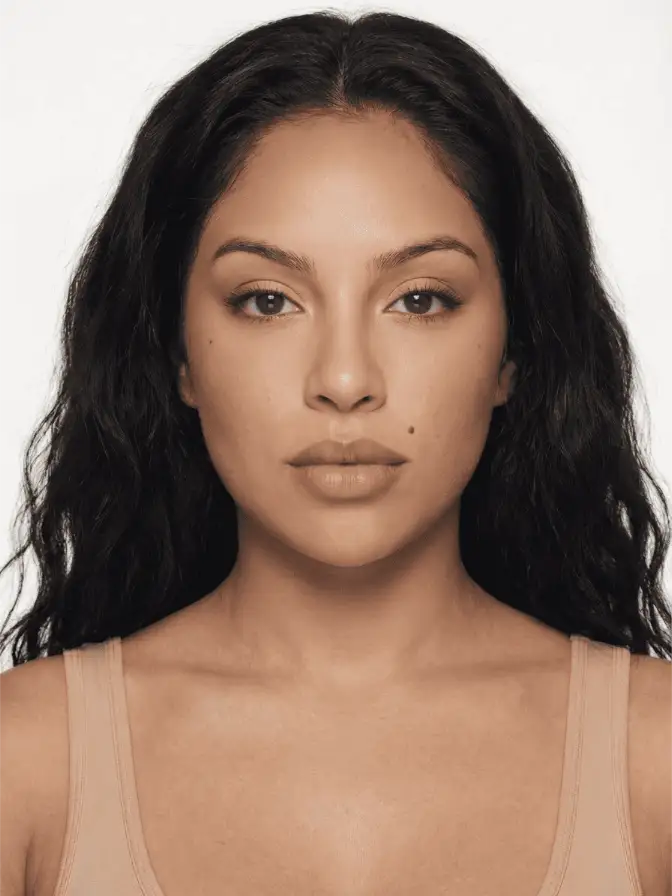
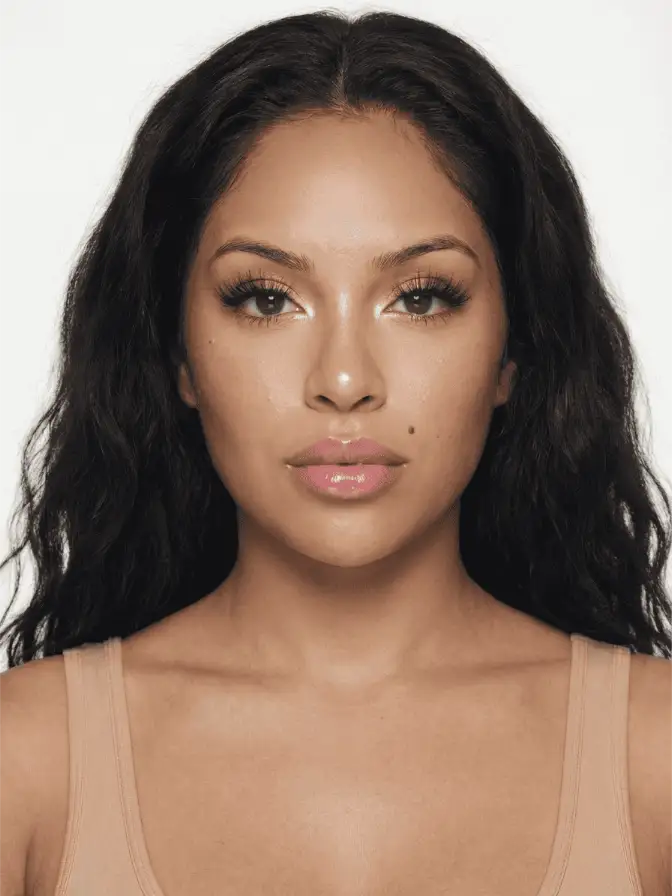
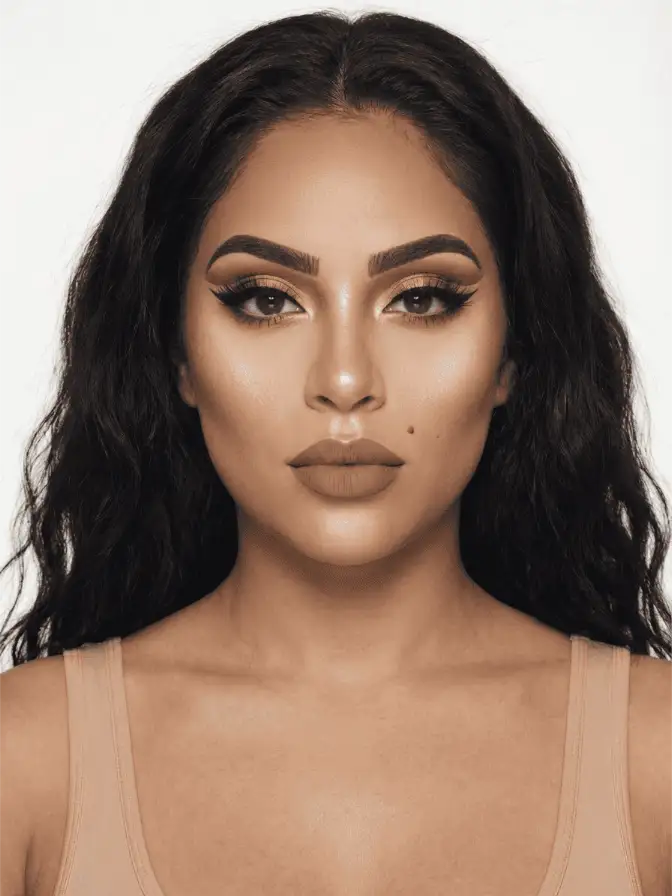
Charlotte Tilbury: the makeup artist who launched her brand at forty
Twenty years on Mario Testino's covers before a single shelf. The Charlotte Tilbury origin story, and what apprenticeship in editorial actually buys.
The first time Magic Cream had a name, it did not have a label. It was being mixed by Charlotte Tilbury backstage at fashion shows in the early 2000s, scooped from a stainless-steel mixing bowl into recycled Estée Lauder jars that she labeled in marker pen and handed to models who were complaining about how their skin looked under the lights. By the time the formula reached Selfridges in 2013, it had been refined for nearly a decade and had a waiting list of editors.
That timeline matters more than the product. Charlotte Tilbury launched her own beauty brand at forty, twenty years into a career most people would consider a career in itself, and the Selfridges debut in September 2013 was the largest beauty launch in the department store’s history. Magic Cream sold out within hours of going on sale. The Femfounded case study notes that the company hit a £1.3 billion sale to Puig in 2020. Most beauty founder stories are built around a precocious twenty-five-year-old with a small batch of lipsticks. Tilbury’s is built around a twenty-year apprenticeship.
The two decades before the brand
Tilbury was born in 1973 in Hertfordshire and grew up in Ibiza, where her parents ran a beach taverna. The pivotal early relationship in her career, repeated in nearly every profile, is with Mary Greenwell, the British makeup artist whose work in the 1980s and 1990s on Vogue covers and Princess Diana shaped a generation. Greenwell met Tilbury when Tilbury was eleven and offered her an assistantship years later, after Tilbury graduated from the Glauca Rossi School of Makeup in London.
The Fashionista profile of her career documents the next decade in granular detail. Through Greenwell she met Mario Testino. Through Testino she met Mert Alas and Marcus Piggott. Through Mert and Marcus she did Vogue editorial work that became increasingly her own through the late 1990s. By the time the Beautylish profile picks up the thread in the early 2000s, Tilbury was the makeup artist on Kate Moss’s Calvin Klein campaigns, the runway shows of Tom Ford for Gucci, and a steady rotation of British and Italian Vogue covers.
The career was genuinely substantial. The Wikipedia entry lists the celebrities she worked with by 2010: Kate Moss, Penelope Cruz, Salma Hayek, Sienna Miller, Cara Delevingne, Amal Clooney. She did Kate Moss’s wedding makeup. She did the British Vogue cover of Princess Diana that ran posthumously. She was, by any reasonable measure, one of the four or five most-booked editorial makeup artists in the world, and she had been in that position for at least fifteen years before she had a single product on a shelf.
Why the late launch worked
Most twenty-something beauty founders launch a product line that solves a problem they are imagining. Tilbury launched a line that solved problems she had been solving with her own hands, on real human faces, multiple times a week, for two decades. The Beautylish profile makes the point bluntly: she launched roughly two hundred products at the Selfridges debut, and not one of them was speculative. Magic Cream was the moisturizer she had been mixing in mixing bowls since 2002. The Pillow Talk lipstick was a shade she had been blending on top of nude lipsticks backstage to give models a more flushed, lived-in mouth. The Hollywood Flawless Filter was an effect she had been creating with three different products on Penelope Cruz before red-carpet appearances. Each product had a use case she had personally validated thousands of times.
That is what an editorial apprenticeship actually buys you, and it is not romantic. It is data. By the time Tilbury walked into the Selfridges meeting that became the launch, she had likely done over ten thousand makeup applications on women aged eighteen to seventy, with skin tones ranging across every Fitzpatrick category, in every kind of lighting from harsh studio strobes to natural sunlight at noon. She knew which formulas survived a four-hour shoot and which did not. She knew which pigments photographed warmer and which photographed cooler. She knew, because she had been backstage when it happened, how Penelope Cruz’s lipstick wore down over a fourteen-hour day.
This kind of knowledge does not come from market research. It comes from doing the work, in the room, repeatedly, for long enough that patterns emerge. The Femfounded case study calls it “two decades of in-market product development before any product existed.”
The branding choice nobody copied properly
The visual identity of Charlotte Tilbury Beauty is not subtle. Rose gold packaging, deep magenta accents, scripted logos, theatrical product names like Hollywood Flawless Filter, Pillow Talk, Magic Cream, Walk of Shame, Walk of No Shame, Goddess Skin Clay Mask. The aesthetic is overtly Old Hollywood, and the Wikipedia entry traces it directly to Tilbury’s documented obsession with the makeup of the 1940s and 1950s, particularly Elizabeth Taylor and Marilyn Monroe.
Most beauty competitors in the early 2010s were going minimalist. Every other launch in the category was sans-serif logos, white packaging, single-pigment philosophies. Tilbury went the other way, hard. The Space NK piece on the brand notes that the rose-gold compact mirror that comes with every cream blush was a deliberate signal: this is not a brand that wants to look modern, it wants to look like it has always existed.
The visual choice paid off because it occupied a position nobody else wanted to occupy. Drunk Elephant, Glossier, and the new generation of clean-girl brands all felt like 2014. Charlotte Tilbury felt like 1954, sold to a 2014 customer, and the customer recognized the difference immediately.
The thing the founder story understates
What none of the case studies fully capture is how unusual the path was for a woman launching a brand at forty in the beauty industry. The Beautylish profile mentions, in passing, that Tilbury was repeatedly told by potential investors that her age was a problem. The brand had to bootstrap initial inventory through a private fundraise that did not involve traditional VC, and the IPO conversations that started in 2018 were complicated by the same skepticism that had been there from the beginning. The 2020 Puig acquisition at $1.3 billion settled that argument permanently.
The lesson from Tilbury’s trajectory is not that you should wait until forty to start something. It is that the work in front of the work matters. Twenty years of doing the actual job before launching a brand is not a delay. It is the foundation. By the time the brand existed, she had nothing left to learn about the customer, the formulation, or the use case. Most founders never reach that position, no matter how long they spend in market.
Continue reading
- inspiration Peter Philips: from a Mickey Mouse face to Dior Beauty The graphic-design student who painted Mickey on a model at a Raf Simons shoot went on to run the two most coveted jobs in cosmetics. A profile.
- inspiration Val Garland: The Colorist Who Rewrote the Rules From a Bristol hair salon to the first global makeup director at L'Oreal Paris, Val Garland built a career on refusing the rulebook. A profile of an editorial original.
- inspiration The End of Precision: Why 2026 Makeup Loosened Up For a decade makeup chased Instagram precision. The 2026 runways rewarded a deliberately imperfect hand instead, and that loosening says something about us.