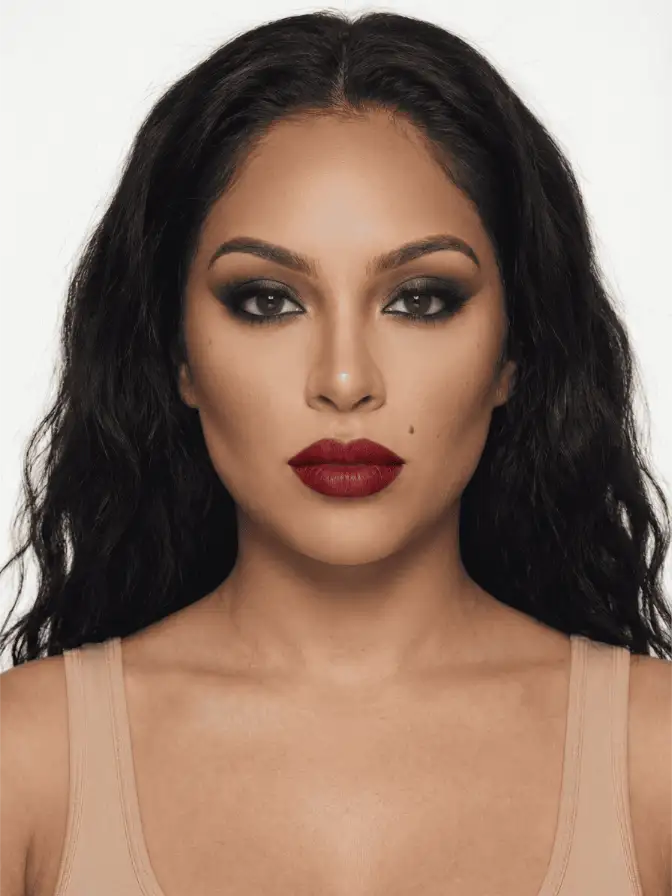
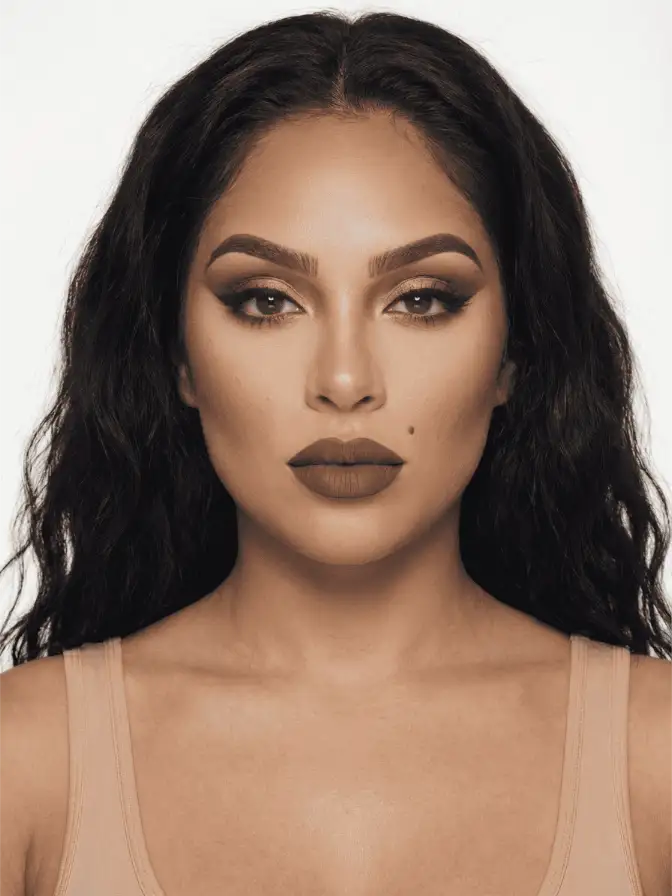
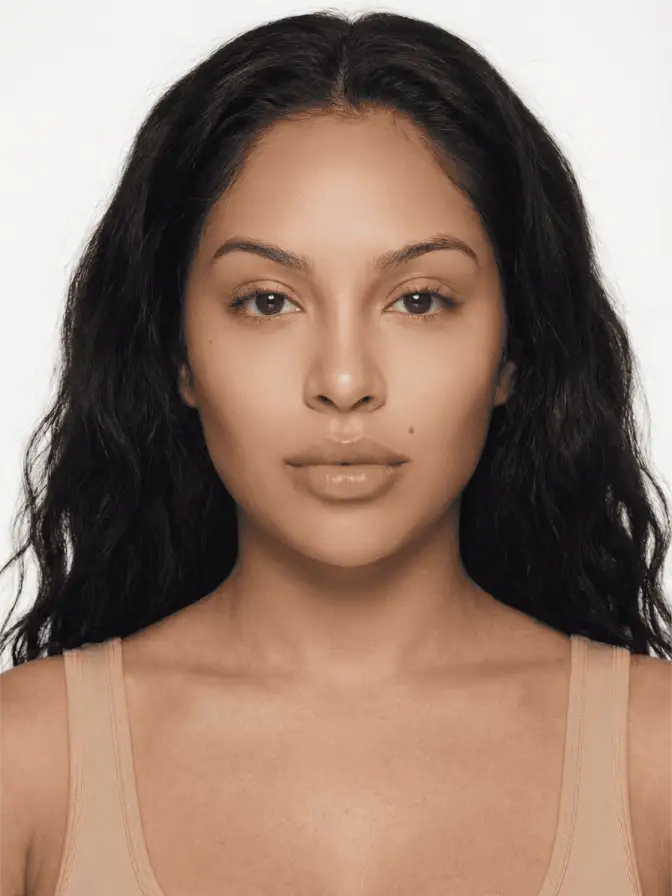
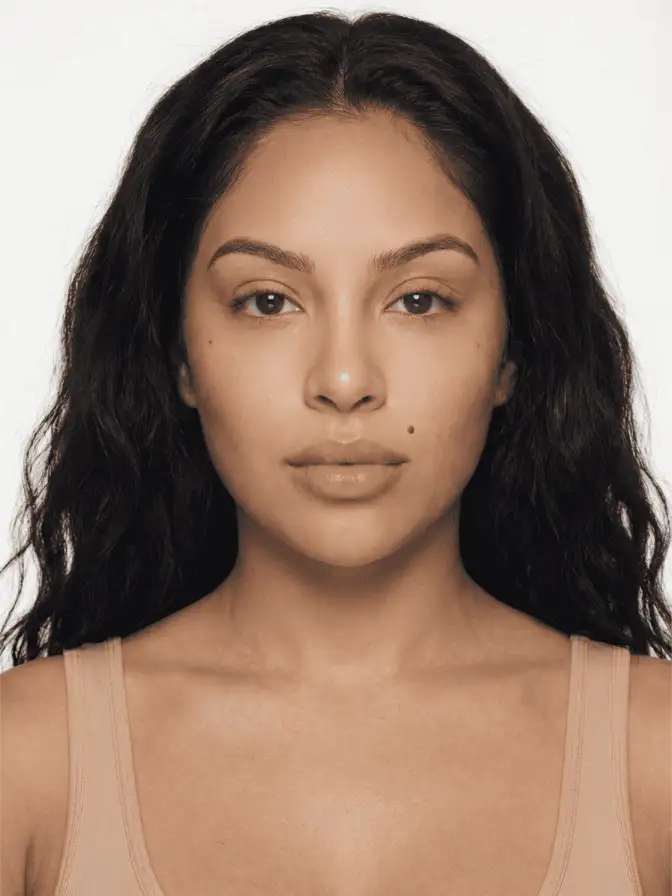
Pat McGrath: from i-D magazine to a billion-dollar makeup empire
Pat McGrath has no formal training and prefers her hands to brushes. The path from a 1990s i-D shoot to a billion-dollar brand at fifty rewrites the rules.
The first thing most makeup students hear about Pat McGrath, the most influential editorial makeup artist of the last thirty years, is that she does not use brushes. She prefers her fingers. The second thing they hear is that she never went to makeup school. The third thing is harder to believe: she launched her first product at fifty, and within four years it was a billion-dollar company.
These are not myths. They are documented facts in her own bio at Pat McGrath Labs, in her Wikipedia entry, and in twenty-five years of i-D, The Face, and Vogue masthead credits. Her career rewrites the conventional wisdom about how a beauty professional builds a name and a brand, and the rewrite is worth studying whether you ever pick up a brush or not.
Northampton, art school, no plan
Patricia McGrath was born in Northampton, England, to a Jamaican mother named Jean. Her bio at Pat McGrath Labs is unusually direct about the influence: she credits her mother as her first beauty teacher, the source of the colour theory and finish-quality obsessions that would define her later work. Her formal education was a foundation course in art at Northampton College. There was no makeup school, no apprenticeship at a counter, no certification. What she had was a mother who knew how foundation behaved on dark skin in the 1970s, when the industry catered almost exclusively to one shade range, and an art school’s training in seeing colour as composition.
She moved into editorial work in the early 1990s through a relationship with the stylist Edward Enninful, then the fashion director of i-D. Her first shoots were for the youth magazine, working with her hands and a few fingers’ worth of cream pigment, and the looks she produced read as fundamentally different from what was on other masthead pages of the period. Where most editorial faces of the early 1990s hewed to the polished neutral of fashion advertising, McGrath’s faces were treated as canvases, sometimes raw, sometimes stained, sometimes glittered to the cheekbone. The Face and i-D both became regular outlets.
The Italian Vogue decade
Italian Vogue, under Franca Sozzani’s editorship, was the magazine that ran the most ambitious editorial of the 1990s and 2000s, and Pat McGrath did the makeup for every cover for twenty years. That single line, repeated in nearly every profile of her work, deserves more weight than it usually gets. Cover work for a single magazine for two decades is unusual at any level of the industry. Cover work for the most editorially adventurous magazine of the era, run by a famously demanding editor, is closer to monastic devotion.
The Wikipedia entry on her career notes the volume in plain numbers: more than 3,000 runway shows in twenty-five years, roughly 35 shows per fashion-week season. The roster of houses she has done shows for, Prada, Givenchy, Louis Vuitton, Versace, Maison Margiela, Balenciaga, Dior under John Galliano, reads as a near-complete list of the brands that defined modern luxury. Her partnership with Galliano in the early 2000s shaped the visual identity of Dior couture for almost a decade, and it produced some of the most cited runway makeup looks of the period: the powdered porcelain of the spring 2003 collection, the geisha-influenced theatricality of fall 2007, and the painted-mask treatment of the spring 2009 show.
The Mothership and the brand
In 2015, McGrath launched her own product line. The first release was a single eyeshadow, Gold 001, packaged in a glass jar and sold for $40. It sold out in six minutes. The second release was a kit. The third was the first Mothership eyeshadow palette, the product line that would become her commercial spine. By 2019, Pat McGrath Labs was reported as a billion-dollar company and the highest-selling beauty line at Selfridges, where the brand’s UK launch was treated as a fashion event in itself.
The product strategy was deliberate. Where most legacy makeup-artist brands of the 2010s launched with a “starter kit” of approachable shades, McGrath went hard in the other direction. The Mothership palettes are heavily pigmented, theatrical, often built around metallic finishes that read better on a runway than a Zoom call. The signature Mattetrance and BlitzTrance lipsticks ship in a sleek black case with the gold lip motif protruding from the bullet, packaging that is closer to a perfume bottle than a department-store lipstick.
The pricing is unapologetic. A Mothership palette retails at around $128. The signature lipsticks start at £35 in the UK. McGrath’s bet, which the sales numbers have repeatedly validated, is that a customer who follows fashion editorial wants the actual editorial palette rather than a watered-down version of it.
What the work taught the industry
McGrath’s influence shows up most clearly in the next generation of makeup artists who cite her: Isamaya Ffrench, Lucia Pieroni, Lynsey Alexander, and the rotating bench of artists at Maison Margiela where she still leads beauty for John Galliano’s couture shows. The lessons are observable in their work.
Pigment as substance, not coverage. McGrath’s foundation work is famously light and almost translucent. Her colour work, by contrast, is heavily saturated, often applied directly with the fingers to embed the pigment in the skin rather than sitting on top. The finish is a hallmark you can see in any airbrush or high definition reference image: skin that reads as skin, with strategic colour layered on top.
Hands first, brushes second. Her preferred application method, fingers and a few small flat brushes for detail, has filtered into mainstream practice. The argument is partly haptic, you can feel the temperature of a cream blush warming on your hand and gauge how it will sit on skin, and partly aesthetic, fingertip application produces a softer edge than even the best brushwork.
Diversity as a default, not a marketing line. McGrath has worked across every skin tone since the 1990s, decades before the industry started auditing its shade ranges. Her foundation testing on the runway shaped the colour-matching she later built into her brand’s launches. The 2010s industry conversation about expanded shade ranges did not invent inclusivity in beauty; it caught up to where Pat McGrath had been working since her first i-D shoot.
The damehood
In 2021, Queen Elizabeth II made McGrath a Dame Commander of the British Empire for services to the fashion and beauty industry, and to diversity. She was the first makeup artist to receive the honour. The citation is worth pausing on for two reasons. First, it acknowledges makeup as a craft of the same standing as fashion design or photography, a recognition the industry has historically been slow to grant. Second, it bundles her commercial achievement with her diversity work, treating them as part of the same project rather than two separate lines on a CV.
The first lesson of her career, then, is not “build a billion-dollar brand”. Most working makeup artists never will. The first lesson is that the editorial work, the runway, the daily, painstaking, decades-long practice of making faces look like art, is the foundation. The brand is downstream. McGrath built her brand on a body of work that was already complete enough to stand on its own. For anyone aiming at a red carpet glam or 2016 glam reference, the McGrath archive at Vogue and WWD is still the highest-quality public training set you can study, two decades of looks created not for Instagram but for runway lighting and four-colour print.
The second lesson is patience. McGrath was fifty when she launched her first product. She had spent twenty-five years building a reputation that made the launch impossible to ignore. The path is not glamorous, and most beauty press skips over the i-D years to talk about the lipsticks. The i-D years were the whole point.
Continue reading
- inspiration Peter Philips: from a Mickey Mouse face to Dior Beauty The graphic-design student who painted Mickey on a model at a Raf Simons shoot went on to run the two most coveted jobs in cosmetics. A profile.
- inspiration Val Garland: The Colorist Who Rewrote the Rules From a Bristol hair salon to the first global makeup director at L'Oreal Paris, Val Garland built a career on refusing the rulebook. A profile of an editorial original.
- inspiration The End of Precision: Why 2026 Makeup Loosened Up For a decade makeup chased Instagram precision. The 2026 runways rewarded a deliberately imperfect hand instead, and that loosening says something about us.