Peter Philips: from a Mickey Mouse face to Dior Beauty
The graphic-design student who painted Mickey on a model at a Raf Simons shoot went on to run the two most coveted jobs in cosmetics. A profile.
There is a story Peter Philips tells about a shoot early in his career, before the Chanel job, before Dior, when he was still a backstage hand building a portfolio. He was working with the designer Raf Simons, and someone needed a model’s face transformed into something graphic and strange. Philips drew a Mickey Mouse face onto her, freehand, in perfect scale and proportion. It is the kind of party trick that sounds gimmicky until you understand what it actually requires: the ability to map a flat cartoon onto the curved, asymmetric architecture of a real face and have it still read as Mickey from across a room. That is not makeup as cosmetics. That is makeup as drawing.
Which makes sense, because Philips did not start as a makeup artist. He started as a designer.
A graphic designer who wandered backstage
Philips was born in Antwerp, the Belgian city that, in the 1980s and 90s, was quietly producing some of the most influential fashion talent in the world. According to his Wikipedia entry and a long interview he gave Into The Gloss, he first earned a degree in graphic design in Brussels, then went back to school to study fashion at Antwerp’s Royal Academy of Fine Arts, the same institution that shaped the so-called Antwerp Six.
It was in his final year as a fashion student that he was pulled backstage at Paris Fashion Week and put a brush in his hand for the first time. He has been candid in interviews that he more or less fell into makeup; it was not a childhood dream, it was a discovery he made at the exact moment he had the eye to use it. He graduated in 1993 and did what aspiring artists do: test shoots, unpaid, with other young people who were also nobodies at the time. Among his early collaborators were the photographer Willy Vanderperre and the stylist Olivier Rizzo, both of whom became major names. The Antwerp network carried all of them up together.
The most coveted job in cosmetics, twice
In 2008, Chanel made Philips its global creative director of makeup. Vogue once described that role as “the most coveted job in cosmetics,” and Philips proceeded to justify the description. His collections did the thing that is genuinely hard in beauty: they were artistically credible and they sold out. The clearest example is Jade, a milky green nail polish he released in 2009 as part of a runway collection. It became a phenomenon, resold at multiples of retail, and is frequently credited with kicking off the entire era of fashion-house nail lacquer as a collectible object. A bottle of green nail polish does not usually move culture. That one did.
He stepped down from Chanel in early 2013. A year later, in March 2014, Dior named him creative and image director of its makeup line, taking over the role from Pat McGrath. Sit with that for a second: Philips has now held the top creative makeup post at both Chanel and Dior, and his predecessor at Dior was arguably the most famous makeup artist alive. The Business of Fashion has listed him among the people shaping the global industry, and he has done the makeup for every Dior show since 2014 while also shooting campaigns and editorials for the house.
What his trajectory actually teaches
It is tempting to read Philips as a lucky-break story, the Mickey Mouse drawing that launched a career. The more useful reading is about transferable skill. He arrived in makeup already fluent in composition, proportion, color relationships, and the discipline of working to a brief, because that is what graphic design and fashion training drill into you. The brushes were new. The thinking was not.
You can see the designer’s logic in how he talks about the work. In interviews he keeps returning to the part he loves most, which is not a single red-carpet face but the full arc: being in the room when a product is conceived, following it through development, and seeing it end up in someone’s handbag. That is a product designer’s pleasure, not a glam squad’s. He treats a lipstick the way an industrial designer treats a chair.
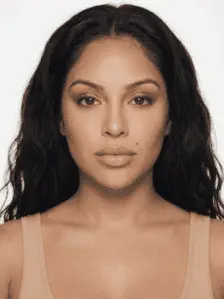
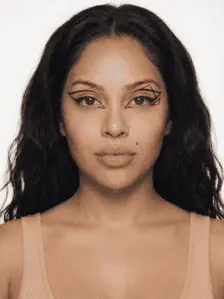
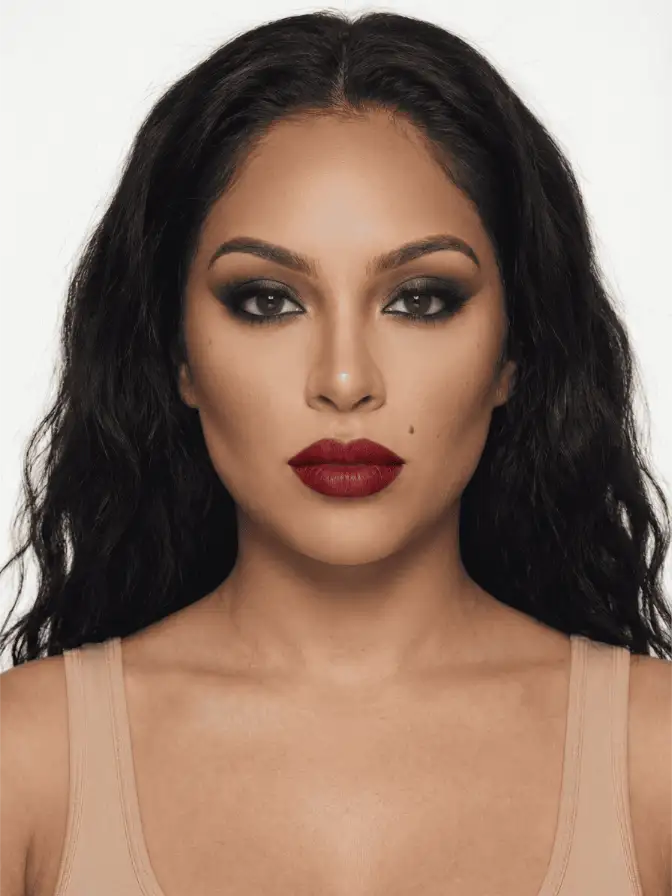
His range is the practical proof of the approach. The same person who can draw a cartoon on a face also builds the quiet, expensive-looking soft glam that anchors a Dior campaign, the precise graphic liner that turns a runway look into a single memorable image, and the polished red-carpet faces that have to survive flash photography and four hours of step-and-repeat. Most artists have a register. Philips has a vocabulary, and he switches between dialects depending on what the job needs.
The democratization argument
In recent interviews, including one with S Magazine, Philips has leaned into a theme he calls the democratization of makeup, the idea that the gap between a runway face and what an ordinary person can do at home has narrowed dramatically. Better products, yes, but mostly better information. The techniques that used to be trade secrets of backstage artists are now broken down frame by frame online, and the tools have gotten forgiving enough that the average person can actually execute them.
That is a striking thing to hear from a man whose whole career is built on being able to do what most people cannot. But it fits the designer’s worldview. A good designer wants the thing they made to be used, widely and well, not locked behind a velvet rope. Philips spent fifteen years at the very top of luxury beauty and came out of it arguing that the interesting future is the one where the skill spreads out. The student who drew Mickey on a model freehand seems genuinely delighted that the rest of us are catching up.
Continue reading
- inspiration Val Garland: The Colorist Who Rewrote the Rules From a Bristol hair salon to the first global makeup director at L'Oreal Paris, Val Garland built a career on refusing the rulebook. A profile of an editorial original.
- inspiration The End of Precision: Why 2026 Makeup Loosened Up For a decade makeup chased Instagram precision. The 2026 runways rewarded a deliberately imperfect hand instead, and that loosening says something about us.
- inspiration Danessa Myricks, the Accidental Makeup Artist She taught herself makeup from a magazine job, ran product innovation at Benefit, and built her own brand around the shade gap she lived through as a teen.