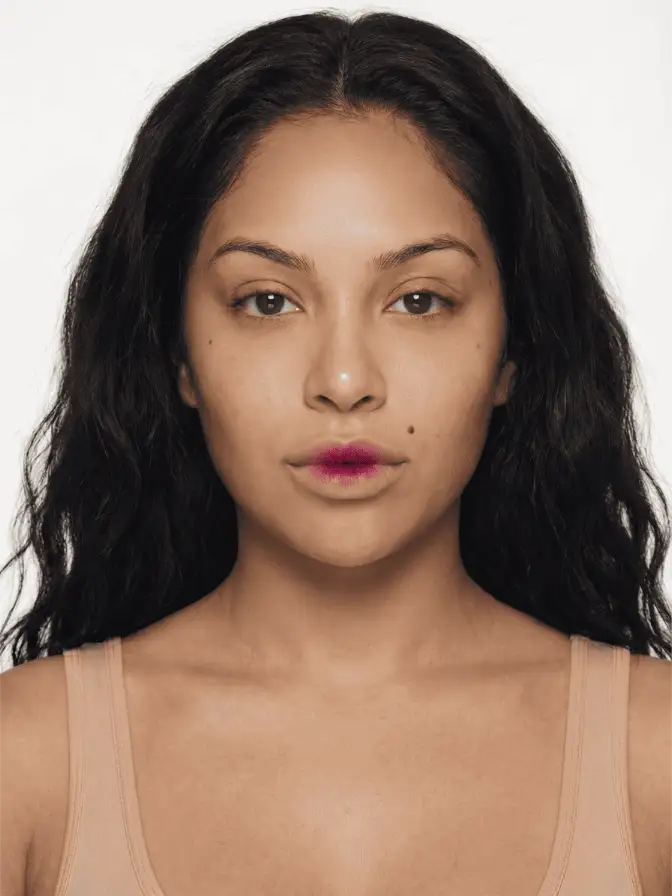
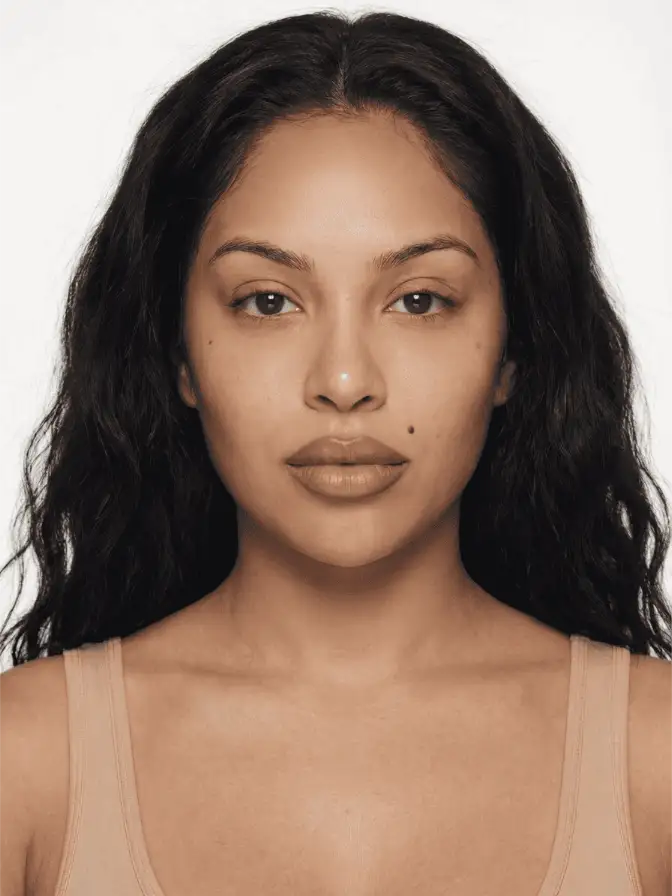
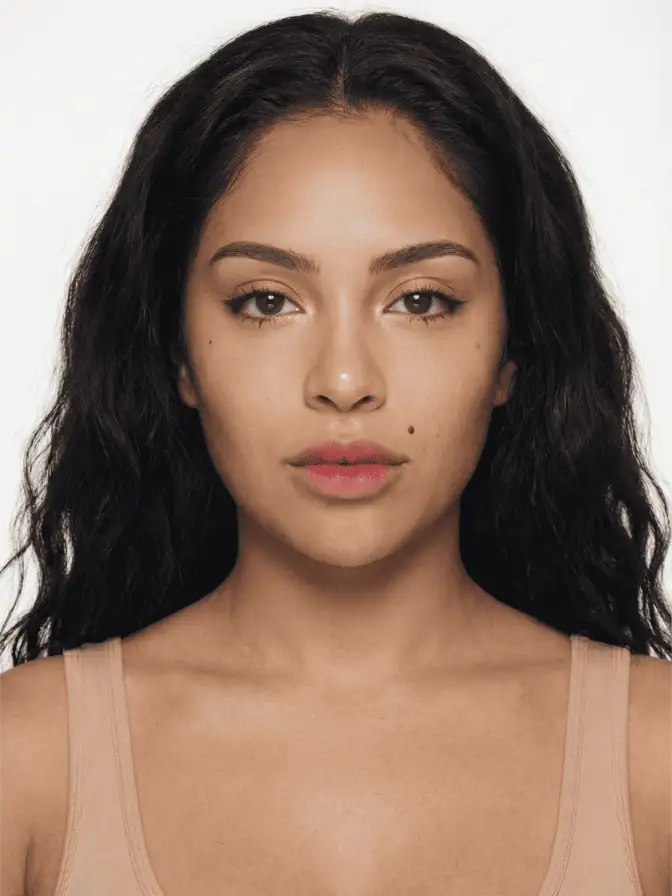
Halo Lip: The Blurred Plumping Trick Without Filler
Katie Jane Hughes' halo lip is the soft-blur answer to overlining: a darker contoured edge, a brighter centre, and no concealer cut-out anywhere.
Katie Jane Hughes posted the first proper halo lip tutorial on her Instagram in October 2025, calling it the lip equivalent of strobing. The trend caught five months later on TikTok, and by February 2026 makeup artists at Stella McCartney and Rabanne were briefing it backstage. According to Grazia’s beauty desk, halo lips became the SS26 runway’s most-copied lip moment in a single fashion week.
The reason it travelled is geometric, not aesthetic. Overlining your lip, which everyone has been doing since Kylie Jenner’s 2014 KKW Beauty era, only works if your foundation extends out to your new lip border without breaking. It almost never does. By the third hour the foundation lifts in tiny crumbs where the liner crosses skin, and the line reads as drawn-on rather than as lip.
The halo lip sidesteps the problem by never crossing the natural lip border. The illusion lives entirely inside your own vermilion zone. That makes it more forgiving to wear, and it photographs without the slight cartoon quality that overlining picks up under flash.
Where the brighter centre actually needs to sit
Think of the lower lip as having two pillows separated by a tiny central dip. The brighter highlight sits on the outer half of each pillow, not the dip and not the corners. On the upper lip, the highlight is a small oval directly under the cupid’s bow, not the full top.
If you put the highlight in the centre dip of the lower lip, the lip looks pinched. If you carry it to the corners, you flatten the smile line. Hughes’ tutorial on Beautylish stresses the same thing: the bright sits exactly where the lip naturally tilts forward toward the camera.
For the darker frame, the placement is everything. A cool brown pencil along the outer 30 percent of the upper lip and the outer 30 percent of the lower lip is the standard recipe. Not a full outline, not a corner-only smudge. The corners themselves stay slightly darker than the middle, but the darkest point is where the lip starts to curve back into the face, roughly where your lip would hit if you pressed the back of a teaspoon against it.
The blend has to be inward. You drag the dark edge toward the centre with a finger, then stop. If you blend outward, the dark crosses onto skin and the whole effect collapses.
The product pairings that read as soft, not muddy
The brown contour pencil is doing nine-tenths of the work, so pencil choice matters more than lipstick choice. Hughes uses Charlotte Tilbury Lip Cheat in Pillow Talk Medium on most clients. The Globe and Mail’s lip-liner roundup names MAC’s Cherry, NYX Slim Lip Pencil in Cabaret, and Refy’s Lip Sculpt as the three liners every makeup artist they spoke to mentioned for the look.
The lipstick layer should not be a separate colour. A satin formula one tone deeper than your natural lip, applied with a small flat brush rather than direct from the bullet, gives you the muted base the halo sits inside. The Globe and Mail’s piece notes that warm browns, rosy nudes, and maroon-toned liners work best as starting points because they amplify the lip’s natural colour without changing the temperature of the rest of the face.
The highlight is gloss, not a lighter lipstick. A clear or barely-tinted gloss with no shimmer pulled into a thin film on the centre area is what creates the projection. Hughes uses the Patrick Ta Major Glow Lip Shine. Glossier Balm Dotcom in clear is the cheaper substitute. Anything with shimmer kills the effect because the highlight needs to read as wetness, not as glitter.
A small reverse trick that works on TikTok creators: a single pinpoint of pearl highlighter (Rare Beauty Positive Light Liquid Luminizer in Enlighten) pressed dead-centre under the lower lip ledge, on the chin side, not the lip itself. It reflects up into the lip and amplifies the projection by another ten percent without adding any visible product to the lip.
Where the technique falls down
The halo lip does not survive eating. The darker edge migrates inward toward the brighter centre, and within an hour of lunch you end up with a uniform lip that has lost the geometric trick. Most makeup artists carrying the look through evening do a single touch-up: re-press the outer 30 percent with the same pencil, do not re-add the gloss, and walk away.
On lips with significant vertical lines, the brown pencil will follow the grooves and the contour reads as veining instead of shadow. The fix is to do the lip prep that every gradient-lip technique relies on. Five minutes with a damp washcloth and a fingertip of lanolin (Lansinoh, the same nipple cream new mothers use, is what artists like Mary Phillips have been quietly recommending for ten years) gives you a smooth substrate. The gradient lip from K-beauty uses the same prep step for the same reason.
Older skin reads differently under the technique. The lip tissue becomes thinner with age and the surrounding skin loses its slight upward roll, so the contour pencil has less to grab onto. NewBeauty’s writeup notes that makeup artists working on clients over 50 reduce the darkness of the edge by half and lean harder on the central gloss. The illusion still works; it just needs less brown to read as natural.
If you have a deeper natural lip colour, the brown pencil should shift to a cooler raisin or burgundy tone. The principle is contrast against your own lip, not contrast against a pale baseline. The same logic that drives overlining placement drives halo placement: shadow has to read as deeper than the base, not as a different colour.
What the trend is replacing
Two years of overlining tutorials shaped how a generation of TikTok creators thinks about lip shape. The halo lip is the soft answer. It admits that overlining never really hid its own edges and offers a lip that gets the same fullness illusion with no visible drawing.
The other casualty is the ombre lip, which the ulzzang look helped popularise in 2018 and which has lived steadily in K-beauty since. The halo lip is its descendant. The ombre had a visible gradient and a paler centre that worked best with pinks and reds. The halo lip uses one colour family throughout and depends on a wet-look highlight rather than a colour shift. It is, in practice, what the ombre lip becomes when matte lipstick stops being the default.
Halo lip will not last. None of these techniques last, and the next thing will probably be a return to a clean nude with no contour anywhere, which Lisa Eldridge has been quietly forecasting since spring. But for the months it lives, the geometry is good and the technique scales to anyone who can draw a softer line than they think they can. The trick is to do less than feels natural. A halo lip done at 60 percent intensity is what people will photograph well. At 100 percent intensity, it looks like everyone is wearing the same lip.
Frequently asked
What's the actual difference between a halo lip and an ombre lip?
An ombre lip gradients from a dark outside to a light centre with a visible transition zone. The halo lip is geometric, not chromatic; the centre highlight is concentrated to a small oval at the cupid's bow and lower lip pillow, and the edges are not a different colour so much as the same colour viewed through a darker tonal frame.
Do you need a lip liner for the halo lip or can you just use lipstick?
Liner gives you a cleaner darker edge, but most makeup artists, including Katie Jane Hughes, do the contour with a brown cream pencil or even a face contour stick. Anything that puts a slightly darker, slightly cooler shade around the perimeter of the lip will work.
Does the halo lip work on thin lips, or only on naturally fuller ones?
Thin lips are where the halo trick earns its keep. The centre highlight reads as projection, which is the same optical effect a filler creates. The halo lip cannot add structural volume, but it can add the illusion of a forward-tilted lower lip, which is most of what fillers buy you visually anyway.
Continue reading
- technique Stained Blush Without the Blotch: Applying Watercolor Cheek Tints Liquid and water-gel blush goes patchy because of speed and prep, not the formula. Here is the small-area, damp-finger method that fixes the blotch for good.
- technique Puppy eyeliner: the downturned wing for rounder eyes Puppy liner drops the flick instead of lifting it, the opposite of a cat eye. Why the downturned wing flatters hooded and downturned eyes, and how to draw it.
- technique Eyeshadow by Eye Color: The Complementary Rule, Used Well The color wheel says wear the opposite of your eye color. That is true and incomplete. Here is why complementary shadow works, and the nuance for each eye.