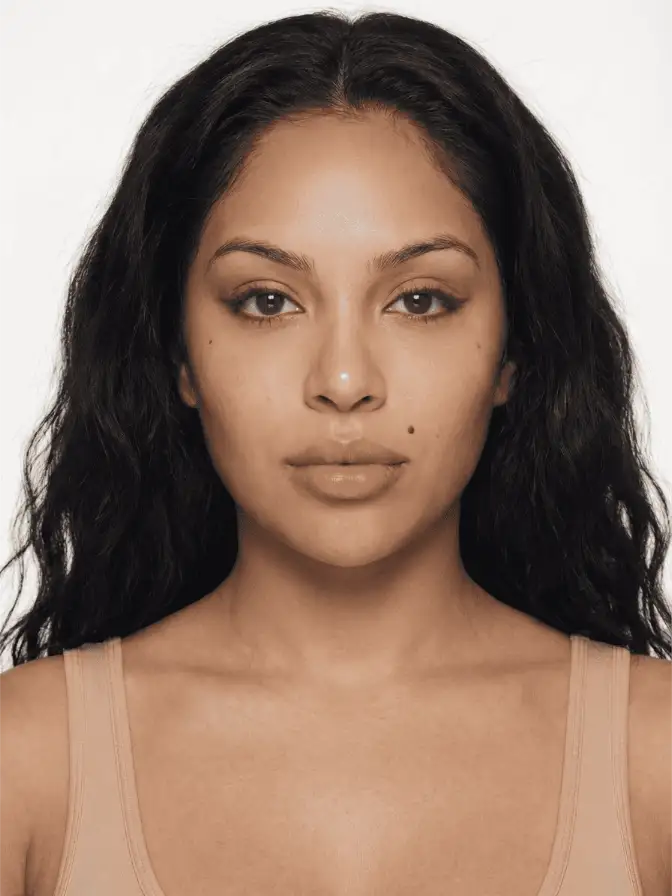
Puppy eyeliner: the downturned wing for rounder eyes
Puppy liner drops the flick instead of lifting it, the opposite of a cat eye. Why the downturned wing flatters hooded and downturned eyes, and how to draw it.
The cat eye has run beauty for so long that we stopped questioning it. Lift the outer corner, flick up and out, sharpen the tail: that single move has been the default for a decade, the thing tutorials teach first and the shape everyone tapes their lids for. So it is a little funny that the eyeliner trend of 2026 is, geometrically, the cat eye turned upside down.
Puppy eyeliner does the opposite of everything a cat eye does. Instead of pulling the outer corner up, you let it drop, following the natural downward slope of the eye and then rounding the line back toward the lower lash line. The result reads soft, open, slightly innocent, the visual opposite of the cat eye’s sharp confidence. It is a core piece of the Douyin makeup aesthetic that, per Mirai Skin’s trend breakdown, has become one of the biggest beauty movements of the year.
Why down can be more flattering than up
The cat eye is built on an assumption: that lifting the eye is always the goal. For a lot of eye shapes, it is. But that lift is doing a specific thing, it elongates and pulls the eye toward the temple, and that is not universally flattering.
Consider what actually happens when you flick a hard wing up on a hooded eye. The hood, the fold of skin that sits over the lash line, covers part of your lid when your eye is open. So you draw a beautiful wing, you open your eye, and the wing vanishes under the fold, or worse, it stamps a smudged copy of itself onto the crease. Anyone with hooded eyes has lived this exact disappointment. Puppy liner sidesteps it entirely. Because the line travels down and out rather than up, it stays below the hood, where you can actually see it.
The shape also softens the face. An upturned wing reads as sharp, even severe; it is the makeup equivalent of a raised eyebrow. A downturned line reads as gentle and a touch vulnerable, which is precisely the appeal in the current soft, doll-like Korean and Chinese beauty looks. Glam’s tutorial on the technique frames it the same way: puppy liner is the antidote to the “siren eye” severity that dominated the last few years.
Who it actually suits
The eyes that fight a cat eye hardest are the ones puppy liner loves. Downturned eyes, where the outer corner already slopes down, look strained when you force an upward wing against their natural line; puppy liner works with that slope instead of against it. Hooded eyes, for the visibility reason above. Deep-set and round eyes get a wider, softer openness from it.
The eyes that already turn up at the outer corner, the classic almond and upturned shapes, can absolutely wear puppy liner, but they get the smallest payoff because the shape is closer to what their eye already does. If you have upturned eyes and you want drama, the cat eye is still your friend; if you want to soften a naturally sharp eye for a change of pace, a gentle puppy flick does that nicely. There is also real overlap with the wide, rounded doe eye, which uses a similar logic of opening and rounding rather than elongating.
How to draw it
Start, as with any liner, on prepped skin. A swipe of eye primer and a little concealer under the eye gives you a clean, non-greasy surface so the line does not travel through the day.
Line the upper lash line first, but here is the key difference from a cat eye: as you reach the outer corner, do not lift. Follow your lash line out past the corner and curve the tip slightly downward, tracing the natural direction your eye already slopes. Keep this extension short. A long downward drag tips from “soft” into “sad clown” fast, and the MasterClass walkthrough specifically warns that length is what separates a flattering droop from a droopy mess.
Now connect it. Draw a line along the lower lash line from roughly the center of the eye outward, parallel to the floor, until it meets the downturned tip of your upper line. That little connected corner is what gives puppy liner its rounded, enclosed shape and keeps it from just looking like a smudged wing. Finish with mascara, and if you want maximum softness, skip liquid liner entirely and do the whole thing in a soft brown pencil or even a dark eyeshadow pressed in with a small brush, which reads gentler than a crisp black line.
A few variations are worth knowing. The “baby puppy,” a short, subtle version, is the daytime option and the most foolproof place to start. The “droopy puppy” extends the downward flick further for a more dramatic, more obviously trend-forward look that photographs well but is easier to overdo. Brown is more forgiving than black for both; black on a downturned shape can occasionally read tired rather than soft, especially in unflattering light.
The bigger shift it represents
It is worth noticing what the rise of puppy liner says about where makeup is heading. For most of the 2010s, the dominant eye looks were about sharpness and lift, the cat eye, the fox eye, the siren eye, all of them pulling the face toward an elongated, almost feline severity. Puppy liner is part of a clear swing back toward softness: rounder shapes, gentler lines, a slightly undone quality. The same impulse is showing up in blurred lips and diffused, lived-in liner generally.
You do not have to abandon your cat eye. But the next time it keeps vanishing under your hood, or the next time the sharpness feels like too much for a soft summer day, try dropping the wing instead of lifting it. The shape is more forgiving than it looks, and on the eyes that have always struggled with the cat eye, it can be the more flattering choice by a wide margin.
Frequently asked
Does puppy eyeliner work on hooded eyes?
Yes, and that is its main advantage. Because the wing points down rather than up, it does not disappear into the hood when your eye is open, which is the classic frustration with a cat eye on hooded lids. Keep the downturn short and connect it to the lower lash line so the shape stays visible.
What is the difference between puppy and cat eyeliner?
Direction. A cat eye flicks the outer corner up and out for a lifted, sharp look. Puppy liner curves the same corner gently down, following the eye's natural slope, for a softer, rounder, more youthful effect. Same tools, opposite geometry.
Continue reading
- technique Stained Blush Without the Blotch: Applying Watercolor Cheek Tints Liquid and water-gel blush goes patchy because of speed and prep, not the formula. Here is the small-area, damp-finger method that fixes the blotch for good.
- technique Eyeshadow by Eye Color: The Complementary Rule, Used Well The color wheel says wear the opposite of your eye color. That is true and incomplete. Here is why complementary shadow works, and the nuance for each eye.
- technique Monolid Eyeshadow: The Place-It-Higher Rule On a monolid, shadow set in the anatomical crease vanishes when the eye opens. Here is why placement moves up, and how to build a crease instead of chasing one.