Butterfly Eyeliner: Extending the Wing Without Going Cartoon
The butterfly liner pushes past the brow tail. Here is the geometry that makes it read couture instead of costume.
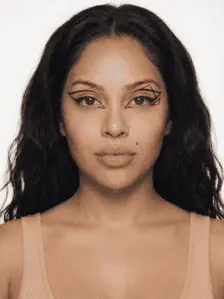
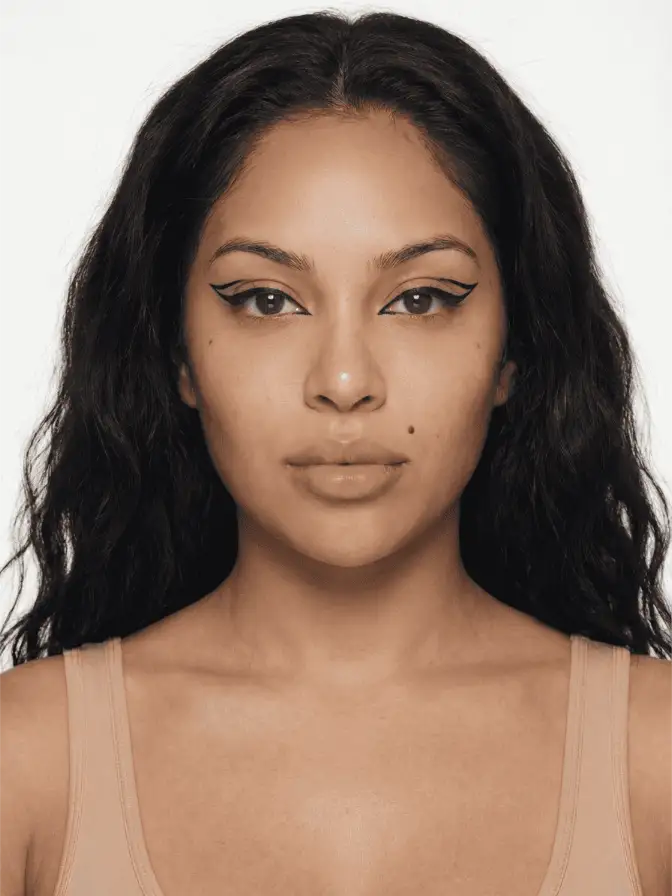
The butterfly liner is the upper wing of a cat eye pushed past the brow tail toward the temple. The L’Oréal Paris beauty desk traces the contemporary version to Bella Hadid at Coachella, though the silhouette appears in Pat McGrath’s Maison Margiela work as early as 2018 and in Kevyn Aucoin’s portraits of Linda Evangelista decades earlier than that. The current trend is the look returning at a moment when Instagram and TikTok can spread the geometry weekly.
Done well, the butterfly wing reads architectural. Done badly, it reads like cosplay. The difference is almost entirely geometric, not technical. The pen does what you point it at. The question is where you are pointing.
The single geometric rule
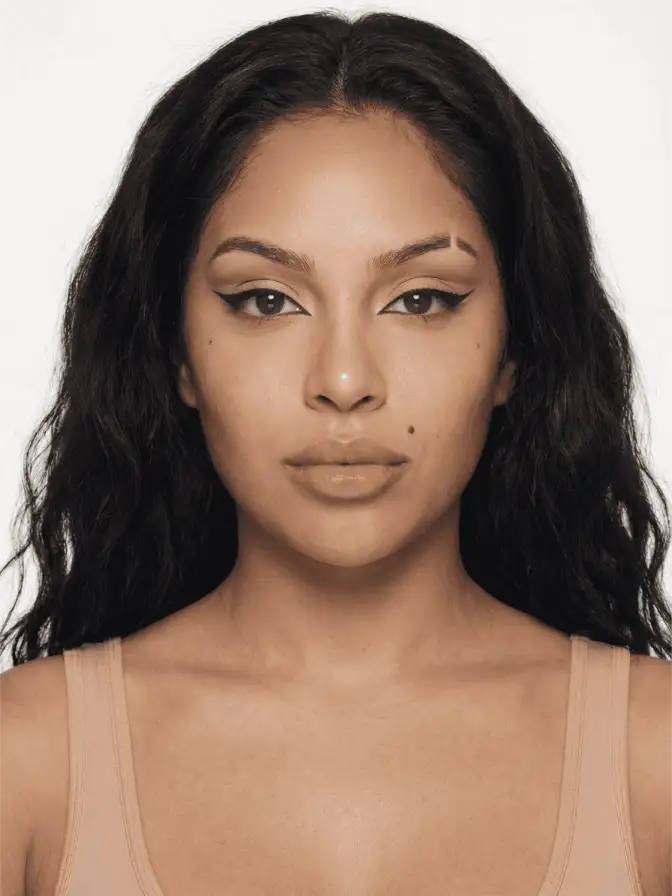
There is one rule that determines whether the wing reads couture or costume. The tip of the wing must aim toward the highest point of your brow arch, not toward your brow tail or temple.
The brow tail anchor pulls the eye down. The temple anchor flattens the lift. The arch peak is the point that creates a diagonal lifting line from the outer corner of the eye, through the midpoint of the eyelid, up to the brow’s structural high point. This is the same geometry Pat McGrath has worked from for two decades, articulated in her Maison Margiela backstage notes from Spring 2024. The arch peak is the magnetic north for any extended graphic liner.
You can test the rule with a finger. Place a clean fingertip at your outer canthus. Lift it diagonally and watch your face in the mirror. If you lift it toward the arch peak, your eye reads more open and lifted. If you lift it toward the brow tail (the lower end of the brow), the eye reads tired or sad. The pencil follows the same physics.
The four-step build
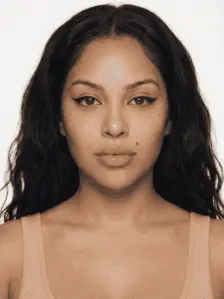
Step one is the under-sketch. Use an eye pencil close to your skin tone, or a dark brown if you have nothing closer. Sketch the wing shape lightly, with the tip pointed at the arch peak. Faces Canada’s technique guide makes the same point: pencil sketch, liquid trace. Going straight to liquid liner is the most common mistake for this look, because liquid will not let you correct an asymmetric shape without removing the whole wing.
Step two is the bottom edge. Continue the pencil line under the wing in a curve that returns to the lash line approximately one-third of the way in from the outer corner. This is the line that creates the “wing” rather than a tail. The wing is closed on the bottom; a cat eye is closed only on the outer end. The difference is what makes a butterfly read as butterfly.
Step three is the liquid trace. Take a fine-tip liquid liner (Stila Stay All Day, Inglot AMC Eyeliner Gel, or NYX Epic Ink) and trace over the pencil sketch. The pencil acts as a guide. The liquid sits on top. Any tiny tremor in your hand is absorbed by the wider pencil underneath, which means the liquid line can be smoother than your hand normally would allow.
Step four is the inner detail. Tightline the upper waterline with the same pencil or a black kohl. The white liquid liner detail (one tiny dot in the inner corner, a thin line of cream highlighter under the brow bone) gives the wing its lift. The graphic liner tutorial walks through the same sequence in its e-girl variant, but the principle is identical for the butterfly: solid line outside, brightness inside.
Where the trend goes wrong on TikTok
The most common failure on TikTok versions of this look is the colour fill. The butterfly silhouette gets drawn correctly, then filled in with bright colour, then surrounded with rhinestones, then loaded with stickers. The accumulation is the problem.
The wing is the statement. Everything else should retreat. A black or dark brown wing with a single frosted lid is the sophisticated read. A black wing with neon pink fill, two layers of pearl, three rhinestones, and white outliner is the costume read. The first looks like editorial. The second looks like Halloween.
Elle India’s round-up of trending butterfly looks features one Bella Hadid reference where the entire wing is rendered in white liquid liner alone. No black. No colour fill. Nothing else on the eye except mascara. The geometry does all the work. The colour does none of it. That photograph is the cleanest visual argument for restraint.
The face-shape adjustments
Standard butterfly geometry assumes a roughly almond eye. If your eye shape diverges from that, the geometry adjusts. For round eyes, push the wing slightly higher (above the natural brow arch line) to elongate. For monolid eyes, the wing should be drawn with the eye open, because the lid will hide the line otherwise. The Charlotte Tilbury technique notes for monolid liner cover the same adjustment.
For hooded eyes, the issue is that the wing disappears under the hood. The adjustment is to extend the wing slightly further out, so that even with the hood relaxed, the tip remains visible. The fox eye tutorial uses the same principle: the elongation is calibrated for what you see in the mirror with your eye open, not closed.
Downturned eyes benefit from butterfly liner more than most other shapes. The lifting diagonal counteracts the downward slope. This is also the case for the cat eye tutorial, but the butterfly’s closed lower edge creates a more dramatic lift than a cat eye alone.
The product short list
Three pencils consistently outperform the rest for the under-sketch: NYX Slim Eye Pencil in Dark Brown, Charlotte Tilbury Rock’n’Kohl in Bedroom Black, and the MAC Eye Kohl in Coffee. All three glide smoothly enough to sketch without dragging the skin, but hold their pigment long enough to give the liquid trace something to follow.
For the liquid trace: Stila Stay All Day in Intense Black, Inglot AMC Eyeliner Gel 77 (a tube product applied with a separate brush), or the NARS Climax Liquid Eyeliner. Brush size matters; the Inglot 31T brush from the same line, used with the Stila product, gives more control than the Stila brush alone.
For the white inner-corner detail: Stila Liquid Eye Art in White, or a clean swipe of the Charlotte Tilbury Hollywood Flawless Filter applied with a pointed brush. The white is what makes the wing geometry sit on the face rather than float.
The wing is finished when you blink and the line reads as a single shape from across the room, not as a series of marks. If you find yourself adding to it for more than two minutes after the liquid is dry, you are probably making it worse. Stop, set with a translucent powder pressed lightly along the wing edge to hold it through the day, and move on.
The look is forty minutes of practice and then thirty seconds to execute. The four steps stay the same every time. Only the wing length changes with what you wear.
Frequently asked
Where should the butterfly wing point?
Aim the tip of the wing toward the highest point of your brow arch, not the brow tail. The brow tail is too low and pulls the eye downward. The arch peak is the correct anchor because it creates a diagonal that visually lifts the outer corner.
Do I need liquid liner or pencil for butterfly liner?
Both, in sequence. Pencil first to sketch the shape and let you erase mistakes, then liquid over the top once you are happy with the geometry. Going straight to liquid is the most common reason the wing comes out asymmetrical.
Is butterfly eyeliner suitable for hooded eyes?
Yes, with one adjustment. Draw the wing with your eye open, not closed. The hood will hide the line otherwise. Mark where you want the tip to land while looking straight ahead, then close the eye to fill in the shape.
Continue reading
- technique Stained Blush Without the Blotch: Applying Watercolor Cheek Tints Liquid and water-gel blush goes patchy because of speed and prep, not the formula. Here is the small-area, damp-finger method that fixes the blotch for good.
- technique Puppy eyeliner: the downturned wing for rounder eyes Puppy liner drops the flick instead of lifting it, the opposite of a cat eye. Why the downturned wing flatters hooded and downturned eyes, and how to draw it.
- technique Eyeshadow by Eye Color: The Complementary Rule, Used Well The color wheel says wear the opposite of your eye color. That is true and incomplete. Here is why complementary shadow works, and the nuance for each eye.