Blush Stacking: Cream Under Powder for All-Day Wear
Powder blush fades by lunch because it has nothing to grip. Layering it over cream is the staying-power hack pro artists use, and the chemistry holds.
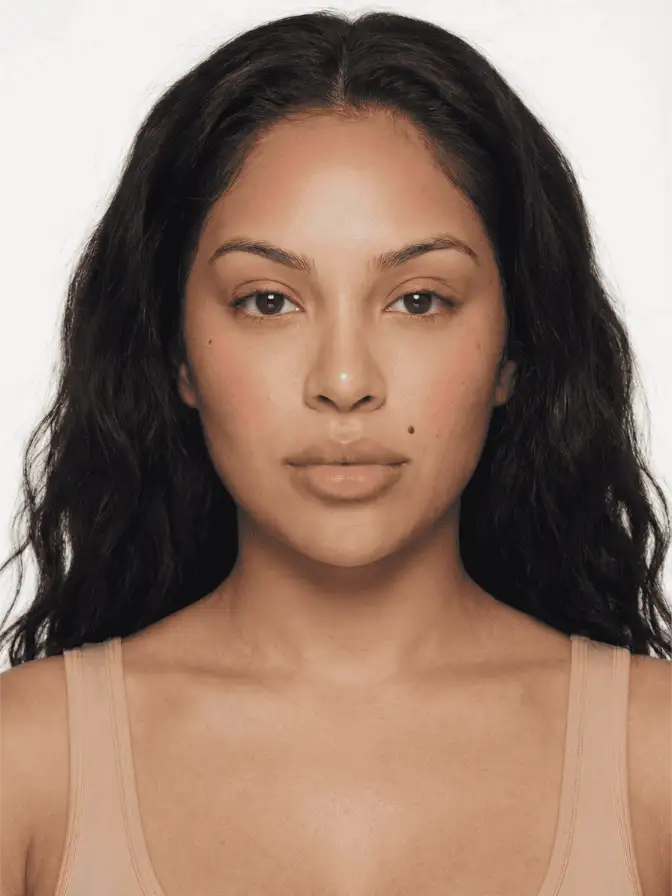
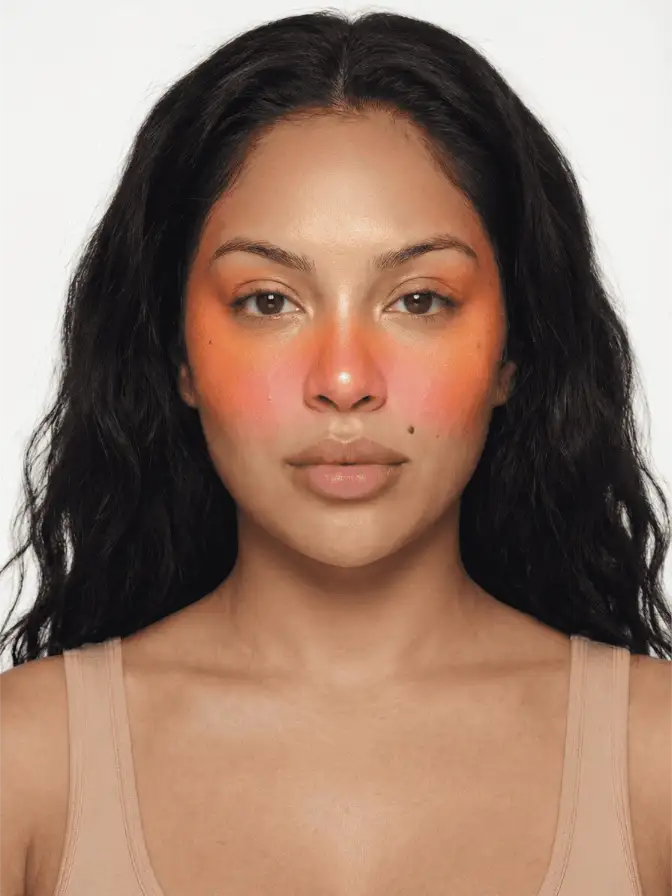
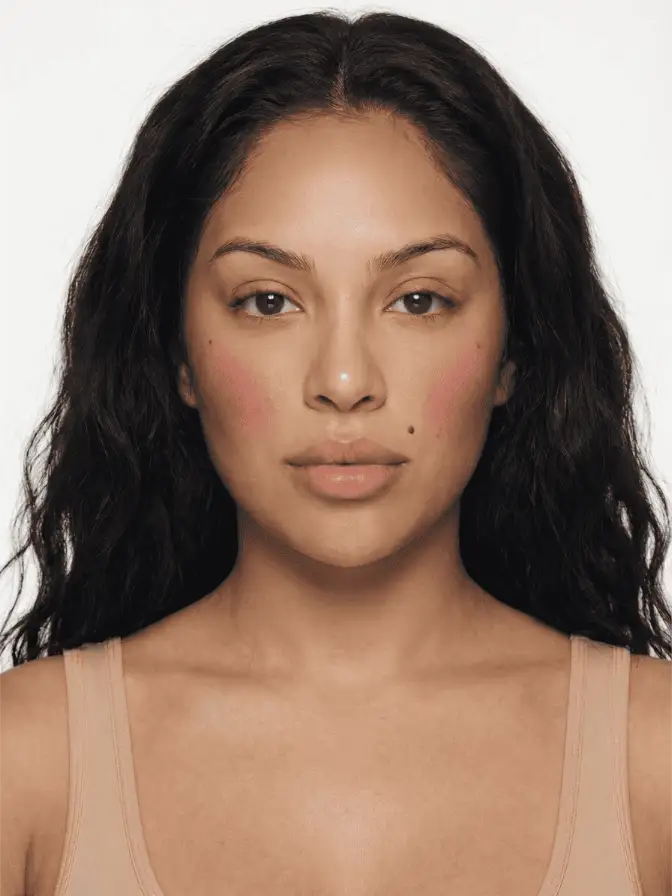
The most useful hack I’ve learned in ten years of writing about working-mother makeup is also the most boring to explain. Cream blush goes on first. Powder blush goes on top, in the same shape. The blush you spent ten minutes blending at 7 a.m. is still legible at 7 p.m. There is no third secret step. The reason it works is just chemistry, and the reason most people don’t do it is that we have all been trained to think of cream and powder as alternatives, not layers.
Patrick Ta calls this his “Own the Cheek” technique on his brand journal and credits it for the suspended-in-place blush that defines a lot of his celebrity work. Mary Phillips uses a related version on Hailey Bieber and Jennifer Lopez. Both artists treat the stack as the default; the single-product approach is the exception they make for low-effort days.
Why the stack outlasts either layer alone
Powder pigment, on its own, sits on top of whatever surface you’ve applied it to. If that surface is liquid foundation or a creamy concealer, the bond is weak. The powder has nothing to mechanically grab, which is why a stripe of powder blush at 8 a.m. is half its intensity by lunch and a memory by dinner. Oils from your skin, the touch of a hand brushing hair off your cheek, the pull of a sweater going over your head, all of these lift powder off skin in tiny increments through the day.
Cream blush bonds differently. It has its own emollient and binder system that grips into the foundation underneath, and because it shares a base chemistry with foundation (oils, waxes, pigment dispersions) the two integrate rather than stack. A cream blush worn alone lasts longer than a powder worn alone, but it has its own failure mode: cream pigment on bare skin gradually drifts and softens until the shape you blended in is unrecognizable.
Stacking solves both. The cream anchors a high-pigment base into the foundation underneath; the powder, pressed into the still-slightly-tacky cream, fixes the cream’s edges in place and adds a second pigment layer on top. The NSS G-Club writeup on blush stacking calls this “double-pigment grip,” which is unfussy but accurate. Each layer compensates for the other’s weakness. The result holds through dinner because there are two different pigment systems doing two different anchoring jobs.
There’s a secondary benefit. The depth you can build with a stack is more than the sum of the two layers because the cream’s slightly translucent finish lets the powder’s color read through, the way a watercolor wash reads through a pencil line. The same pink looks more saturated stacked than it does in either single layer at the same intensity, which means you can use less of each.
The order, the placement, and the brushes
Cream first, always. Apply it like you would on a regular cream-blush day: a small amount on the back of your hand, picked up with a fingertip or a damp sponge, pressed into the cheek in two or three taps. The placement depends on the look. For a draping-style flush the cream goes high on the cheekbone and sweeps toward the temple; for a healthy-glow read it goes on the apple of the cheek when you smile and stops there. For a sunset-blush look the cream sets the base shape that the powder will pull up and out.
Let the cream sit for about thirty seconds before the powder layer. The brief pause is what separates the technique from a smear: you want the cream to grip and lose its wet sheen, going slightly tacky. Touch the back of your hand to test. If your finger comes away clean but the cream still feels slightly grippy, you’re ready.
Powder layer next, in the same shape as the cream but slightly smaller. The reason for the size difference is depth. If you cover the cream completely with powder, you lose the cream’s translucency and the look flattens into a uniform powder block. If you keep the powder concentrated on the most-pigmented part of the cream (usually the outer apple of the cheek) and let the cream show at the edges, you get a gradient that reads dimensional rather than painted.
The brush change matters more than people expect. A stiff brush over a tacky surface drags. Use a soft, slightly larger natural-fiber brush for the powder layer, the MAC 168 or the Sigma F40 are both good options, and tap it gently into the powder pan rather than swirling. Tap excess off twice on the back of your hand before it touches your face. Then place the powder, don’t sweep it: small downward presses, lifting and replacing the brush rather than dragging it across the cream.
If the powder grabs harder in one spot than the rest, don’t try to spread it. Use a clean, larger fluffy brush (a translucent setting brush works) to soften the edge with the lightest possible buffing motion. The trick is removing pigment, not adding it.
Color choices that improve the stack
The two layers don’t need to be the same color, and the most professional-looking versions usually aren’t.
A cream that runs slightly warmer than the powder on top reads more like real skin flush. Skin reddens warm before it reddens pink, so a coral cream under a rose powder, or a terracotta cream under a soft berry, gives the cheek a depth that single-color blush can’t. This is the logic behind a lot of boyfriend-blush palettes that pair warm cream sticks with cooler powder pans.
For a more dramatic stack, pick a deeper, more pigmented cream and a softer, more diffused powder. Rare Beauty’s Soft Pinch Liquid Blush in a richer shade like Bliss or Joy under a translucent flush from Patrick Ta’s Major Beauty Headlines Blush in something like She’s Vibrant builds an obviously made-up look with surprising staying power. For everyday wear, scale down to a sheer Westman Atelier Baby Cheeks under a Hourglass Ambient Lighting Blush.
One pairing to avoid: a high-shimmer powder over a matte cream. The shimmer particles don’t grip into the matte cream the way pigment does, and they end up dusted onto the rest of the face by midday. If you want shimmer in the stack, put it as a small targeted layer at the very top of the cheekbone, applied separately after the matte powder is set.
What to fix when the stack goes wrong
Three common failures, all reversible.
If the blush looks patchy thirty seconds after the powder goes on, the cream wasn’t tacky yet. The wet cream lifted with the brush. Wipe the patches gently with a damp sponge, let the cream re-set for a minute, and try the powder again with a lighter hand.
If the color reads muddy or darker than you wanted, you’ve used the same shade in both layers and overloaded the pigment. Lift the excess with a clean fluffy brush, then knock the saturation down with a translucent powder dusted in a wider radius around the blush; the contrast tricks the eye into reading the blush itself as softer.
If the powder ends up sitting in fine lines, especially in the smile-line crease where blush often lands, the cream went on too thick to begin with. Less cream, applied with a sponge rather than a finger, fixes the next attempt; for today, use a soft brush to feather the excess into the surrounding skin and accept that this is a normal failure mode of trying a new technique.
When to skip it
The stack is meant for days that need to hold. Workdays with evening plans, weddings, travel, anything outdoors in heat. For a quiet weekend home, a single layer of cream blush pressed on with a finger is perfectly fine and looks lower-effort because it is lower-effort.
Skin type matters too. Very oily skin tends to break down even stacked blush by mid-afternoon and benefits from a mattifying primer step under everything. Very dry skin can find the powder layer accentuates texture and might be better served by stacking two creams of different finishes (matte cream under satin cream) instead of cream-under-powder. The principle is the same, the materials change.
For everyone else, this is the most reliable upgrade in a blush routine, and it costs nothing except thirty seconds and a second brush. Try it once with whatever cream and powder you already own and see if the blush is still legible when you check the mirror at 4 p.m. If it is, you’ve found your new default. If not, the cream and powder shades probably need rebalancing, but the technique is right.
Frequently asked
Do you put powder blush over cream blush?
Yes, that is the order most pro artists use, including Patrick Ta. The cream goes on first as a pigment anchor and the powder layers on top in the same shape, usually slightly smaller and more concentrated on the outer apple. Reversing the order (cream on top of powder) doesn't work because the cream lifts the powder when you blend.
Why does my blush disappear by lunch?
Powder blush sits on the surface of your foundation and gets buffed off by hands, scarves, and skin oil through the day. Without a tacky cream base underneath, there is nothing for the powder pigment to grip. Setting powder applied over the blush also dilutes it, which is the second-biggest cause of midday fade.
What brush works for layering cream and powder blush?
Use fingers or a small dense synthetic brush (the Charlotte Tilbury Powder & Sculpt or Real Techniques Sponge+) for the cream layer, then a soft, slightly larger natural-fiber brush like the MAC 168 or Sigma F40 for the powder on top. The brush change matters: a stiff brush over the powder layer will drag the cream and create patches.
Continue reading
- technique Stained Blush Without the Blotch: Applying Watercolor Cheek Tints Liquid and water-gel blush goes patchy because of speed and prep, not the formula. Here is the small-area, damp-finger method that fixes the blotch for good.
- technique Puppy eyeliner: the downturned wing for rounder eyes Puppy liner drops the flick instead of lifting it, the opposite of a cat eye. Why the downturned wing flatters hooded and downturned eyes, and how to draw it.
- technique Eyeshadow by Eye Color: The Complementary Rule, Used Well The color wheel says wear the opposite of your eye color. That is true and incomplete. Here is why complementary shadow works, and the nuance for each eye.