Vinyl lips: the SS26 high-shine revival
Vinyl lips returned in force at the SS26 shows, paired with bare skin and an almost wet finish. Here is what the trend actually is, and how it wears.
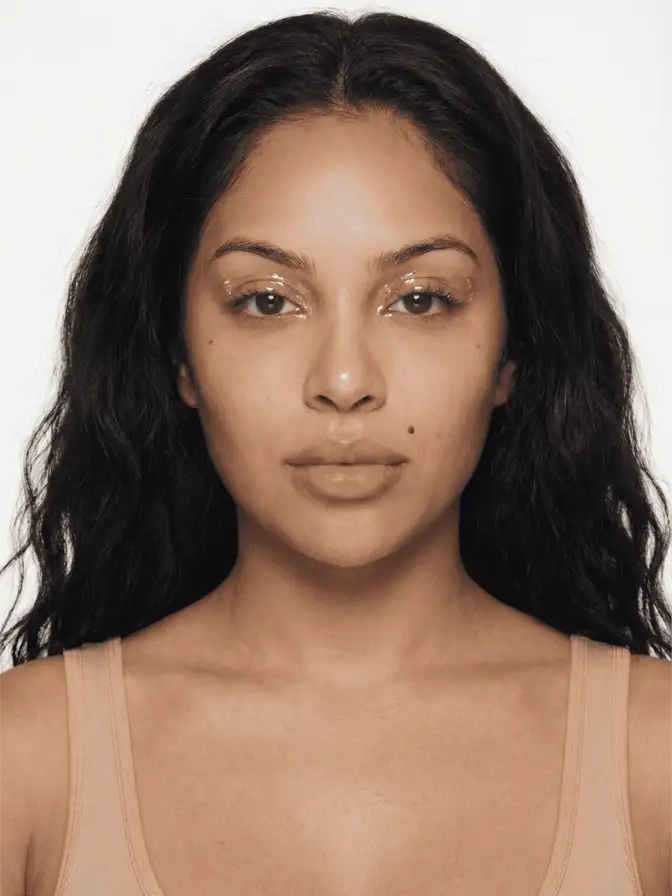
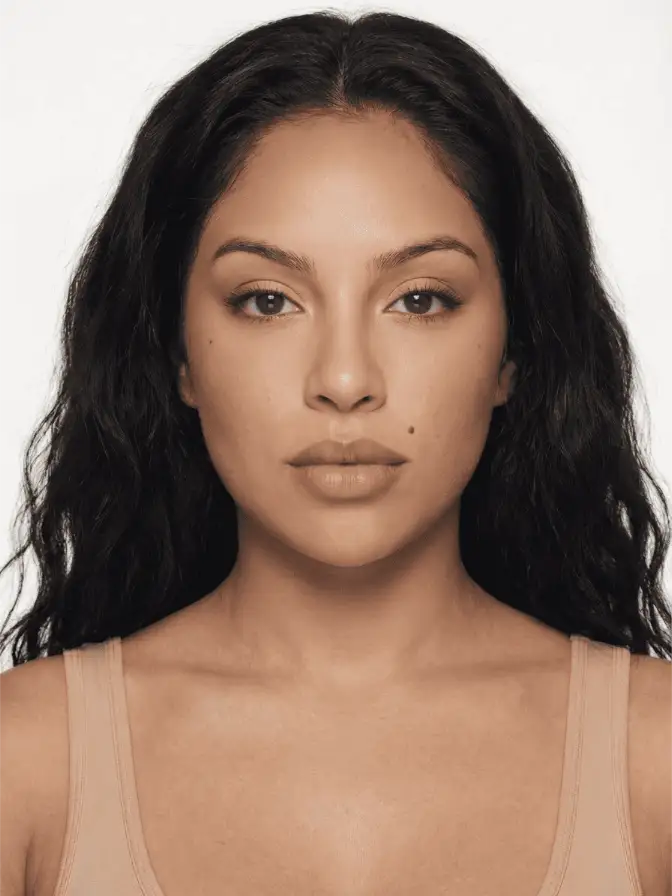
Pat McGrath painted a wet, near-mirror sheen onto every model who walked the Bottega Veneta SS26 show in September, then did it again at Schiaparelli in October. The skin was almost bare. The eyes were a thin line of black, no shadow. The lip carried the entire face.
Vinyl is back, and the language around it has finally settled.
What “vinyl” actually means
For about a decade the word floated around editorial copy as a synonym for “glossy.” It isn’t. A vinyl finish is a specific class of formulation: high loads of film-forming polymers, usually polyisobutene married to silicone elastomers and a trehalose-based binder, suspended in an oil phase that flashes off once the product hits the lip.
The result sets. Not into the powdery flatness of a long-wear matte, but into a single fused layer where pigment, oil, and shine read as one surface. The light bounce is closer to a wet ceramic glaze than a film of water. If you press a fingertip to a true vinyl after sixty seconds, it should feel tacky but not transfer color.
McGrath’s Lust: Gloss in Flesh Tone sits in this class. So does Hourglass Phantom Volumizing Glossy Balm in the original launch shades. So, controversially, does Fenty Gloss Bomb Heat once the capsaicin has finished doing its plumping work, although the polymer load there is lower than McGrath’s.
The runway argument
The reason it returned at SS26 is the same reason it left in the late 2010s: the rest of the face went quiet. When skin is doing a cloud-skin finish or a true bare-radiance moment, and the eye is a single graphic line instead of a smoky build, the lip needs to carry weight. Matte does that with color saturation. Vinyl does it with light.
Two seasons ago Daniel Sander dressed models at Bottega in a sun-flushed, almost wind-burned cheek with a bare lip, and the look read as effortless because the lip had nowhere to look. SS26 reversed the equation. The cheek is still flushed, but the lip is now the loudest thing in the frame.
Pat McGrath told W Magazine about the Bottega look that she was trying to make the lip feel “like a photographed reflection, not a coat of paint.” That language matters. A glossy lip in the 2014 Kylie sense was a wet effect overlaid on a lined and filled shape. A vinyl lip in the 2026 sense is the shape itself, polished.
The five lip shapes that worked this season
Editors picked up five distinct vinyl reads across the SS26 calendar.
The first was a deep oxblood vinyl at Bottega, almost black at the edges, that pooled into burgundy in the center of the lip. The second was Schiaparelli’s clear-glass vinyl, where McGrath layered three sheer washes over a tinted balm to build dimensionality without color. The third was the SS26 Beauty Trends roundup at Istituto Marangoni called “vinyl-cherry,” a high-shine glass-red that referenced Tom Ford’s pre-2018 runway shows.
The fourth, less reported, was a beige-toned vinyl at Khaite, the kind that reads like a glossed almond in product shots and disappears entirely on warm-skinned models without a top light. The fifth was the wettest of all: a translucent rose vinyl at Anna Sui, layered over a sky-blue lash to give what Pat McGrath called the “1920s bohemian” eye.
If the rotation feels familiar, it should. Each of these reads has a predecessor in the late-1990s archive, when Linda Cantello at Armani built a similar vocabulary around lacquered lip enamels. The polymer chemistry has improved. The reference points have not changed much.
How to wear it without the runway crew
The trade-off with a vinyl finish is that the polymer that builds the shine also catches every flaw underneath it. A scaly cuticle of skin at the lip edge, a missed bit of pencil, a smudge from a coffee cup, all read at full brightness because the surface is fused.
This is where a real-life vinyl application differs sharply from the runway. The order goes: exfoliate the lip the night before with a soft toothbrush, never the morning of. Apply a thin balm and let it absorb for ten minutes while you do the rest of the face. Then a pencil one half-millimeter inside the natural lip line, blended in with a clean finger. Then the vinyl, pressed in with the doe-foot rather than swiped, building from the center outward.
The mistake nine out of ten people make is using too much product. A vinyl finish needs about one third of the volume a traditional gloss needs to read at the same brightness. Overload it and it pools.
For real wear, Refinery29’s October ingredient breakdown noted that the vinyl looks at SS26 were reapplied by the runway crew about every twelve minutes. That number tells you what the formula can and cannot do. It will not survive a meal. It will survive an hour of camera work. Plan accordingly.
The longer arc
Vinyl lips are not the only SS26 trend pulling from the late 1990s. The SS26 Beauty Trends at Istituto Marangoni traced the full rotation: brushed-up brows, the blush draped across the bridge of the nose, the floating liner, and now the vinyl lip, all references to a specific period between 1996 and 2001 when polymer chemistry was first being marketed to consumers as a cosmetic finish rather than a paint chemistry term.
The cycle from runway to mass adoption used to take eighteen months. With McGrath posting application breakdowns on TikTok the same week as the show, it now takes about six. Expect vinyl pencils, lip-balm-glass hybrids, and at least one new Glossier launch building on this finish by the end of summer.
The thing that has changed since the last vinyl moment in 1999 is the photography. Phone cameras flatten gloss into a single bright bounce. Vinyl, with its dimensional finish, reads as glass on those same lenses. That, more than anything else, is why it returned now.
Frequently asked
How is a vinyl lip different from a regular gloss?
Vinyl finishes use higher concentrations of film-forming polymers, usually a blend of polyisobutene and silicone elastomers, which set into a glassy crust rather than slipping away on contact. A traditional gloss reads as a wet shine on top of the lip; a vinyl reads as a single solid surface where the pigment and the shine are one layer.
Will vinyl lip last through dinner?
Through cocktails, yes. Through pasta, no. The polymer film resists feathering and migration, but oily food breaks the surface, the same way a clear coat on a car chips against gravel. Reapply once after the appetizer if you want it to read fresh in photos.
Do vinyl lips work without lip liner?
On a runway with a steamer and a retoucher, yes. In real life, line a half millimeter inside the actual lip edge with a matching pencil first. The polymer wants to migrate at the cupid's bow, and a thin pencil dam is the only thing that stops it.
Continue reading
- trends The Gray Grunge Eye: The Soft Rock-Star Smudge of Summer Black smoke went hard and dated. The gray grunge eye on this summer's runways is smudged, dewy, and cool. Here is why it works and how to wear it.
- trends Butter Yellow Eyeshadow, the Soft Neutral That Isn't Butter yellow ran the runways, then landed in TikTok makeup tutorials. It acts like a warm neutral but reads as color. Here is how to wear it by skin tone.
- trends Sunburn Blush: The Flush That Crosses the Nose The summer 2026 blush trend drags warm color across the nose and upper cheeks to fake a sun-touched flush. Here is where to place it and what holds in heat.