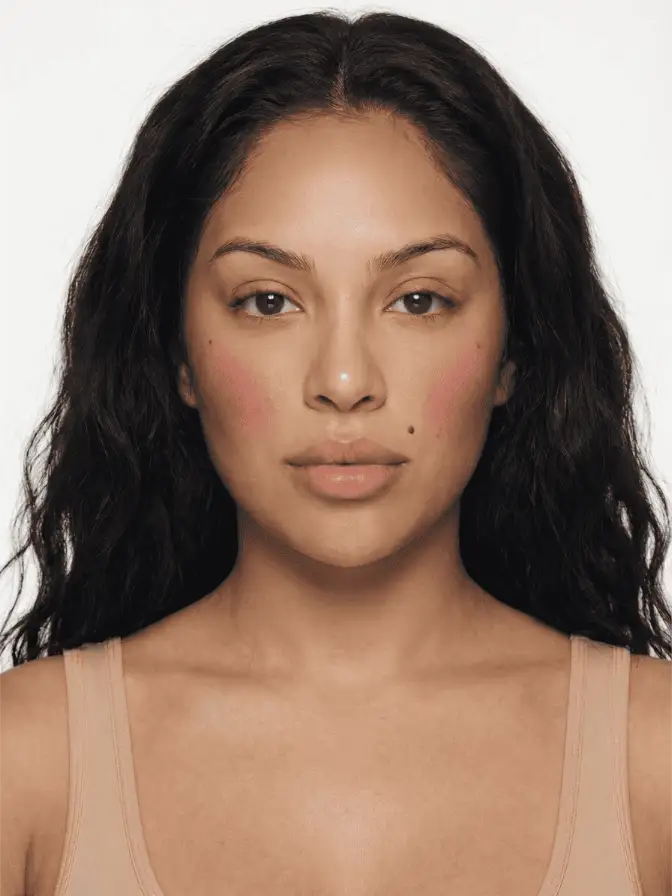
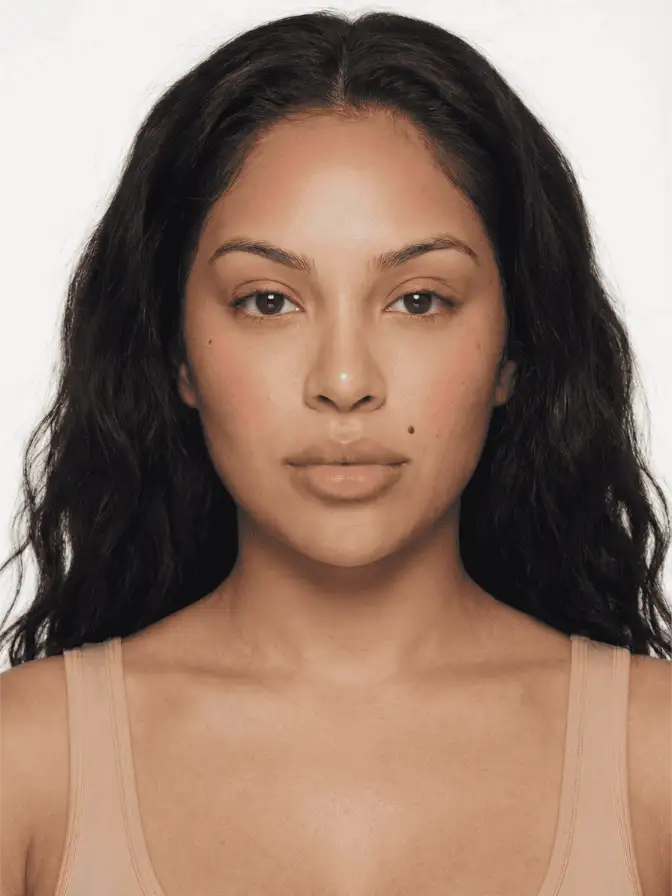
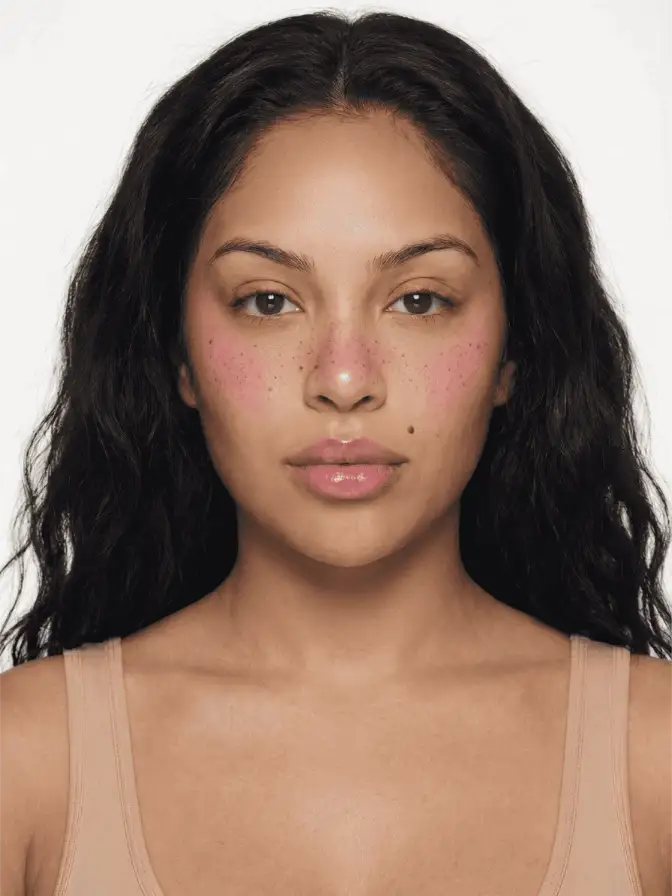
Sunburn Blush: The Flush That Crosses the Nose
The summer 2026 blush trend drags warm color across the nose and upper cheeks to fake a sun-touched flush. Here is where to place it and what holds in heat.
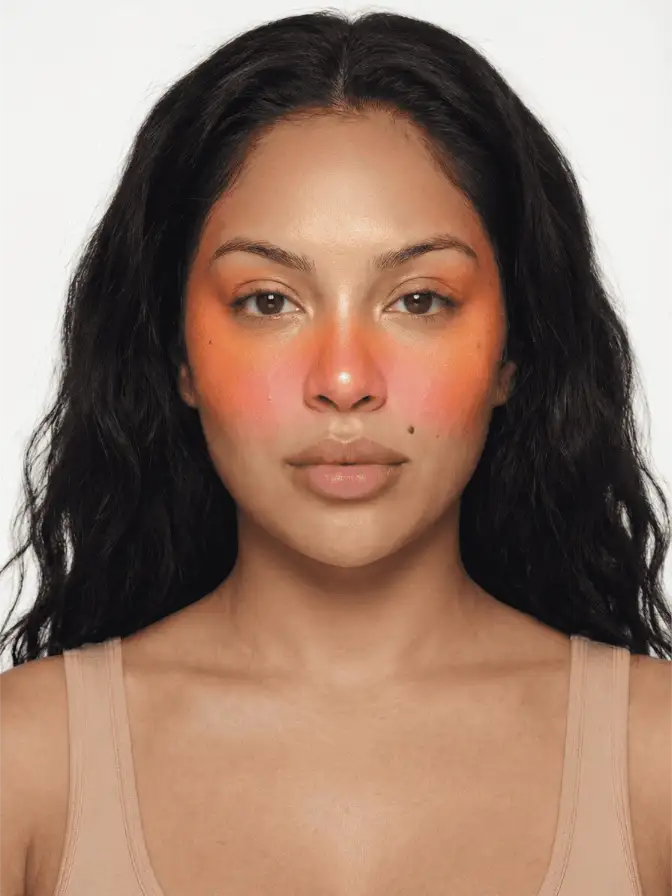
Rabanne sent models down its Spring/Summer 2026 runway looking like they had spent an afternoon on a boat without sunscreen: color smeared high across the nose and cheekbones, nothing on the apples, the whole face reading warm and slightly overexposed. The Zoe Report flagged it as the show keeping the sunburn blush trend alive, and by June the look had jumped the fence from runway to feed.
It is the blush placement your mother told you to avoid. For decades the rule was apples-of-the-cheeks, smile, dab the color where the cheek rounds up. Sunburn blush throws that out. The color goes where actual sun lands.
What makes it read as sunburn and not clown
A real sunburn does not respect the apples. It catches the high points: the bridge of the nose, the tops of the cheekbones, the forehead, occasionally the chin. The skin there flushes uneven and warm, more pink-to-red than the cool rose most blushes default to.
So the trend has two non-negotiables. Placement sits high and crosses the nose, connecting the cheeks into one continuous band. And the color skews warm. IPSY’s how-to on the look describes starting at the center of each cheek, blending up and across the nose, keeping the pigment above the nostrils and under the eyes. The nose is the part people skip, and it is the part that sells the whole thing. Without it you just have blush placed slightly too high.
Bella Hadid, Gracie Abrams, and Zendaya have all worn versions of the warmer summer flush this season, according to Who What Wear’s roundup of 2026 blusher trends. Hadid’s take leans terracotta and barely-there; Abrams goes pinker and more obvious. That range is the point. A sunburn has no fixed shade, so the trend bends to whatever warmth suits your skin.
If you have done the draping technique, where blush wraps from cheek up toward the temple to sculpt, sunburn blush will feel like its lazy summer cousin. Draping is structured and lifting. This is the opposite: loose, central, deliberately undone.
Picking a shade that does not go ashy
Warm is the whole game. A cool baby-pink fights the sunburn logic and tends to sit on the skin rather than sink in.
On fair skin, a soft coral or peachy-pink does the work without tipping into sunburn-that-needs-aloe territory. NARS Orgasm, the peachy-pink with gold shimmer that has sold roughly one unit a minute for years, is the obvious starting point, though for this look a satin or matte finish photographs more like real skin than a heavy shimmer does.
Medium and olive skin can take more pigment. Think terracotta, warm brick, the muted orange-reds. Tower 28 BeachPlease in Magic Hour or a cream bronzer-blush hybrid sits right in this zone.
Deep skin should ignore anything that calls itself “your-lips-but-better” and go for saturation. Brick, copper, a real raspberry-red. Danessa Myricks Yummy Balm in the warmer berries or a pigment-dense cream like Merit Flush Balm in Cheeky carries across deeper tones where a pale wash would simply disappear. The strawberry girl flush leans on this same warm-saturated logic, just kept lower on the face.
Cream first, and why
This is a cream-blush trend, and not by accident.
Cream blends down into the skin so the color looks like it is coming from under the surface, which is exactly what a flush is. Powder sits on top. In June heat that distinction matters twice over, because cream also tends to wear better than powder once you start sweating; powder can grab onto a sheen of perspiration and go patchy.
The application is simpler than it looks. Warm the cream on the back of your hand, then use two or three fingers to press, not drag, color onto the cheekbone. Tap it up and inward toward the nose. Build in thin layers; a sunburn deepens gradually, and so should this. Bounce a clean fingertip or a damp sponge along the edges to kill any hard line. If you want it to last through a long day, set just the cream with a sheer warm powder in the same family. The boyfriend blush method, that flushed, slightly-too-much, just-came-inside-from-the-cold finish, uses the same press-and-build approach; sunburn blush is the warm-weather version of the same idea.
One restraint worth keeping: this reads best on otherwise bare or barely-there skin. Pile it over full-coverage foundation and heavy contour and the flush stops looking accidental, which defeats the point. A tinted moisturizer or skin tint, the blush, maybe a touch of bronzer on the temples, and you are done. The sunset blush gradient, which fades a warm flush out toward the hairline, pairs naturally here if you want a little more dimension without adding product weight.
The mistake that turns it muddy
The most common error is reaching for bronzer first and treating blush as an afterthought. Sunburn blush is the lead, not the accent. Bronzer, if you use it at all, belongs around the perimeter, along the hairline, the very edge of the cheekbone, under the jaw, and stays out of the central zone where the flush lives. Layer bronzer over the nose and you cancel the pink-red warmth that makes the look read as skin reacting to sun rather than skin dusted with powder.
The second slip is hard edges. A real flush has no border. If you can see where your blush starts and stops, you either packed too much on in one pass or skipped the blending step. Sheer it out with a clean fingertip and the color goes believable instead of applied.
Why it caught on now
There is a quiet logic to a trend that fakes sun damage while sun awareness is at an all-time high. People want the glow of a beach day without the actual UV, and a warm flush dragged across the nose delivers the souvenir without the cost. It also happens to be one of the few makeup looks that improves in heat, since cream blush and a sweaty sheen read as convincingly dewy rather than melted.
It will not last forever. Blush placement swings on a cycle, and the apples will be back. For this summer, though, the move is up and across, warm and a little careless, like you forgot a hat.
Frequently asked
Where exactly do you put sunburn blush?
Start at the center of each cheek, drag the color up onto the cheekbone, then carry a lighter amount straight across the bridge of the nose so the two sides connect. Keep it above the nostrils and just under the eyes. The band of color should sit where the sun would actually hit first: nose, the tops of the cheeks, sometimes a whisper on the forehead and chin.
What blush color works for sunburn blush on deeper skin?
Skip muted pinks, which can go ashy. Reach for terracotta, brick, warm copper, or a true brick-red. On rich deep skin a raspberry or berry-red reads as a believable flush where a pale peach would vanish. The trick is saturation, not a specific hue.
Cream or powder blush for the sunburn look?
Cream wins for summer. It melts into skin so the edges blur like a real flush instead of sitting on top as a dusty patch, and it survives heat better than most powders. If you want extra staying power, press a sheer matching powder over the cream once it sets.
Continue reading
- trends The Gray Grunge Eye: The Soft Rock-Star Smudge of Summer Black smoke went hard and dated. The gray grunge eye on this summer's runways is smudged, dewy, and cool. Here is why it works and how to wear it.
- trends Butter Yellow Eyeshadow, the Soft Neutral That Isn't Butter yellow ran the runways, then landed in TikTok makeup tutorials. It acts like a warm neutral but reads as color. Here is how to wear it by skin tone.
- trends Blue Beauty: Why Blue Eyeshadow Came Back Smarter Blue eyeshadow is the defining color of 2026, but it is no flat Y2K rerun. The placement borrows from the 60s and 80s, and the textures finally got good.