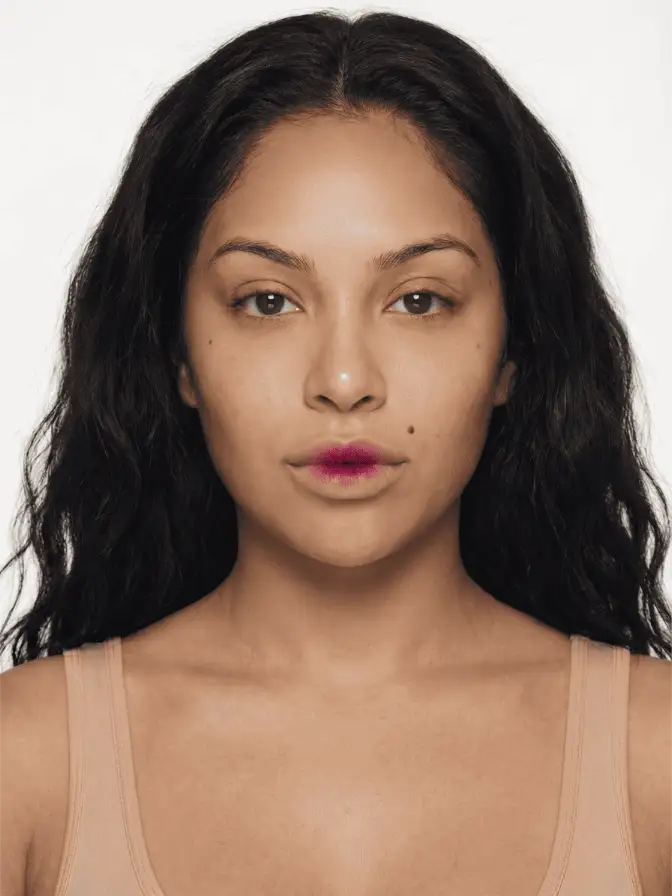
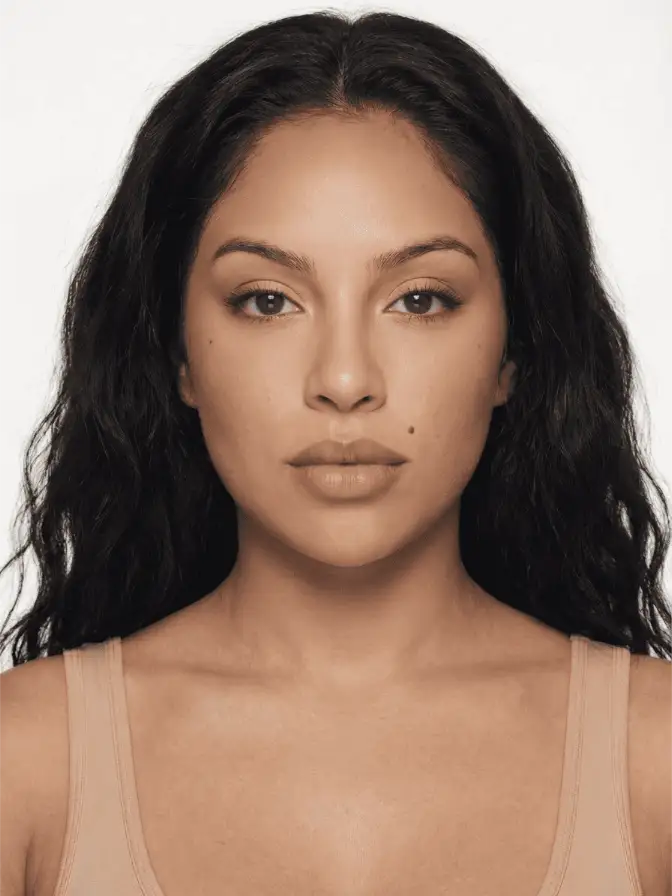
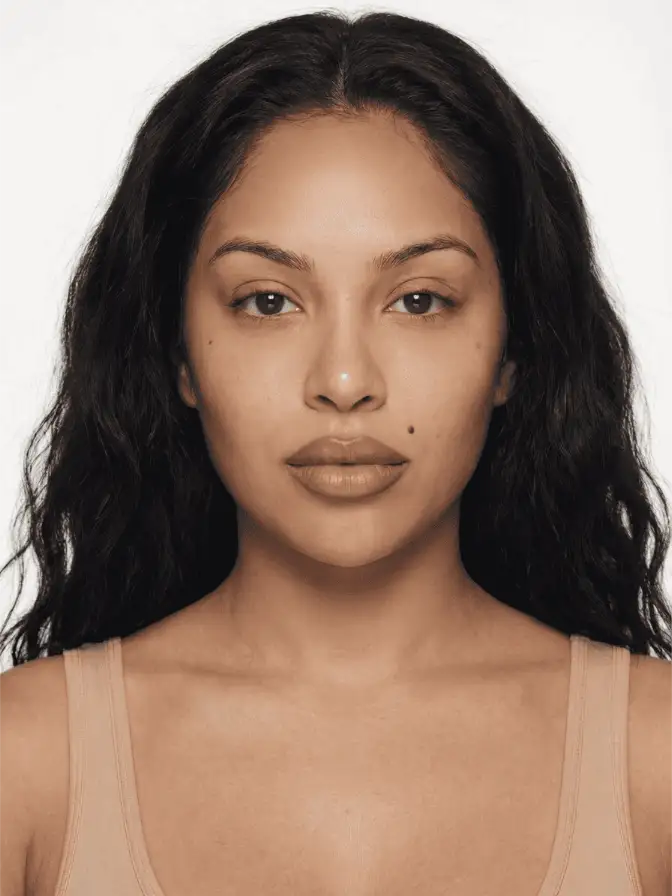
Shellac lips: how to get the lacquered finish that holds
Summer 2026's biggest lip trend is a wet-looking lacquer with hard edges. The technique sits on top of a prep step most tutorials skip.
Pat McGrath sent models down the Schiaparelli SS26 runway with what she called “wet-glass” lips, a high-shine searing red, hard-lined, almost reflective enough to see the studio lights bouncing back. The detail that made it work was a four-layer build: balm, blot, pencil, lacquer. Not a single one of those layers was optional. Skipped any and the gloss slid off within an hour.
Six months later that exact technique is what’s driving the summer’s shellac lip moment. Who What Wear’s June trend report listed “shellac-looking lips” among the seven most wearable summer 2026 trends, and Jen Lyons of Nars described the shift as “a hard pivot away from the blurred, diffused look from last season.” Yahoo’s beauty desk called it the season’s “edgy and unbothered” lip. All three reports cite the same thing as the determining factor for whether the look reads expensive or melted: the prep underneath.
Why the prep matters more than the gloss
Lacquer lips fail in two ways. They bleed at the edge or they dry out and flake in the corners.
Bleeding is a pigment-migration problem. A high-shine gloss sits on the surface in a way matte lipstick doesn’t. The pigment is suspended in a slippery polymer film, usually a polybutene or polyisobutene base, and that film moves with every word and sip. Without a wax or pencil dam at the perimeter the color creeps outward into the surrounding skin within forty minutes. This is why Maybelline Lifter Gloss looks fine on the Sephora model and bleeds on you by lunch. The product is the same; what’s missing is the dam.
Drying is an occlusion problem. Glosses contain enough volatile solvents that the lips underneath dehydrate as the gloss sits. Six hours in, the lacquer has thickened slightly and the lip underneath has lost about 5% of its water content (data from Dr. Michelle Wong’s 2024 Lab Muffin breakdown of TEWL through gloss formulas). The corners are the first place this shows because the orbicularis oris muscle thins the skin there. A waxy balm base, applied and given time to absorb before pigment, is the only fix that actually works.
The Patrick Ta team built the Schiaparelli look around this exact sequence, which is publicly documented in Pat McGrath’s Vogue backstage interview. It’s the same architecture every wearable shellac lip needs, scaled down for a Tuesday.
The four-layer build
Layer one is hydration. Aquaphor, Laneige Lip Sleeping Mask, or Bioderma Atoderm Stick, applied generously and left for at least two minutes while you do another step of your makeup. The point is to let the occlusive sit long enough to actually seal water into the lip tissue, not just slick the surface.
After two minutes, blot. Press a tissue lightly against the mouth so you remove the excess but leave the absorbed product behind. This is the step every TikTok tutorial of the trend skips, and it’s what separates a gloss that holds from one that pools and slips.
Layer two is the liner. A pencil one shade deeper than the gloss, drawn only at the perimeter. Not inside the lip. The pencil is there as a wax dam, not as base color. Charlotte Tilbury Lip Cheat in Pillow Talk Medium is the warmest neutral that works under most lacquer reds; for cooler tones, MAC Whirl or Nars Velvet Lip Liner in Mysterious Red. The line should be sharp but extend no more than a hair outside your natural lip, otherwise the lacquer reads costume.
Layer three is the pigment carrier. This is where most shellac tutorials online get it wrong. They go straight from balm to gloss and wonder why the color washes out. The pigment carrier is a creamy matte or satin lipstick, applied as a base layer just inside the pencil line. It’s what gives the lacquer enough depth to read as a defined color rather than tinted plastic. The MAC Retro Matte in Ruby Woo, the Tom Ford Lip Color Satin in Casablanca, the Pat McGrath MatteTrance in Elson 4. Press, don’t drag, and use a tissue between layers if you’re going for full opacity.
Layer four is the lacquer. The actual shine product. The current options that hold are narrower than the gloss aisle would suggest: Pat McGrath Lust: Gloss in Flesh 5, Tom Ford Soleil Lip Gloss, Charlotte Tilbury Hollywood Beauty Icon Glow. Apply only to the center of the lip and let it self-spread to the perimeter. The pencil dam stops it from migrating; the matte underlayer keeps it sitting where you put it.
When to break the rules
A few specific failure cases. People with very small lips will read clownish in full shellac; the technique flatters fuller mouths because the high-shine creates depth that bigger lips already have. For thinner lips, the overlining technique plus a satin finish, not a lacquer, is the better adaptation.
People with vertical lip lines, the fine creases that show on dehydrated or mature lips, will see lacquer pool in those grooves and read texturally wrong. The fix is to skip layer four entirely and stop at the satin pigment. The result reads polished without the trapped-in-amber effect.
For wedding work or anything photographed under flash, swap the lacquer for a creamy demi-matte. The Patrick Ta Major Sex Lip Crème works here. Flash reads high-shine as wet, and wet is the wrong vocabulary for white dress photos. The classic bridal tutorial base is what to pair this softer version with.
Pairing the rest of the face
The summer 2026 face built around shellac lips is restrained everywhere else. The skin reads juicy but is technically a gradient lip Kbeauty look approach scaled to the whole face, glossy where the natural light catches and matte where it doesn’t. The eye is either nothing (curled lashes, brushed brow, see the season’s ghost lashes trend) or a single wash of warm shimmer pressed onto the lid with a finger. The blush is cream, placed on the cheekbone, not the apple.
What doesn’t work is a heavy contoured base under a lacquered mouth. The contrast in finish reads dated. The soft glam look was the default for evening makeup in 2023; for summer 2026 you want the same definition with half the powder.
The longer arc here is that lip texture cycles roughly every five years between matte, semi-matte, and high-shine. The mid-2010s liquid matte era ended in 2018; the blurred berry middle ground ran from 2022 through early 2026; the shellac revival is now. By 2030 it will probably swing back to a satin powder finish, the way Bobbi Brown and Charlotte Tilbury both formulated their early 2000s flagships. For now, the work is in the layers underneath.
Frequently asked
What's the difference between shellac lips and vinyl lips?
Vinyl is a transparent high-shine over a stained base, often a sheer berry. Shellac is the opaque pigment plus the shine, applied as one lacquered layer with crisp, lined edges. Vinyl shows the underlying lip color; shellac doesn't.
How do you keep shellac lips from drying out?
Hydration first, then occlusive. Aquaphor under, the pigment in the middle, the gloss on top. Skip the hydration step and the lacquer cracks at the corners by hour three. The Bioderma Atoderm Stick or Laneige Lip Sleeping Mask work better than waxy chap-stick bases.
Do you need a liner for shellac lips?
Yes, but barely. The look depends on a hard edge, which natural lip outlines don't give you. A pencil one shade deeper than the lacquer, drawn just on the outer perimeter without filling in, is the right amount. Charlotte Tilbury Lip Cheat in Pillow Talk Medium does this without going darker than the gloss.
Continue reading
- technique Stained Blush Without the Blotch: Applying Watercolor Cheek Tints Liquid and water-gel blush goes patchy because of speed and prep, not the formula. Here is the small-area, damp-finger method that fixes the blotch for good.
- technique Puppy eyeliner: the downturned wing for rounder eyes Puppy liner drops the flick instead of lifting it, the opposite of a cat eye. Why the downturned wing flatters hooded and downturned eyes, and how to draw it.
- technique Eyeshadow by Eye Color: The Complementary Rule, Used Well The color wheel says wear the opposite of your eye color. That is true and incomplete. Here is why complementary shadow works, and the nuance for each eye.