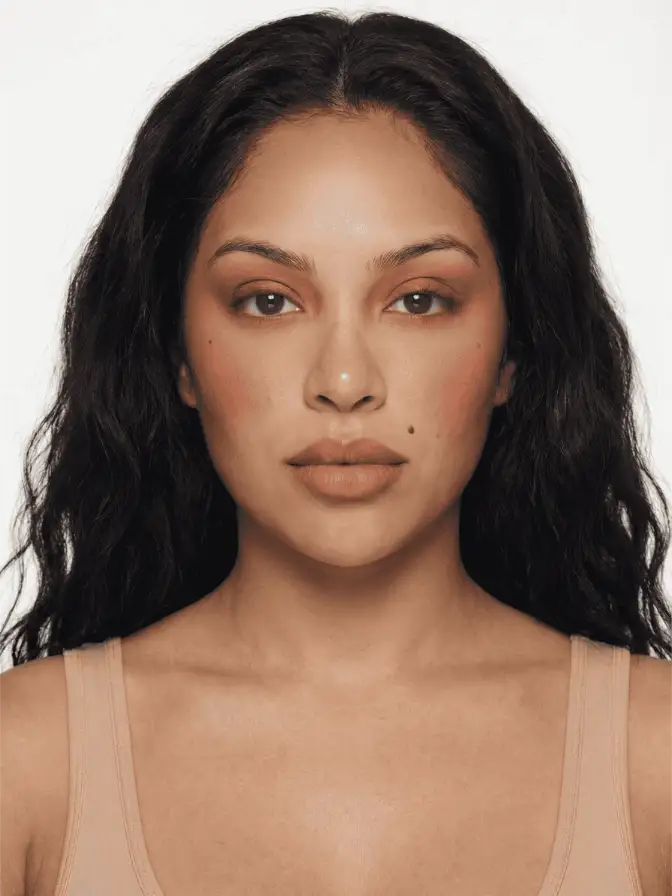
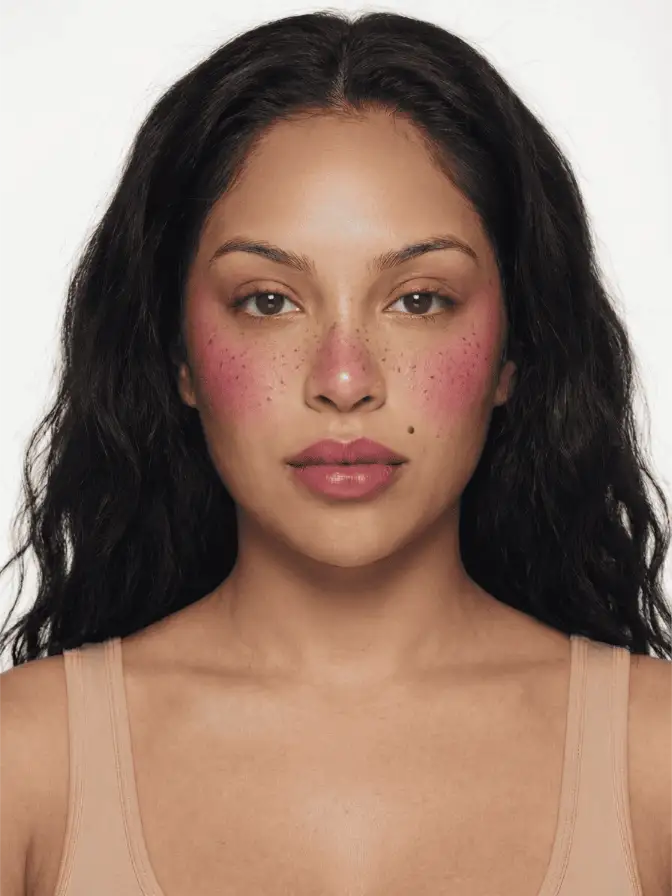
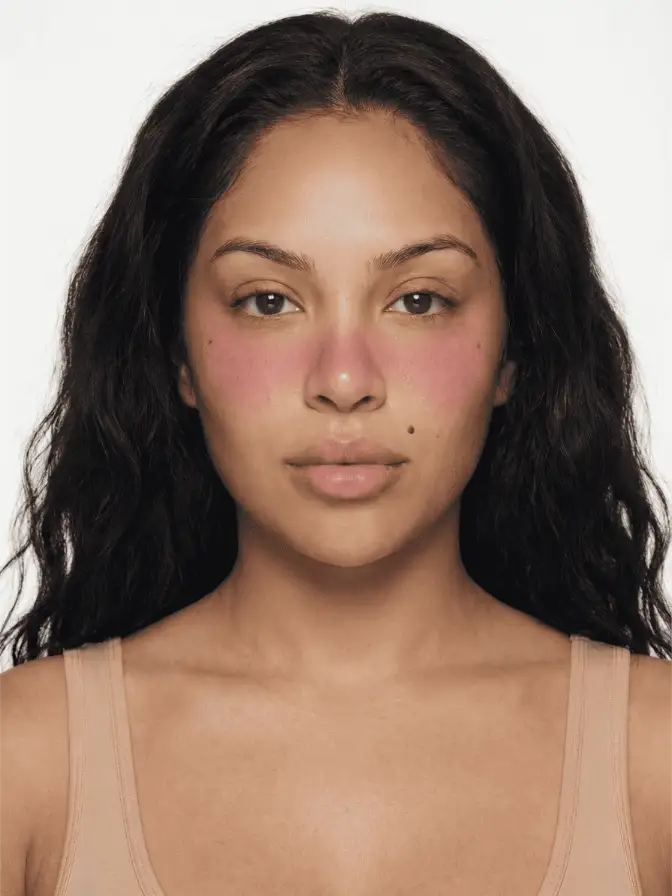
A monochrome pink face from five products in five minutes
Monochromatic only works when every product sits in the same undertone. Five products, five minutes, one rule: pick the undertone first and never cross it.
There is a 6:30 alarm version of every makeup routine. The hand is half-asleep, the coffee hasn’t landed, and the pre-coffee face has about five minutes before the bus.
A full monochromatic look fits inside that window. The trick is not the products. It’s the rule.
The rule that makes it work
Monochromatic makeup means using one color across cheeks, lips, and eyes. The version most beginners try is a literal one: same shade of pink everywhere. It doesn’t usually work, because the same color reads differently on lips than on skin than on eyelids, and “the same shade everywhere” tends to look flat or, worse, like an allergic reaction.
The version that actually works is tonal. Different shades of the same family, with the same undertone. According to the Bdellium Tools breakdown, the key isn’t matching colors exactly, it’s keeping every product in one lane: blue-based or warm-based, never both.
A blue-based pink blush plus a warm coral lip kills the whole face. The tones fight each other and the eye reads them as a clash. A blue-based pink blush plus a blue-based berry lip plus a soft mauve eye reads as cohesive. Same family. Same undertone.
That’s the rule. Pick the undertone first. Build everything else from there.
Picking your undertone in 30 seconds
Hold your wrist up to a window. If the veins read blue or purple, you’re cool. Reach for blue-based pinks: watermelon, raspberry, fuchsia, cool mauve. If the veins read greenish, you’re warm. Reach for peach-pinks or coral-pinks. If you can’t tell, you’re probably neutral and you can wear either side, but consistency still matters; pick one for the day and stay there.
The cool-pink monochrome family is the easier of the two for makeup beginners. The warm-pink family demands tighter color matching across products, because the gap between coral and salmon is small and crossing it looks awkward.
The five products
A starter monochromatic kit is five things. Mine, on the bathroom counter, is the following list. None of these brands are sponsored; they are products that work and that I happened to land on after enough trial.
One: tinted moisturizer. A peachy-toned base if you’re warm, a neutral one if you’re cool. I use the Laura Mercier Tinted Moisturizer SPF 30 in Camel for a warm day and the Ilia Super Serum Skin Tint for a cool one. Both are sheer enough that the rest of the routine reads through the base, which is the point. A heavy foundation will mute everything you put on top of it.
Two: cream blush. This is the keystone. The blush dictates the undertone of the entire look. For a cool monochrome, the Westman Atelier Baby Cheeks in Petal is reliably blue-based. For warm, Rare Beauty’s Soft Pinch Liquid Blush in Joy is a clean coral. A pump or a fingertip dab on each cheek is enough; build slowly.
Three: a sheer lip product. A lipstick or lip oil in the same family as the blush. Cool: try Tower 28’s BeachPlease Tinted Lip Balm in Magic Hour. Warm: Dior’s Lip Glow Oil in Coral Cherry. The sheerness matters because a flat opaque lip in a tonal look looks heavy; you want the lip to read as a darker echo of the cheek, not as a separate event.
Four: a single eyeshadow. One pinky-mauve or peachy-pink shadow, depending on undertone. Apply with a fingertip, blend with a fingertip, and stop. The eye in a monochromatic routine is a hint, not a feature. The slaye strawberry girl tutorial covers exactly this kind of low-effort flushed eye, and the igari tutorial shows the Japanese version of the same flushed-pink eyelid that the routine builds on.
Five: a peach-toned concealer. Not for full coverage, but for brightening the inner corners of the eyes, the center of the chin, and the cupid’s bow. A peach undertone neutralizes any blue under the eye, which would otherwise read as a clash on a cool-pink monochrome face. NARS Radiant Creamy in Vanilla works for cool-leaning skin; Charlotte Tilbury’s Magic Away in Fair works for warm.
The five-minute order
Tinted moisturizer first, fingertips, all over. Concealer next, only where needed, blended out with a damp sponge. Cream blush on the apples of the cheeks, fingertips again, build to the desired flush in two passes. The same blush, a tiny dab, pressed onto the lid and blended with the fingertip. The lip product last, applied directly from the bullet or the wand, no liner needed.
Five steps. About 90 seconds per step if you don’t fuss. Coffee can finish brewing in the same window.
Why this routine survives a workday
The slaye monochromatic tutorial covers this look in more detail, but the workday-survival logic is worth saying explicitly. A tonal monochromatic face fades evenly. When the lip wears off slightly, the cheek wears off slightly, the eye wears off slightly, and the face still reads as cohesive. A face built on three different color families fades unevenly: the lip goes first, the eye holds, the blush dries down, and by 4pm the look is patched.
Same-undertone makeup ages well across an eight-hour day. That is not the reason most people learn the technique, but it’s the reason most people keep using it once they have.
When to break the rule
The one place a monochrome look benefits from breaking its own rule is at the lash line. A black or dark brown mascara reads neutral against any color family and adds the only sharp line on an otherwise soft face. The contrast is what keeps the look from drifting into a sleepy or washed-out finish.
Skip the eyeliner for the five-minute version. Just mascara. One coat on the upper lashes, none on the lower.
Building the kit over time
If you don’t already own all five products, the order to acquire them matters. The cream blush comes first; it dictates everything else, and a wrong-undertone blush will sabotage matched lip and eye products you buy afterward. The lip product comes second, ideally bought in person so you can swatch it next to the blush on the back of your hand. The shadow comes third, and a single multi-use product (Glossier Cloud Paint or Tower 28’s BeachPlease, both blushers that double on lids) cuts step three down to a recolor of step one. The concealer and tinted moisturizer can be whatever you already own, as long as the concealer is at least half a shade lighter than the base.
The whole kit, sourced thoughtfully across one or two shopping trips, runs around 200 dollars at retail and lasts about six months at daily-wear pace. Most of that cost is the cream blush, which is the part you should not cheap out on.
That’s the routine. It costs five products and 300 seconds, and it is the kind of face you can wear to a meeting, a school run, and a 7pm dinner without having to redo a thing.
The deeper point about monochromatic makeup is that it forces a useful constraint. Most makeup experimentation expands outward, more products, more colors, more steps; the result is often a face that reads as cluttered. Working inside one undertone family does the opposite. The constraint compresses the routine, sharpens the choices, and almost always makes the wearer look more pulled-together than a fuller routine would. If you have ever stood in front of your bathroom counter unsure where to start, picking a single undertone for the day is the simplest way to get unstuck.
Frequently asked
How do you pick the right pink undertone for your skin?
Hold your wrist in natural light. If your veins read blue or purple, you have cool undertones and a blue-based pink (think watermelon, raspberry) will sit right. If your veins read green, you have warm undertones and a peach-based or coral pink will be more flattering. Neutral wrists can wear either.
Can you use a lipstick as blush in a monochromatic look?
Yes, and it's actually the best route to undertone consistency. A satin-finish lipstick warmed between the fingers and pressed onto the apples of the cheeks gives an exact tonal match. Avoid matte formulas for cheeks; they grip the skin and look patchy.
Continue reading
- routines The Interview Face: Five Products That Read Competent on Camera A hybrid interview means makeup that survives a flattening webcam and harsh office light. Five products, structure over coverage, matte where the camera bounces.
- routines Festival makeup that survives three days of heat A realistic kit and a sweat-proof sequence for multi-day outdoor festivals: thin cream-then-powder layering, the setting-spray sandwich, and the lash call.
- routines Makeup for Glasses, Sorted by Your Prescription Minus lenses shrink the eye, plus lenses magnify it. Two short makeup routines built around that one optical fact, with finish choices and a brow note.