Kevyn Aucoin: The Michelangelo of Maquillage
Kevyn Aucoin was the first makeup artist to become a household name, and the one who taught the public to sculpt a face with light and shadow. His blueprint endures.
Before Kevyn Aucoin, the makeup artist was an invisible profession. Faces appeared on magazine covers fully formed, and nobody outside the studio knew how. By the time he died in May 2002, at forty, that was no longer true. He had pulled the curtain back so far that a teenager in a suburb could open one of his books and learn the same sculpting tricks that built a Vogue cover.
PORTER called him the man who changed the beauty world forever, and the claim is not really an exaggeration. Every contour tutorial you have ever watched, every “before and after” that turns one face into a sharper version of itself, traces back to what he taught the public to see.
Louisiana to the cover of Vogue
Aucoin was born in 1962 and raised in Louisiana, adopted, bullied as a gay kid in a small town, and largely self-taught with a camera and his mother’s friends as practice. He moved to New York in the early 1980s with no formal training and a portfolio of Polaroids. The break came fast once people saw what he could do. Within a few years he was working for Vogue under Anna Wintour and shooting with the photographers who defined the era.
The supermodel boom gave him his canvas. He painted Cindy Crawford, Linda Evangelista, Christy Turlington and Naomi Campbell at the height of their fame, then crossed into Hollywood and music with Cher, Tina Turner, Janet Jackson and Gwyneth Paltrow. He became, as 29Secrets put it in their profile, the first makeup artist most people could actually name. That had never happened before. Artists worked in service of the photographer and the model; Aucoin became a star alongside them.
Sculpting a face out of light and dark
His real innovation was conceptual. Aucoin treated the face the way a painter treats a flat canvas that needs to look three-dimensional. Refinery29 credits him with popularizing contoured cheeks, overdrawn lips and strobing, and while he did not strictly invent any of them, he is the reason they entered the general vocabulary.
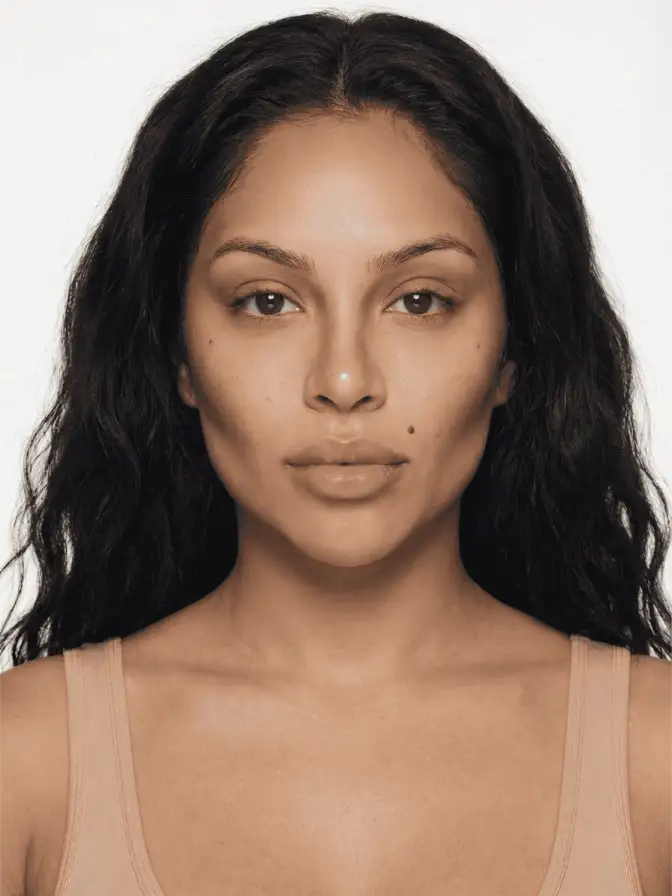
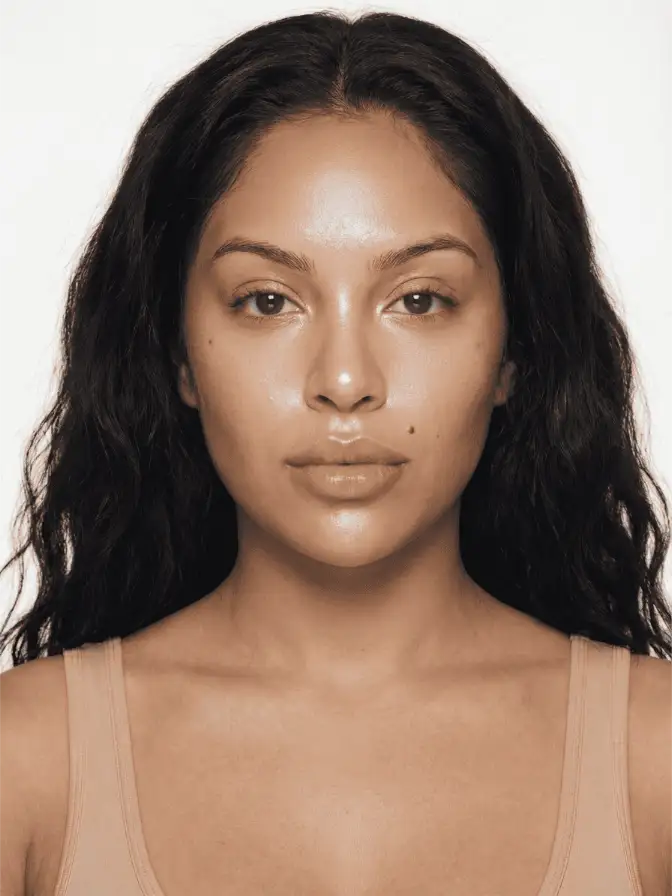
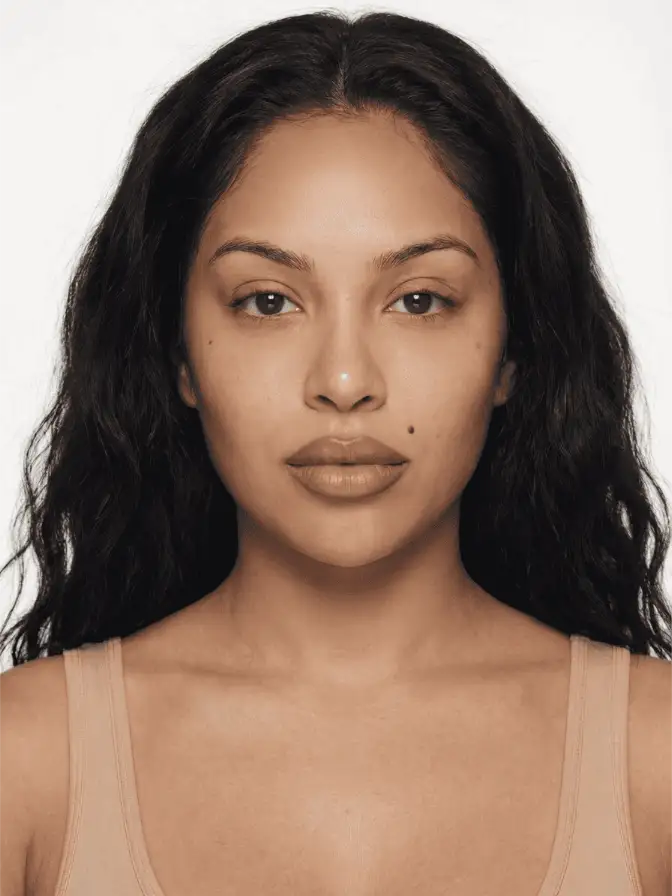
The method, as the Polyester Zine beauty archive describes it, started with a kind of erasure. He would blank out the model’s face first with a layer of foundation, creating a neutral ground with the natural shadows muted. From there he rebuilt the face deliberately, placing foundation noticeably lighter or darker than the real skin tone to fake structure that was not there. A nose looked narrower, a brow lifted, a cheekbone carved, all through where the light and shadow fell. The contouring tutorial works from that exact principle, darker shade in the hollows to recede, lighter on the high points to advance.
The bright under-eye was his signature move, a wedge of light concealer set well below the lash line that opened the whole face. Pair that with the smoky browns and beiges he favored along the bone structure and you have the template for nearly every sculpted look that followed. Strobing, the highlight-led version of the same idea, is the other half of his legacy; the strobing tutorial places luminosity on the spots he taught artists to lift.
One detail surprises people who assume technical mastery means a kit full of brushes. Aucoin mostly used his hands. He would warm and press product into skin with his fingertips, arguing that the heat helped it melt in and that nothing read as natural as makeup applied by touch. The overdrawn lip was the same instinct for reshaping by hand, building a fuller mouth past the natural border, a move the overlining tutorial breaks down without tipping into costume.
The books that gave the secret away
What separates Aucoin from the brilliant artists around him is that he refused to keep the knowledge private. In a decade when technique was guarded, he published it. The Art of Makeup arrived in 1994, then Making Faces in 1997, which became a genuine bestseller, and Face Forward in 2000. These were not coffee-table books of pretty pictures. They were step-by-step manuals, full of the contouring and sculpting diagrams that, as several of his obituaries noted, introduced face-sculpting to the general public for the first time.
He wanted everyone in on it. Unlike the closed circle of artists who ruled the industry, he saw no reason the methods should stay behind studio doors, and that openness is the through-line of his whole career. Making Faces in particular taught a generation of regular people, not professionals, that a face could be redrawn. Two decades later, when contouring exploded across Instagram and YouTube and turned the Kardashian beat into a global skill, it was running on the grammar Aucoin had written.
In 2001 he launched his own line, Kevyn Aucoin Beauty. The Sensual Skin Enhancer, a heavily pigmented foundation-concealer hybrid you sheer out or build up, and The Sculpting Powder became cult products that are still on shelves. The brand outlived him, which is its own kind of proof that the products were never gimmicks.
A short life and a long shadow
The end of his story is sad and not widely understood. Aucoin had lived for years with chronic pain and a slow physical change he could not explain, his features and hands gradually enlarging. The cause was acromegaly, a pituitary tumor that floods the body with growth hormone, and it went undiagnosed for far too long. The pain led to a dependence on medication, and the combination of the underlying illness and its complications killed him at forty, in 2002. He had hidden most of it, working through the discomfort the way he had worked through everything else.
He left behind more than a product line and three books. Net-a-Porter’s tribute framed his legacy as cultural rather than commercial, and that is the right frame. He made the makeup artist visible as an artist. He turned private craft into public knowledge. And he gave us the core idea that a face is not fixed, that with light and shadow placed by a steady hand it can become whatever you decide it should be.
Watch any contour video today and you are watching Kevyn Aucoin’s lesson, repeated by people who may not know his name. The Michelangelo comparison stuck for a reason. He understood that the most powerful thing about makeup is not concealment, it is the illusion of structure, and he taught the rest of us to see it too.
Continue reading
- inspiration Peter Philips: from a Mickey Mouse face to Dior Beauty The graphic-design student who painted Mickey on a model at a Raf Simons shoot went on to run the two most coveted jobs in cosmetics. A profile.
- inspiration Val Garland: The Colorist Who Rewrote the Rules From a Bristol hair salon to the first global makeup director at L'Oreal Paris, Val Garland built a career on refusing the rulebook. A profile of an editorial original.
- inspiration The End of Precision: Why 2026 Makeup Loosened Up For a decade makeup chased Instagram precision. The 2026 runways rewarded a deliberately imperfect hand instead, and that loosening says something about us.