Believable Beauty: The Return of Realistic Skin
Spring 2026 is pulling away from filtered perfection toward believable skin: visible pores, a slight beach flush, freckles intact. Why the mood is shifting.
The first sign was the runway. By the time Sabato De Sarno sent his second Gucci collection out in September 2024, the makeup brief had been described in show notes as “as if the model had spent the morning at the sea.” That language, lifted almost verbatim into spring 2025 and 2026 editorial copy, marked something more than a single season’s mood. It marked the start of a longer move away from the digitally smoothed face that had dominated the previous decade.
Eighteen months later, “believable beauty” is everywhere the trend forecasters are looking, and it’s a useful name for something that has been building quietly since around 2022.
What the look actually contains
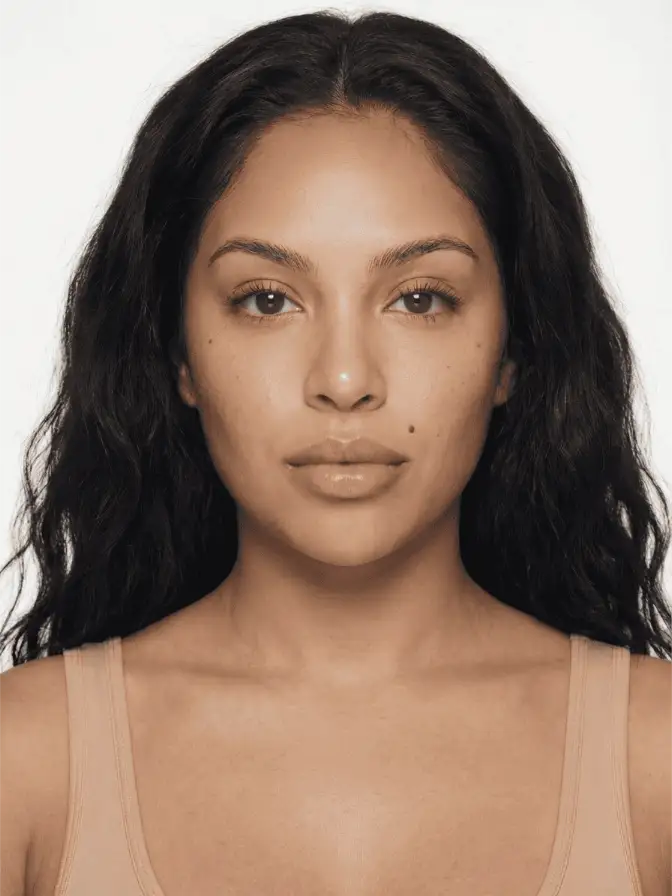
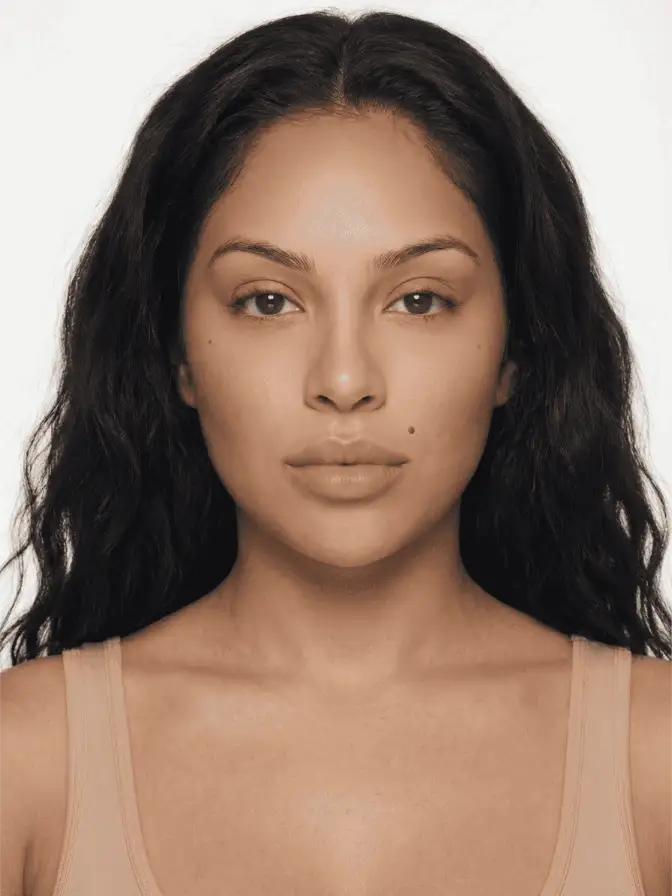
Believable beauty is, on the face, the opposite of Instagram glam. The skin is not airbrushed. The base coverage is sheer enough that pores show through the cheekbones and forehead. A flush sits on the high points of the face in a way that suggests actual blood vessels under the surface, not a flat wash of pigment. Freckles, if they exist, are visible.
The shorthand a few editors started using in 2025 is “skin that has been somewhere.” A model who has clearly walked from the car to the studio with a little wind in her hair, not one who has just been pulled out of a chemical peel. The Who What Wear writeup of the spring 2026 makeup trends, drawing on conversations with celebrity makeup artists including Vincent Oquendo and Pati Dubroff, identifies the shift as a return to “emotional, believable beauty in the form of realistically flushed color, sun-kissed skin, and redness likened to a delicate sunburn after a day spent lounging on the beach.”
That’s a specific image. It’s also a specific rejection of the technique stack that produced the previous decade’s editorial face: heavy primer, full-coverage foundation, sculpted contour, baked under-eye, cut crease, gradient lip. All of that was photographable. None of it was believable.
Why the shift, and why now
Three forces converged.
The first is fatigue. After roughly a decade of progressively heavier digital editing, both in beauty editorial and in the consumer-facing world of TikTok filters, the visual market for filtered faces saturated. People started reading filtered images as suspicious by default. The same dynamic that produced “real food” labeling on grocery shelves a decade ago has produced “real skin” as a category in beauty, with the same underlying logic: a market that has been pushed too far one direction develops an appetite for the corrective.
The second is generational. Older Gen Z and younger millennials, who grew up with the visual vocabulary of digital perfection, have become the consumer base setting the trend. Their preferences are documented in a series of Pinterest searches that have been climbing through 2024 and 2025: “freckled skin makeup,” “no foundation routine,” “skin you can see through.” The aesthetic is being pulled by exactly the demographic that has spent the most time being marketed to by filter-first beauty.
The third is technical. The base products needed to deliver this kind of finish, sheer enough to let real skin show through but still able to cover what needs to be covered, only really matured in the last few years. Skin tints like Saie Glowy Super Skin, Ilia Super Serum Skin Tint, and Westman Atelier Vital Skin Foundation Stick gave consumers a category that the previous Instagram-glam decade did not have. The visual goal could only become widespread once the products to reach it became widespread.
What’s surviving from the previous era
This is the part most “the death of glam” pieces get wrong. Believable beauty is not the end of finished makeup. It is a recalibration of where the finishing effort goes.
The technique that’s surviving is the one that adds dimension without flattening. A precise soft-glam contour carried out with cream products and blurred edges still reads as polished within a believable-skin face. So does a sharper graphic eye, if it’s paired with a base that does not compete for attention. The 2026 mood is not anti-makeup. It is anti-coverage-as-default.
What is not surviving is the part of the Instagram era that flattened individual variation. Heavy baking under the eyes; one-pigment contour applied to every face shape regardless of the underlying structure; the matte-to-the-point-of-papery base that erased pores along with everything else. Those techniques served the camera, not the wearer.
Cloud skin, the K-beauty-derived semi-matte finish that holds a slight blur without going flat, has emerged as the most-cited finish for the 2026 mood. It’s the closest match: enough finish to read polished, transparent enough to read as actual skin.
The Hailey Bieber question
Trend pieces are obligated to mention her, and there’s a reason. The “strawberry girl” image she crystallized in 2023, freckled, slightly flushed, with skin you could see the underlying texture of, was an early commercial mainstreaming of what believable beauty would become. The fact that the look was carefully constructed (her makeup artist Mary Phillips has documented the technique in detail) doesn’t undermine the read. It actually supports it. Believable beauty is not the absence of artistry. It is artistry whose visible signature is the implication that little has been done.
That’s a hard read to fake. Real freckles photograph differently from drawn-on freckles; a real beach flush sits differently from a swept-on blush. The technique that works is the one that places product where the body would have produced color on its own, in the same patterns and the same proportions. Read across high-end campaigns of the last three seasons and you can see the makeup artists who understand this versus the ones still applying a stylized version of “natural” that hasn’t quite caught up.
What this means for what to buy
The most efficient way into the mood is to remove rather than add. A sheer tinted base in place of a full-coverage foundation. A cream blush placed on the apples and the bridge of the nose. A clear or barely-tinted balm instead of an opaque lipstick. A single coat of mascara, not two. The whole effect cooperates with the no-makeup-makeup tutorial and reads as 2026 in a way the previous decade’s full glam no longer does.
For anyone who built a kit around heavy coverage products over the last decade, this is the year to add the sheer counterparts. The full-coverage formulas don’t have to go. They become specialty tools, used when the occasion actually calls for that level of finish, instead of being the default base of every face.
The longer pattern, the one beauty editorial keeps rediscovering, is that visible humanity in a face reads as expensive when the surrounding culture has spent ten years editing it out. Believable beauty is just the current name for that recurring correction. The next one is already on the way.
Continue reading
- inspiration Peter Philips: from a Mickey Mouse face to Dior Beauty The graphic-design student who painted Mickey on a model at a Raf Simons shoot went on to run the two most coveted jobs in cosmetics. A profile.
- inspiration Val Garland: The Colorist Who Rewrote the Rules From a Bristol hair salon to the first global makeup director at L'Oreal Paris, Val Garland built a career on refusing the rulebook. A profile of an editorial original.
- inspiration The End of Precision: Why 2026 Makeup Loosened Up For a decade makeup chased Instagram precision. The 2026 runways rewarded a deliberately imperfect hand instead, and that loosening says something about us.