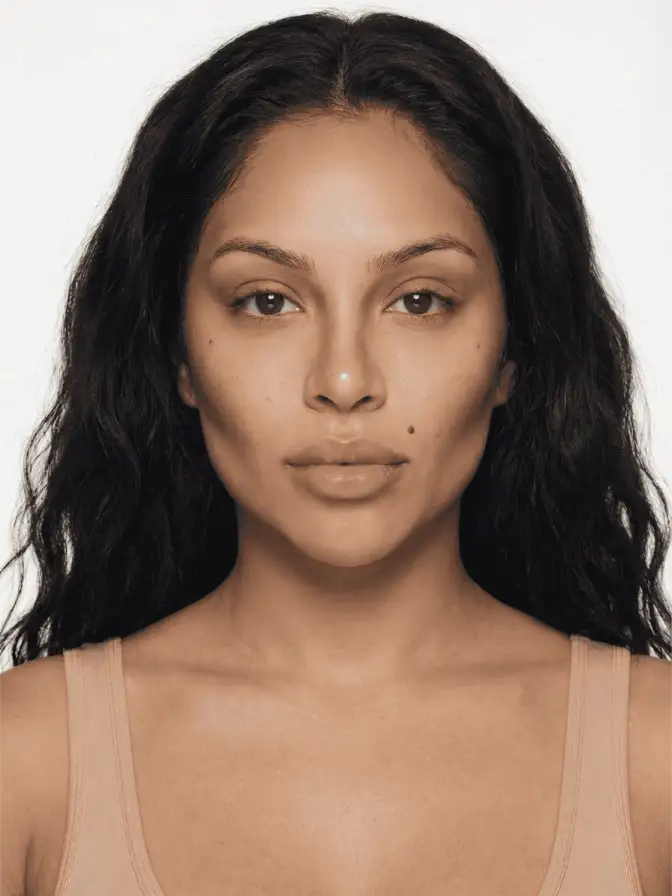
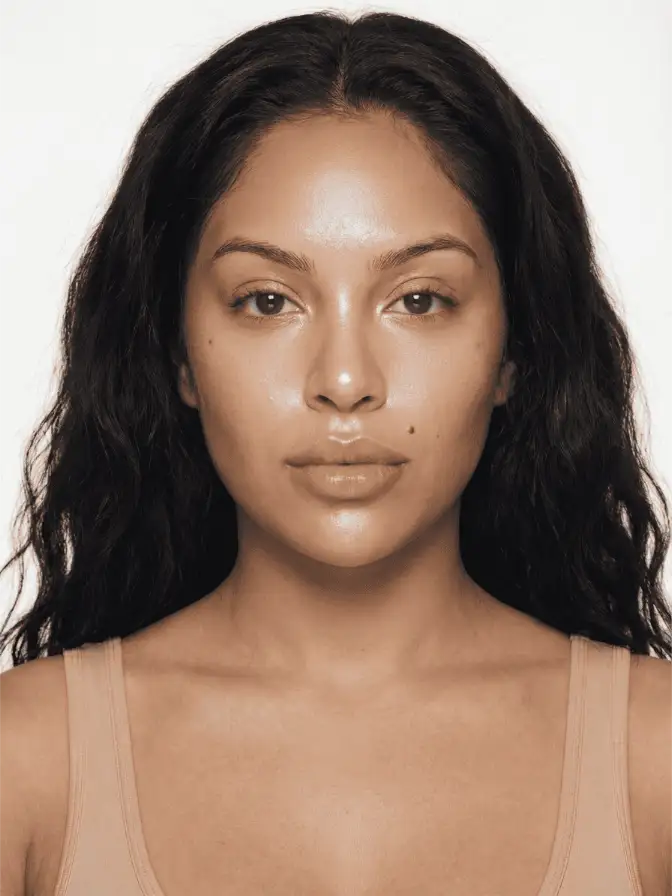
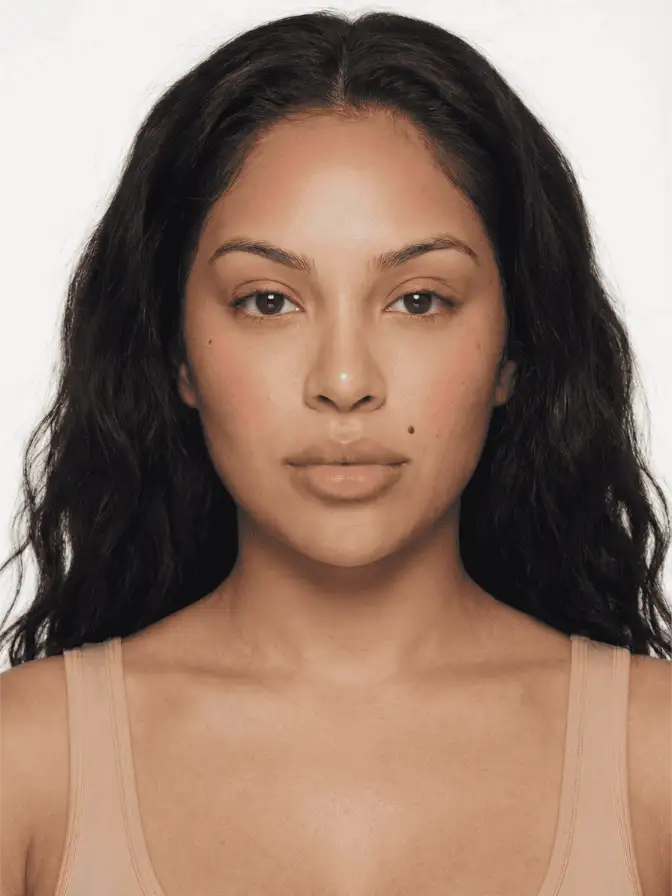
GLP-1 face: a makeup routine for the hollowed cheek
When semaglutide and tirzepatide reshape the face, the routines that used to flatter you can flatten you. A five-step rebuild for the new face.
The first time someone on a GLP-1 medication notices that their face has changed, it’s usually in a photograph. The angles look different. The cheek isn’t where it used to be. The under-eye reads a little deeper than it did at the same weight a few years earlier. By the time the change is visible, the soft tissue redistribution is already underway, and the makeup routine that worked at the old face starts working against the new one.
Plastic surgeons started calling it “Ozempic face” in 2023, and the name has stuck even though tirzepatide, the active in Mounjaro and Zepbound, produces the same redistribution pattern faster. The Dr Goldberg practice’s overview defines it accurately: rapid weight loss causes the loss of both fat and muscle in the face, with the cheek, temple, and jawline losing volume disproportionately compared to the rest of the body.
The clinical solutions are real and well established. Hyaluronic acid fillers, Sculptra series, fat grafting, all replace the volume directly. The makeup-only approach is more limited. It can’t replace volume, but it can dramatically shift how light reads on the new contours, which buys most of the visual benefit.
What’s actually happening anatomically
A healthy younger face has fat distributed across roughly five compartments around the mid-face: the nasolabial fat pad, the medial cheek fat pad, the middle cheek fat, the lateral temporal cheek fat, and the suborbicularis oculi fat under the eye. Rapid weight loss reduces all five, but reduces the medial and middle cheek compartments first and most. The lateral compartments hold on a little longer.
The visible result is a face where the cheekbone protrudes more, the temple sinks, the area under the eye deepens, and the jowls along the lower jaw can read as more pronounced even when the overall face is significantly thinner. This is why people often look “older” in the face after rapid weight loss even when their body looks younger.
The Levesque Plastic Surgery overview describes it the same way: hollowed cheeks, sagging skin where the skin has more area than the underlying tissue can fill, deeper wrinkles, and a gaunt appearance especially around the mouth. None of this is going to be replaced by a powder, but most of it can be visually softened by changing where light and shadow go.
The wrong moves
Two specific old habits actively work against a GLP-1 face. The first is standard contouring. The whole point of placing a cool shadow under the cheekbone, in the technique you’d find in any contouring tutorial, is to suggest depth under the bone, which makes the cheekbone read as higher and more sculpted. On a face that has already become more sculpted than it should be, contour pushes the look further into “drawn.” Skip it, or move the placement entirely to the jawline.
The second is heavy under-eye concealer. The bright triangle of pale concealer that became the dominant under-eye move in the 2010s was designed to mask circles by reflecting light. On a face where the under-eye is genuinely deeper, that bright triangle reads as a separate panel of color rather than as continuous skin. The face looks like it’s wearing patches. Switch to a thin, single layer of concealer matched to the cheek tone, set very lightly, and let the rest of the routine do the brightening.
A five-step rebuild
What works, in order, is a routine built around adding light to the apex points of volume rather than trying to mask the loss of it.
-
Base. Use a lighter, more luminous foundation than you would have on a fuller face. The Charlotte Tilbury Hollywood Flawless Filter and the Westman Atelier Vital Skin Foundation Stick are both formulated with enough light reflection that they smooth the perception of the surface without requiring a heavy concealer layer on top. A standard matte foundation on a hollowed face emphasizes the hollows.
-
Cream blush on the front of the apple. Take a coral or warm pink cream blush, the warmer the better, and place it as a small round patch right on the front of the apple of the cheek, not back along the cheekbone. Blend outward only slightly. The point is to give the apple roundness through color, which the eye reads as volume. The Westman Atelier Baby Cheeks in Petal and the Rare Beauty Soft Pinch Luminous Tint in Joy are the two I keep going back to.
-
Liquid highlight on the apex. A drop of liquid highlight, something that catches light wet rather than glittery, placed on the highest point of the cheekbone and a tiny bit on the chin and the bridge of the nose. The Hourglass Vanish Flash Highlighter and Rare Beauty Positive Light Liquid Luminizer both produce the kind of skin-like sheen that suggests health, not glitter. Skip standard powder highlighters; they read as ornament and don’t add the dimensional softness a liquid does.
-
Brow restoration. The face becomes more angular as the temple hollows, and a thinner over-plucked brow makes the angularity worse. A slightly fuller, slightly higher brow rebalances the face. Use a brow gel like Refy Brow Sculpt or Glossier Boy Brow to push the hair upward rather than penciling more in.
-
Lip volume in warmth. A satin lip in a slightly fuller-toned shade restores some of the perceived lower-face volume. Avoid liner that pulls the corners down; if anything, lift the corners up by a millimeter. The Tom Ford Lip Color Satin in Pussycat and the Charlotte Tilbury Pillow Talk Push Up Lashes lip ranges both have shades that pair with the warmer overall palette this routine builds.
The five steps take about ten minutes. The face that comes out is not the face you had at thirty, and it’s not pretending to be. It’s the face you have now, with the volume you do still have caught in light.
What helps outside of makeup
Khrom MedSpa’s clinical guide on Mounjaro and Ozempic face notes that the speed of weight loss is the biggest predictor of how dramatic the facial change becomes. Slower titration of the medication, when the prescribing physician will allow it, produces less abrupt facial volume loss. Strength training also preserves more facial muscle mass alongside body muscle, which holds some of the underlying support structure for the skin.
Hydration matters more than usual. The skin’s ability to retain elasticity at lower body water levels is the difference between a hollowed face that looks healthy and one that looks gaunt. The same humidity-survival rules that show up in routine guides for any strobing tutorial work apply here, with one addition: a hydrating mist throughout the day, applied over the makeup, holds the dewy finish that makes the routine work.
What this routine cannot do is replace what the medication has taken away. It can only redirect where the eye looks first. That redirection, used consistently, is usually enough to make the new face read as healthy rather than as a reminder of the change. And when it’s not enough, the clinical options are well documented and worth a conversation with a dermatologist or plastic surgeon who has experience with the GLP-1 patient population specifically.
Frequently asked
How do you make your face look fuller with makeup?
Switch the contour direction. Standard contouring places shadow under the cheekbone to suggest depth; for a hollowed face, that's the last thing you want. Instead, place a warm peach or coral cream blush across the apple and forward of the cheekbone, and use a soft luminous highlight on the high point. The eye reads volume where light catches roundness.
What blush placement is best for hollow cheeks?
Apples-forward, not cheekbone-back. The transition blush technique that dominates the runway right now is built for fuller faces and reads as concavity on hollowed ones. A round cream blush placed on the front of the apple, blended outward only slightly, gives the appearance of restored volume better than any contour can.
Continue reading
- routines The Interview Face: Five Products That Read Competent on Camera A hybrid interview means makeup that survives a flattening webcam and harsh office light. Five products, structure over coverage, matte where the camera bounces.
- routines Festival makeup that survives three days of heat A realistic kit and a sweat-proof sequence for multi-day outdoor festivals: thin cream-then-powder layering, the setting-spray sandwich, and the lash call.
- routines Makeup for Glasses, Sorted by Your Prescription Minus lenses shrink the eye, plus lenses magnify it. Two short makeup routines built around that one optical fact, with finish choices and a brow note.