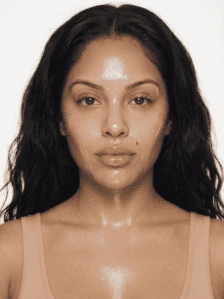
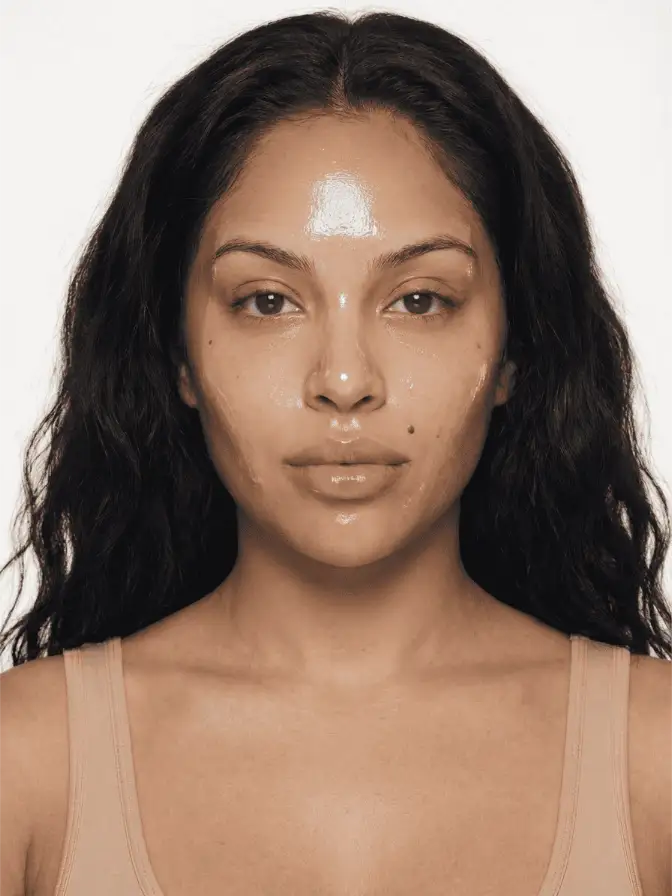
Glazed-Donut Night Prep as Tomorrow's Makeup Primer
Hailey Bieber's glazed donut routine sells itself as skincare, but its real value is the morning after. Here's how to use it as next-day base prep.
Hailey Bieber said it on the Breaking Beauty podcast in 2023, and the line has been quoted in every glazed-donut explainer since. “If I’m not getting into bed looking like a glazed doughnut, then I’m not doing the right thing.” Three years later, the routine that built Rhode into a brand worth over a billion dollars is everywhere, and there is one piece of it that nobody talks about.
The routine is sold as skincare. Its bigger value is what it does to your makeup the next morning.
I tested this for six weeks across a working spring schedule. School run at seven, full work day, dinner-out twice a week. The point of the experiment was not whether glazed-donut prep produces glowing skin on its own (it does, on most people, after about a week). The point was whether layering four products at 10pm actually saved time and made the foundation look better at 7am.
It did both, and the math is not subtle.
The four steps, the way the routine actually breaks down
Hailey’s published routine, as covered in StyleCaster’s spring 2026 update and The Tab’s deep-dive last summer, has four core stages. The Rhode-specific products are interchangeable with cheaper equivalents at every step.
Double cleanse. An oil cleanser to dissolve the day’s sunscreen and makeup, then a gentle water-based cleanser to remove the oil. Hailey uses Bioderma Sensibio H2O and the Rhode Pineapple Refresh. The cheaper substitution is DHC Deep Cleansing Oil at $30 followed by CeraVe Hydrating Cleanser at $16. The whole step takes ninety seconds if you are organized about it.
Hydrating essence. A liquid step that is wetter than a serum and thinner than a moisturizer, designed to flood the corneocyte layer with humectants. Rhode Glazing Milk at $32 is the brand version. Laneige Cream Skin Refiner at $35 is the better-established Korean equivalent, in production since 2019 and the formula the Rhode product reportedly mirrored. The Inkey List Polyglutamic Acid Serum at $15 works too.
Peptide or growth-factor serum. This is the slowest step of the routine to show results and the most easily skipped. Rhode Peptide Glazing Fluid at $35 is the obvious play. The Ordinary Multi-Peptide + HA Serum at $24 contains a similar peptide profile (Matrixyl 3000, copper tripeptide GHK-Cu) at a quarter of the price. Skipping it on a tired night is fine. Skipping it for six weeks is not, because the cumulative skin-plumping comes from this product, not the surface shine.
Occlusive seal. A facial oil, balm, or thin Aquaphor layer pressed over the top. This is the step that produces the actual glazed look. Hailey uses Rhode Peptide Glazing Fluid as a hybrid serum-occlusive, but pure squalane (The Ordinary, $9) or marula oil (Drunk Elephant Virgin Marula, $42) produces the same overnight finish. The occlusive locks the previous three layers in and prevents transepidermal water loss while you sleep.
The total time is around six minutes including the cleanse. The math is the cleanse cannot be skipped anyway, so the actual added time over a minimal routine is about three minutes.
What this does for makeup the next morning
This is the part I tested.
For two weeks I did my normal nighttime routine, which was a cleanse and one moisturizer, then logged how my foundation behaved the next day. For the following four weeks I did the full four-step glazed routine and logged the same thing.
Three things changed.
Foundation needed less product. With glazed prep the night before, my skin was visibly plumper at the surface in the morning. Pores that had been visible in the cheek area on weeks one and two were noticeably softer on weeks three through six. Two pumps of Skin Tint became one pump; three of Estée Lauder Double Wear became two. Across a tube, that adds up to about 30% longer wear.
The base set faster and stayed put longer. Hydrated skin absorbs a small amount of the foundation’s volatile carriers (the silicones and water in a Skin Tint, the alcohols in some long-wear bases) in a way that helps the pigment lay flat and bond. Foundation applied over the glazed-prep morning never settled into the nasolabial fold the way it had after the minimal routine. By midday on the no-prep weeks I had a clear “settle line” at the crease; on the glazed-prep weeks I did not.
Cream blush and highlight blended differently. This was the unexpected one. On glazed-prep mornings, cream products blended out faster and more evenly because the skin underneath was already saturated with humectants. Rare Beauty Soft Pinch tapped out in two passes instead of four. Charlotte Tilbury Hollywood Flawless Filter, applied as a luminizer along the cheekbone, blurred into the foundation rather than sitting on top.
The cumulative effect is closer to a glass skin finish over the makeup than I have ever achieved with a primer alone. The reason is mechanical: a primer sits between skincare and makeup, adding a buffer layer. Glazed prep is part of the skincare itself, which means the makeup goes onto hydrated skin directly, without a buffer that adds dimension you do not need.
The minimum version that still works
If you have thirty seconds at night, not six minutes, the routine compresses.
Cleanse with anything. Apply your hydrating essence directly to damp skin so it spreads further. Skip the serum on weeknights, keep it for Sunday and Wednesday as the longer-term play. Press a few drops of squalane or marula on top of the cheeks and forehead only. Bed.
That version takes ninety seconds. It captures about 70% of the morning-makeup benefit at the price of slower long-term plumping.
The version I land on most nights is the cleanse, the essence, and the oil. The peptide serum gets two or three nights a week, usually when I am already up late after the kids are asleep and I can put it on twenty minutes before bed.
When not to do this
Three situations.
If you have active acne, the occlusive oil at the end can trap sebum overnight and worsen breakouts within three or four nights. Drop to the cleanse and essence only, skip the oil, watch the chin for a week before reintroducing.
If you wear retinoids at night (tretinoin, Differin, Retin-A), the occlusive over the top can intensify the active and increase irritation. Apply the retinoid first, wait twenty minutes for it to absorb, then do the glazed steps. Or alternate nights, retinoid one night and glazed prep the next.
If your morning routine includes a dolphin skin wet-look finish or a balmy no makeup makeup approach, the glazed prep can tip into too-much-shine territory by 11am. For those finishes, use the cleanse-and-essence two-step at night and let the morning products carry the dewiness.
The deeper claim Hailey Bieber accidentally made, by branding her routine as “glazed donut” rather than “skin prep,” is that skincare and makeup are not separate categories any more. They are different points on a single hydration curve. The routine you do at 10pm changes what you can do at 7am. The most efficient version of that is to think of nighttime skincare as part of the next morning’s base, not as a separate ritual with its own goals.
A tube of squalane is $9. The morning savings, in foundation, blush, and time at the mirror, pay back in a week. The glazed-donut routine is sold as luxury skincare, but what it actually is, by accident, is the cheapest, most effective makeup primer most working mornings will ever see.
Frequently asked
Does the glazed donut routine cause breakouts?
It can on oilier skin if the occlusive oil traps sebum overnight. Test it on a Friday night first so you can see the result by Sunday. If you wake up with congestion around the chin and forehead after one week, swap the final oil step for a humectant-only finish like Glow Recipe Watermelon Glow Niacinamide Drops. Combination skin can usually tolerate the full routine three or four nights a week, not seven.
Can you do the glazed donut routine on oily skin?
Yes, with two adjustments. Skip the heavier facial oil at the end and use a thin layer of squalane only on the cheeks and forehead, leaving the t-zone bare. Drop the routine to twice a week. The hydration benefits show up without the overnight slick that triggers breakouts on actively oily skin.
What product gives the glazed donut shine?
The shine is the cumulative effect of three to four products, not one. The key step is the occlusive at the end: a facial oil, a balm, or a thin layer of Aquaphor sealed over hydrated skin. Hailey Bieber uses Rhode Peptide Glazing Fluid for the surface sheen, but plain marula or squalane oil at $20 produces the same finish.
Continue reading
- routines The Interview Face: Five Products That Read Competent on Camera A hybrid interview means makeup that survives a flattening webcam and harsh office light. Five products, structure over coverage, matte where the camera bounces.
- routines Festival makeup that survives three days of heat A realistic kit and a sweat-proof sequence for multi-day outdoor festivals: thin cream-then-powder layering, the setting-spray sandwich, and the lash call.
- routines Makeup for Glasses, Sorted by Your Prescription Minus lenses shrink the eye, plus lenses magnify it. Two short makeup routines built around that one optical fact, with finish choices and a brow note.