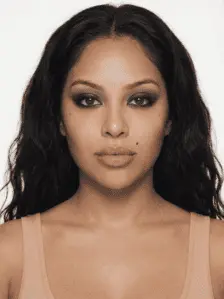
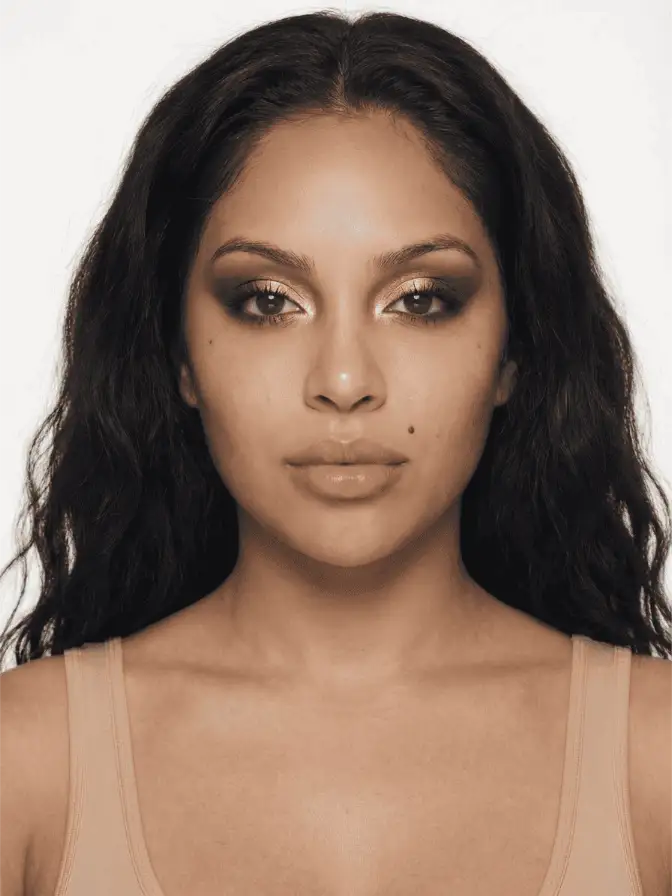
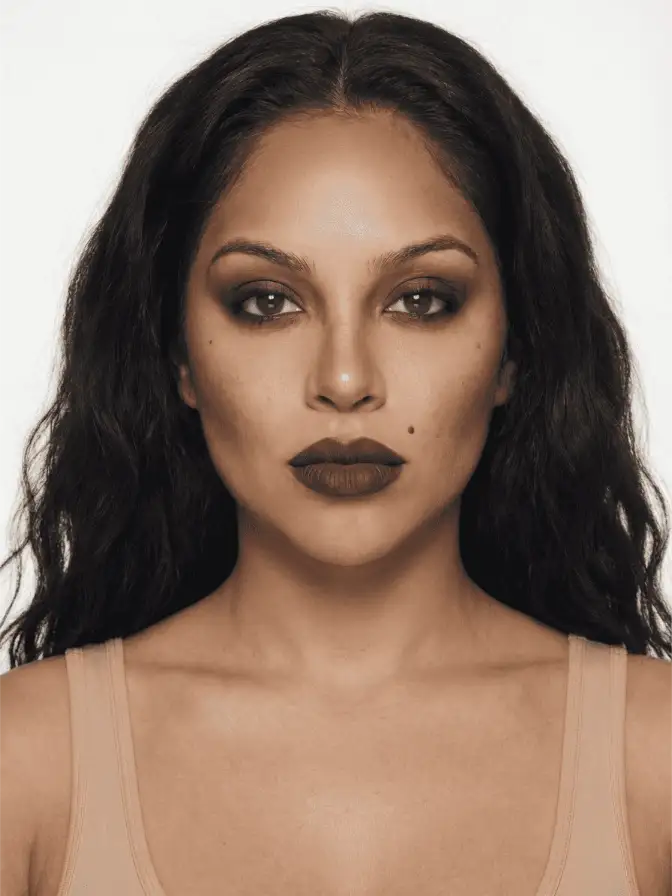
The Bronze Smoky Eye Is Quietly Replacing Black
Black-and-grey smoke is giving way to caramel, terracotta and satin bronze. Here is why the softer smoky eye reads better, and how to build one.
The smoky eye most people picture is still the one from a 2010 red carpet: black liner smudged into grey, blended until the socket disappears into shadow. Walk through the spring/summer 2026 shows and that version looks oddly dated. Backstage, the smoke turned warm. Caramel, burnt sienna, a bronze that catches light instead of swallowing it.
Elle India called caramel eye makeup “the softest, most wearable trend of 2026,” and the framing is right. The appeal isn’t a new color so much as a new amount of contrast. Black against skin is a hard edge. Warm brown sits closer to most skin tones, so the same smoky shape reads as depth rather than a dark patch you notice before you notice the face.
Why black started to look harsh
Cameras are part of the story. A black smoky eye was built for a different viewing distance, the kind of intensity that survives a step-and-repeat under hard flash. On a phone screen, in natural light, that contrast can look heavy, even a little severe. The Who What Wear roundup of fashion-month beauty described the season’s eyes as diffused and “windswept” rather than sharp, part of a wider pivot toward makeup that looks lived-in instead of laid-on.
Bronze solves the contrast problem without giving up drama. You still get a gradient from light to dark, still get the smudged, slept-in edge, but the darkest point is a rich brown rather than a void. The look holds up close, which matters when most people see your makeup through a front-facing camera before they ever see it in a room.
There’s also a warmth bias running through the whole season. The same shows pushed flushed, sun-touched skin and a general move away from cool, clinical finishes. A warm eye belongs to that mood in a way a cool grey smoky eye fights against. If you’ve already played with espresso makeup and its all-over warm-brown logic, the bronze smoky eye is that idea concentrated on the lid.
How to build it
Start with a base that holds shimmer. A thin layer of cream eyeshadow or even a touch of concealer, pressed and left slightly tacky, gives metallic pigment something to grab. Skip a heavy powder set on the lid centre; powder is what makes bronze go patchy.
Lay down the smoke first, in matte or near-matte warm brown. Caramel or tawny through the socket, then something deeper, burnt sienna or a true terracotta, worked into the outer corner and along the upper lash line. The structure here is the same one in any classic smoky eye: you’re building a gradient and softening every edge so there’s no visible line where one shade stops. The difference is purely the temperature of the browns.
Then the part that makes it 2026. Press a satin or foiled bronze onto the middle of the lid, right over the pupil, and stop. Don’t blend it out to nothing. That concentrated catch-light against the diffused brown around it is the whole effect, a bit like a halo eye but warmer and less graphic. Charlotte Tilbury’s Rock ‘n’ Kohl in Smokey Bronze is an easy shortcut for the lash line if you want one product doing the deepening and the metallic at once.
Lower lash line is optional and worth a beat of restraint. A smudge of the same caramel under the outer third keeps the eye looking finished without dragging it down. Reserve true black for one thing only, if at all: a thin smudge tight against the upper lashes for definition. Even that is skippable, and many of the backstage versions left it out entirely.
If you want shortcuts in the pan, a few warm-toned palettes do most of the gradient work for you. Natasha Denona’s Bronze palette and Pat McGrath’s Bronze Seduction quad are both built around exactly this caramel-to-terracotta-to-foil progression, so you’re not hunting for matching shades across three products. A cream bronze like the ones in many monochrome warm-eye kits can stand in for the whole look on a rushed morning, pressed on with one finger and smudged with another.
Pairing it with the rest of the face
A warm eye wants a warm, low-effort face around it. The SS26 shows that pushed bronze eyes paired them with skin that looked sun-touched rather than sculpted, the diffused, slightly windswept finish Who What Wear flagged across fashion month. That means a soft cream blush carried high on the cheek, a wash of bronzer where the sun would actually hit, and skin left dewy instead of powdered flat.
Keep the lip quiet so the eye stays the event. A nude with warm undertones, a soft terracotta, or a sheer berry all sit comfortably under a bronze eye; a bright cool red fights it. Brows should stay soft and brushed-up rather than sharply drawn, because hard, dark brows reintroduce the exact high-contrast severity the warm eye is trying to move away from. The whole face is aiming for warmth and diffusion, not definition stacked on definition.
Day, night, and the camera
The same look scales up and down by how much depth you build. For daytime, treat it as barely-there: a wash of caramel through the socket, a single tap of satin bronze on the lid centre, and that’s it. Skip the terracotta entirely. Worn this sheer it reads as warmth and a little glow rather than a full smoky eye, which is exactly what makes it wearable to an office or a lunch where a black smoke would feel like overkill.
For going out, add back the contrast you left off. Pack the terracotta or burnt sienna harder into the outer corner, take it a touch higher toward the brow bone, and switch the lid centre to a true foil rather than a soft satin so it catches light across a room. This is where a thin smudge of black tight along the upper lashes finally earns its place, anchoring all that warmth without flattening it. Deepen the lower lash line a shade more than you would by day.
One habit worth keeping: check it in your front-facing camera before you leave. Warm tones forgive a lot, and they generally photograph softer than black, but a phone screen shows you the contrast the way other people will actually see it, especially under the cool light of a video call or the harsh white of a bathroom flash. If the bronze looks muddy or the metallic has gone patchy on camera, it’s almost always because powder crept onto the lid centre, and a clean fingertip press of fresh metallic fixes it in seconds.
Who it flatters, and the easy mistakes
Warm bronze is forgiving across skin tones because it borrows from tones already in the skin. On deeper complexions, terracotta and copper read especially rich; on fair skin, tawny and soft caramel keep it from looking muddy. Brown and hazel eyes get an obvious lift from copper, but the bigger payoff is for hooded and mature eyes, where black smoke can collapse into a heavy block. Lower contrast means the shape stays legible when the eye is open.
The mistakes are predictable. Too much metallic, blended everywhere, tips into frosted rather than smoky. A bronze that leans orange can look like irritation rather than pigment, so test the shade against your skin, not against the pan. And matte-only, with no satin or foil at the centre, just reads as warm brown shadow; the light-catch is what signals that this is the new version and not a beige wash.
It’s a quieter look than the black smoky eye it’s replacing, and that’s the point. The 2026 eye is built to be seen close up, in daylight, on a screen, where softness reads as expensive and hard edges read as effort.
Frequently asked
What colors make a bronze smoky eye instead of black?
Build from warm browns rather than charcoal: caramel and tawny in the socket, burnt sienna or terracotta to deepen the outer corner, and a satin or metallic bronze pressed onto the centre of the lid. Skip true black except, optionally, a thin lash-line smudge.
Does a bronze smoky eye work on hooded eyes?
It tends to work better than black, because warm brown carries less contrast and won't read as a heavy block when the lid is partly hidden. Keep the deepest shade just above your natural crease so it stays visible with the eye open, and take the colour slightly up and out.
How do you keep a metallic bronze shadow from creasing?
Press the metallic on with a flat synthetic brush or a fingertip over a tacky cream base, and keep powder off the lid centre. A thin layer of concealer or eyeshadow primer set lightly at the inner corner stops the shimmer from sliding by midday.
Continue reading
- trends The Gray Grunge Eye: The Soft Rock-Star Smudge of Summer Black smoke went hard and dated. The gray grunge eye on this summer's runways is smudged, dewy, and cool. Here is why it works and how to wear it.
- trends Butter Yellow Eyeshadow, the Soft Neutral That Isn't Butter yellow ran the runways, then landed in TikTok makeup tutorials. It acts like a warm neutral but reads as color. Here is how to wear it by skin tone.
- trends Sunburn Blush: The Flush That Crosses the Nose The summer 2026 blush trend drags warm color across the nose and upper cheeks to fake a sun-touched flush. Here is where to place it and what holds in heat.