Snail Mucin: What the Glycoproteins Actually Do
Snail mucin reads like marketing, but the glycoproteins, allantoin, and glycolic acid in the filtrate have real chemistry. What the clinical data actually shows.
Snail mucin is the one K-beauty ingredient that has not faded since its 2010s breakout. Sales of COSRX’s 96% essence reportedly pushed past a million units a year by 2022, and the ingredient now appears in formulations from drugstore labels through to clinical brands. What’s worth asking, more than a decade in, is what the chemistry actually does and where the marketing has stretched ahead of the evidence.
What is in the filtrate
Snail secretion filtrate, abbreviated SSF on ingredient lists, is the strained mucus produced by certain land snails, typically Cornu aspersum (the brown garden snail). The filtration step is mandatory; raw mucus contains particulates that wouldn’t pass cosmetic-grade safety. What ends up in the bottle is a clear, viscous liquid containing a defined mix of bioactive molecules.
The 2024 Journal of Cosmetic Dermatology review by Singh and colleagues breaks down the contents in detail. Glycoproteins, hyaluronic acid, glycolic acid, allantoin, glycosaminoglycans, copper peptides, and small amounts of collagen and elastin. None of these individually is novel. What is somewhat unusual is the combination delivered in a single biological substrate, with the proportions roughly mirroring what the skin already uses for repair.
This is what the marketing language about “regeneration” is gesturing at, and on the chemistry side it is roughly defensible. The components do support some of the same pathways the skin uses to heal mild damage.
What each component contributes
Allantoin is the most-studied piece. It has been used in wound-care formulations since the 1930s, with consistent evidence that it accelerates cellular turnover and supports tissue repair at low concentrations. Most over-the-counter allantoin products use 0.5% to 2%; the natural concentration in snail filtrate is in a similar range. This is the ingredient that explains why a snail-mucin essence feels noticeably soothing after a strong AHA exfoliation.
Glycolic acid is the second piece. It’s an alpha-hydroxy acid, the smallest AHA molecule, and one of the most studied chemical exfoliants in skincare. The concentration in snail filtrate is low, far below the 5% to 10% you’d reach for in an exfoliating toner, so it doesn’t produce a peeling effect. What it does provide is a baseline of gentle keratolytic activity that helps explain the texture-smoothing claim that COSRX and similar brands have leaned on.
Glycoproteins are where the most chemically interesting claims live, and where the evidence base is thinnest. The 2024 review notes that certain glycoproteins identified in mucin samples appear to stimulate fibroblast activity in laboratory cell-culture studies, with corresponding increases in collagen and elastin output. Translating that to a real face under real cosmetic use is a longer leap. The split-face trial referenced in Dermatology Times saw modest density gains in the treated cheek after four weeks of twice-daily application of an 80% snail-content cream. The effect was real and measurable. It was also not the kind of dramatic transformation the marketing imagery implies.
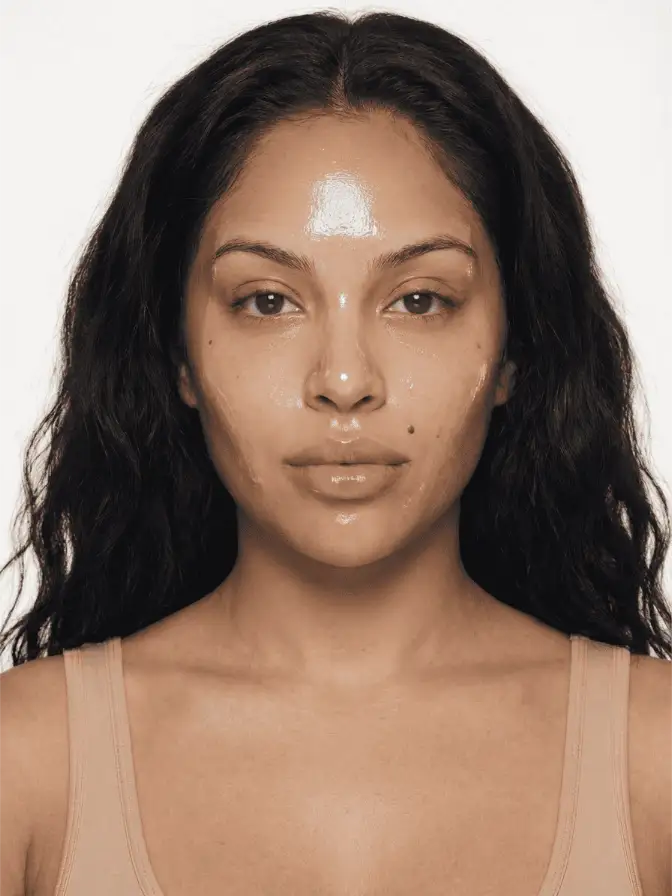
Hyaluronic acid in the filtrate, plus the lubricating mucin polymers themselves, are responsible for the immediate plump-and-glide feel. This is the visible payoff people associate with the glass skin look, and the reason snail essences pair so well into a morning routine that prizes a dewy finish.
What the clinical data shows
The most-cited human trial is the 2020 split-face study, which compared an 80% snail-mucin cream against an untreated control on the opposite side of the face. Twice-daily application across four weeks improved dermal density, elasticity, and stratum corneum moisture on the treated side. The effect sizes were modest. The trial was small. It was, however, randomized within-subject, which controls for a number of confounders that uncontrolled studies miss.
The 2024 review pulled together the available human and animal studies and reached a fair conclusion: the evidence is consistent in showing modest improvements in barrier function, hydration, and superficial elasticity, with weaker evidence for the deeper anti-aging claims that some marketing language attaches. The review noted that most studies are small, and that long-term data beyond eight to twelve weeks is essentially absent.
There is no peer-reviewed evidence that snail mucin meaningfully treats hyperpigmentation, scarring, or active acne, despite social-media claims to the contrary. It can soothe a barrier-compromised face and add hydration. It cannot lighten a stubborn dark spot.
How to use it productively
The most useful place for snail mucin in a routine is the layer after a chemical exfoliant or a retinol step. The barrier support buys back some of what those treatments take out. People building toward a dolphin-skin finish often use it as the second-to-last layer before sunscreen, because the slight tackiness of the filtrate helps the skin hold light reflective particles.
For a clean-girl morning routine where the goal is sheer skin under minimal makeup, a snail essence layered between toner and moisturizer adds the bounce that makes a no-makeup-makeup finish look hydrated rather than thin. This is closer to what Allure’s various essence reviews describe as a “filter on the skin.” The effect is mechanical, the light just bounces off a more hydrated surface, but the result reads as expensive.
Concentration matters less than the marketing claims. A 92% essence will not meaningfully outperform a 96% one in either trial data or anecdotal reporting. What does matter is the rest of the formulation: a snail essence supplemented with niacinamide, additional hyaluronic acid, or peptides will outperform a higher-concentration essence with nothing else in the bottle.
What the chemistry can’t do
The same fairness that recognizes the genuine modest benefits of snail mucin requires the honesty that the ingredient is not a retinoid, a sunscreen, or an AHA at active concentration. People asking whether they can replace their retinol with snail mucin (a question that surfaces on r/AsianBeauty roughly twice a month) should be told no. The categories solve different problems. Snail mucin sits in the same shelf as hyaluronic acid serums and niacinamide essences: useful, gentle, real but bounded.
The 2024 review’s closing line is the right register for the ingredient overall. The data supports continued use in hydration and barrier-support formulations, with skepticism warranted for any claim that puts the ingredient on a level with established actives. Twelve years after the COSRX essence broke into mainstream rotation, that’s roughly where the evidence sits, and it is a more interesting place than either the unconditional enthusiasm or the dismissive cynicism allow.
Frequently asked
Does snail mucin actually do anything?
Yes, but modestly. A 2020 split-face trial of 80% snail filtrate cream showed improvement in skin elasticity and moisture retention over four weeks. The 2024 review in the Journal of Cosmetic Dermatology calls the evidence base 'limited but consistent.' Expect a hydration and barrier nudge, not a retinol-level result.
Is snail mucin safe for sensitive skin?
Generally yes. Allantoin, one of the main components, is a long-established skin soother used in wound-care formulations. The filtrate is typically well tolerated. People with shellfish or mollusk allergies should patch test first, and people with active fungal acne sometimes find the formulation occlusive enough to flare.
Can you use snail mucin with retinol?
Yes, and the combination is one of the few cases where layering is recommended rather than tolerated. The hydration and barrier support from the filtrate mitigates the dryness and irritation retinol can cause. Most dermatologists who have written on the pairing suggest snail mucin first, then a brief wait, then retinol.
Is the 96% snail mucin essence the highest concentration available?
Practically, yes. COSRX Advanced Snail 96 Mucin Power Essence sets the marketed ceiling, though some Korean brands have launched 92% to 95% formulations. The exact concentration above roughly 90% does not produce meaningfully different outcomes in published data.
Continue reading
- product-science Acetyl Zingerone: The Ginger Antioxidant That Works After Sundown Acetyl zingerone keeps blocking UV-triggered DNA damage in skin cells for hours after the sun sets. Here is what the antioxidant data actually shows.
- product-science Ergothioneine: the mushroom antioxidant with real data Ergothioneine rides a dedicated transporter into skin cells that vitamin C cannot reach. A look at the mechanism, the clinical data, and the longevity hype.
- product-science Kojic Acid for Hyperpigmentation: How Copper Chelation Works Kojic acid blocks pigment by starving tyrosinase of its copper cofactor, a different route from arbutin or vitamin C. Here is the evidence, the dose, the catch.