Polyhydroxy acids: the gentle cousin of glycolic
PHAs (gluconolactone, lactobionic acid) exfoliate without the AHA sting. Larger molecules slow the burn. Here's the chemistry and which serums actually deliver.
The chemical exfoliant aisle has the same problem every other beauty category has: the strongest option is the most popular option, even when it isn’t the right one for most of the people buying it. Glycolic acid sells in volumes that have nothing to do with whether glycolic acid is the molecule that should be on a given face.
Polyhydroxy acids are the molecule most people probably should be using and almost no one talks about. They were first developed for sensitive skin in the late 1990s, sold mostly through dermatologist offices for the first decade, and only crossed into mainstream skincare around 2018 when The Ordinary launched a low-cost gluconolactone serum at $7. Since then they’ve quietly become the standard recommendation for anyone with rosacea, eczema, or a history of barrier disruption.
According to Michelle Wong at Lab Muffin Beauty Science, who has written one of the better breakdowns of the category, PHAs work on the same principle as alpha hydroxy acids (the family that includes glycolic and lactic acid) but with a structural twist that changes everything about how the skin tolerates them.
What a PHA actually is
A polyhydroxy acid is just an acid with multiple hydroxyl groups hanging off the molecule. The three you’ll see on ingredient lists are gluconolactone, lactobionic acid, and galactose. Gluconolactone is the most common; lactobionic acid is the heaviest of the three; galactose is rarer and mostly used in higher-end formulations.
The key difference from a standard AHA is molecular weight. Glycolic acid weighs about 76 grams per mole. Gluconolactone weighs around 178. Lactobionic acid is 358, almost five times the size of glycolic. That weight is what changes the behavior.
A small molecule like glycolic acid pushes through the stratum corneum quickly. It reaches the deeper layers within minutes of application, which is why it works fast and why it stings, flushes, and causes the heat sensation that anyone who’s tried a 10% glycolic toner remembers. A larger molecule like lactobionic acid simply doesn’t fit through the same gaps as easily. It exfoliates only the outermost dead skin cells and stops there.
This sounds like a downside if you’re chasing the dramatic before-and-after photos that AHA brands love to show. For most skin, most of the time, it isn’t. The risk-to-benefit ratio shifts in the user’s favor: you get the exfoliation, you don’t get the irritation, and the cumulative effect over months is comparable to a low-percentage AHA without the breakdown periods most users experience starting out.
The humectant bonus
The other thing PHAs do that AHAs don’t is hold water at the skin surface. The extra hydroxyl groups on a PHA molecule act as humectants, pulling moisture from the surrounding environment and keeping it bound in the upper layers of the skin. Gluconolactone specifically has been shown in laboratory studies (the original NeoStrata research, since replicated) to behave like a mild hyaluronic acid in this respect.
This means a PHA serum often feels hydrating in the way that an AHA serum doesn’t. You can put it on dry, slightly inflamed skin and have the skin look better immediately, not in the eight-week timeline of conventional acid use. The category is genuinely friendlier to compromised barriers.
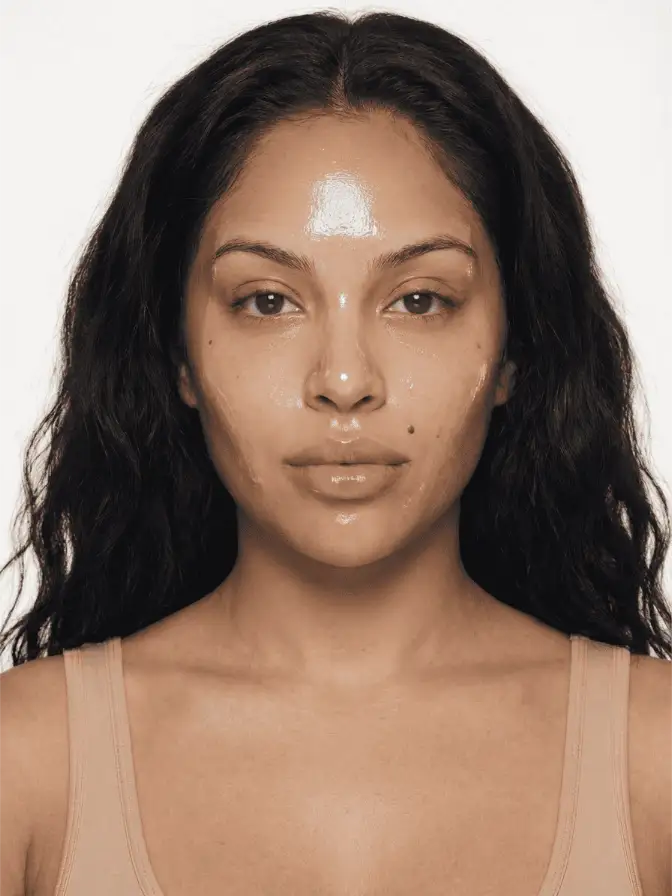
It also means PHAs play nicely with the kind of dewy minimal-makeup base that has dominated the last three years. The skin texture you’re going for in a glass skin or clean girl routine, smooth and reflective, is closer to what PHAs produce than what a strong AHA produces (the post-AHA skin often looks slightly raw for a day or two).
The serums worth buying
Most of the marketing budget in this category goes to glycolic and lactic products, so finding a real PHA serum requires reading the bottle. A handful of well-formulated options:
The Ordinary Lactic Acid 5% + HA technically isn’t a PHA serum, but the same brand’s lactobionic-based formulas (which appear under the brand’s NeoStrata sister line) are the budget benchmark. NeoStrata Bionic Face Serum, around $76 for 30 ml, contains 10% gluconolactone plus 4% lactobionic acid and is the most-cited PHA-only formula. It is what most dermatologists hand to rosacea patients.
INKEY List PHA Toner is the entry-level option, $11, primarily gluconolactone with niacinamide. Mild enough to use daily, light enough to layer under almost anything.
Naturium PHA Topical Acid 12% is the more aggressive American option, $20, designed to push closer to AHA-level effect while still maintaining the larger molecule profile. Best on people with resilient skin who specifically want exfoliation without the glycolic burn.
Avoid anything labelled “PHA” that doesn’t list gluconolactone, lactobionic acid, or galactose in the top half of the ingredient deck. Some brands fold trace PHAs into a primarily glycolic formula and market the result as gentle. The math on a glycolic-dominated serum with 0.1% gluconolactone is the same as a glycolic serum.
When to switch
The honest signal that PHAs are worth a try: any combination of (a) flushing with current acids, (b) visible dryness or flaking after exfoliation, (c) rosacea, perioral dermatitis, or any diagnosed barrier condition, or (d) ongoing use of retinoids, where adding an AHA on top often produces more irritation than benefit. Allure’s October 2024 ingredient breakdown noted that the dermatologist roster they polled overwhelmingly recommended PHAs for first-time chemical exfoliant users, on the logic that there is almost no downside to starting gentle and stepping up if needed.
The other case is the no-makeup makeup reader: anyone whose makeup is light enough that skin texture is doing most of the visual work. PHA-conditioned skin photographs and reads on camera differently than skin treated with stronger acids; the surface looks softer rather than polished.
What PHAs won’t do
This part doesn’t get said often enough. PHAs are not a replacement for retinoids if you’re treating actual photoaging, deep texture, or post-acne marks. They’re a maintenance and gentle-exfoliation tool. The molecular-weight property that makes them tolerable also means they aren’t reaching the cell layers where retinoid signaling happens.
If your goal is reversing visible sun damage, a prescription tretinoin (or its over-the-counter cousin, adapalene) is the actual answer, with PHAs as the supplementary buffer that keeps the barrier intact through the retinoid adjustment period. This is how most dermatologist routines now sequence the two: retinoid at night for the cellular work, PHA serum a few mornings a week for the surface smoothing, and SPF over both.
That stack is the modern standard. PHAs are the boring part of it, which is precisely why they tend to outlast the trend cycle that always seems to be chasing the next stronger acid.
Frequently asked
Are PHAs safe for rosacea or eczema?
Generally yes, more so than glycolic or lactic acid. The larger molecular size slows penetration into the stratum corneum, which means less of the heat and stinging that flares rosacea. A patch test is still smart on compromised skin, but PHAs are the chemical exfoliant dermatologists most often recommend to patients who can't tolerate AHAs.
Can you use PHAs with retinol?
Yes, with a gap. Apply PHA first, let it absorb for about ten minutes, then retinol. The pH conflict that causes problems with vitamin C and retinol doesn't apply here because PHA serums are usually formulated at a milder pH around 4.0 to 5.0. Some dermatologists prefer alternating nights to avoid any cumulative irritation.
Do polyhydroxy acids cause sun sensitivity like AHAs?
Less so. AHAs thin the stratum corneum measurably and increase UV penetration. PHAs exfoliate more shallowly and the larger molecules don't reach the basal layer as readily. Daily SPF is still essential because any exfoliation removes some of the skin's natural UV filter, but the photo-sensitivity bump is smaller.
Continue reading
- product-science Acetyl Zingerone: The Ginger Antioxidant That Works After Sundown Acetyl zingerone keeps blocking UV-triggered DNA damage in skin cells for hours after the sun sets. Here is what the antioxidant data actually shows.
- product-science Ergothioneine: the mushroom antioxidant with real data Ergothioneine rides a dedicated transporter into skin cells that vitamin C cannot reach. A look at the mechanism, the clinical data, and the longevity hype.
- product-science Kojic Acid for Hyperpigmentation: How Copper Chelation Works Kojic acid blocks pigment by starving tyrosinase of its copper cofactor, a different route from arbutin or vitamin C. Here is the evidence, the dose, the catch.