Red Lipstick: A Five-Thousand-Year History
Red lipstick has been crushed gemstone, mercury sulfide, fish-scale shimmer, and lead. The 5,000-year story is mostly about pigment chemistry, and luck.
In 1991 the British Museum’s antiquities department dated a small lump of red mineral pigment from a Sumerian tomb in southern Iraq to roughly 3,500 BCE. It looked like dried lipstick because it more or less was. The earliest evidence for lip colour predates writing. Before any Mesopotamian scribe pressed cuneiform into clay, someone in Ur was crushing gemstone dust into a paste and rubbing it onto her mouth.
The story since then is longer than makeup pretends. Across five thousand years, the colour red has been carried onto lips by minerals, plants, insects, fish, and at least one mineral that should not have been carrying anything anywhere near a human body.
Mesopotamia, Egypt, and the cinnabar problem
Sumerian women, according to the Historians’ Magazine, used a mix of crushed precious stones and white lead. Egyptian formulas got more sophisticated. Cleopatra’s much-photographed reds, the colours that ended up on the cosmetic palettes excavated from Ptolemaic tombs, were made from carmine (the pigment derived from cochineal, a scale insect), red ochre, and a now-infamous mineral called cinnabar.
Cinnabar is mercury sulfide. The Egyptians used it because it was the most vivid pure red they could grind. They had no idea that long-term mercury exposure damages the kidneys and the central nervous system. Roman recipes (the dye known as fucus, mixed with rose petals and wine sediment) used the same mineral. So did the Tang Dynasty. Cinnabar was the dominant red lipstick pigment in China from roughly the 2nd century BCE through the 10th century CE, applied as a paste called kou zhi by court women whose lips, the records suggest, were occasionally trembling for reasons no one then understood.
The chemistry is straightforward. Mercury sulfide is bright red and stable, which made it the perfect pigment, except for the mercury part. Modern lip formulas use synthetic iron oxides for the same warm reds. Iron oxides are not pleasant to ingest in any quantity, but none of them are mercury.
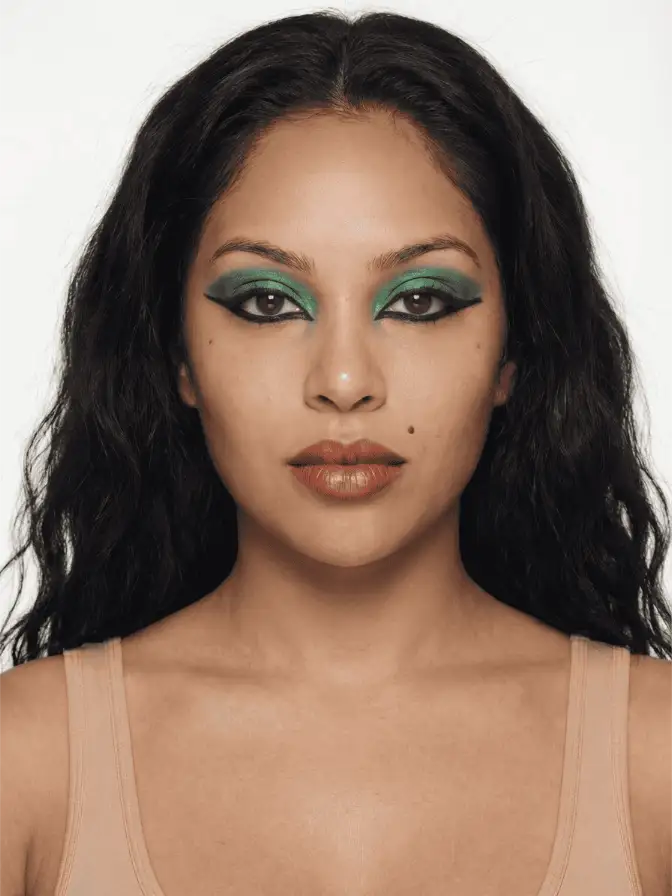
For context, the lined-eye-and-stained-lip face that defined this era is reconstructed in the ancient Egyptian tutorial on slaye, with the actual pigment substitutions modern formulators use to recreate the historic look without the toxicity.
The age of plants and bugs
Once you knew not to put metal on your mouth, you used what was alive. Carmine, the cochineal-insect dye, became the dominant red across the medieval and Renaissance Mediterranean. It still is, technically. Check the ingredient label of any deep red lipstick that lists CI 75470 and you are reading the formal name for crushed cochineal.
The cosmetic value of the bug was so high that Spanish ships transported tonnes of dried cochineal back from the New World in the 16th century. For a brief stretch, carmine was Spain’s second-most-valuable colonial export after silver. Plant reds did the work in places without easy carmine access. Henna in North Africa and the Levant. Madder root across Europe. Brazilwood across the Mediterranean trade routes.
The lead-and-vermilion centuries
Europe lost its way around the early modern period. Elizabethan court ladies, painting in white lead foundation and red vermilion lip rouge (vermilion being a refined synthetic version of, yes, cinnabar), were essentially poisoning themselves on two fronts. The Abbey St. Clare archive of historical lip colour formulas notes that mercury-derived reds remained common in European cosmetics through the 1850s. Warnings about toxicity began appearing in medical literature in the 1860s. Most fashionable women ignored them for another forty years.
The first commercial lipstick in something resembling a modern tube was Guerlain’s Ne M’Oubliez Pas, sold in 1870 in a paper container. It still used carmine and beeswax. Maurice Levy’s metal swivel-up tube, patented in 1915, is the design every lipstick on a counter today descends from. By then the pigments had finally gone synthetic and largely safe: iron oxides, lakes of FD&C dyes, and eosin (a bromine-based stain that gave the early 20th-century stainable red lipstick its tenacious quality).
The flapper, the pin-up, and what changed underneath
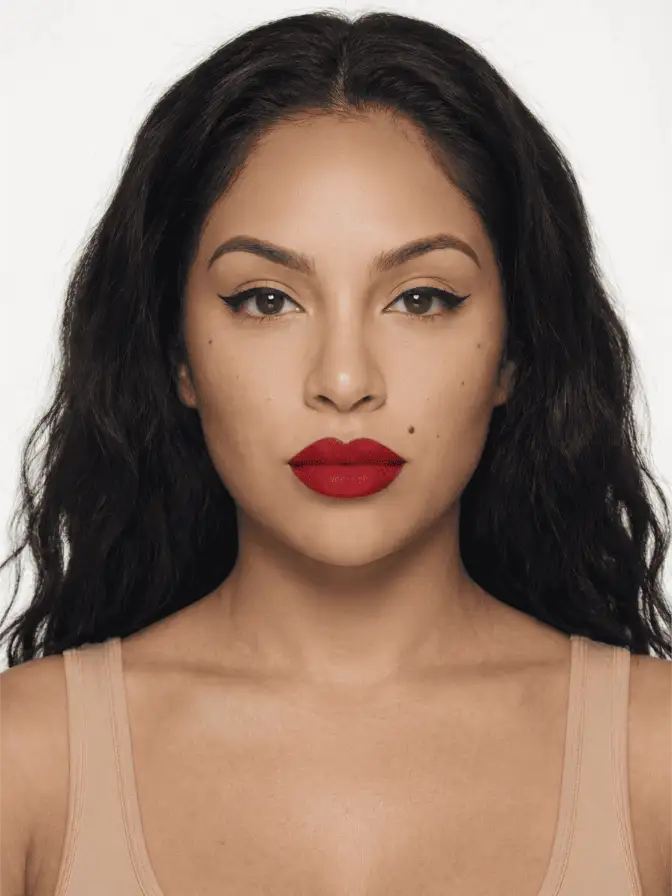
Visually, the most dramatic chapters in lipstick history are the cinematic ones. The cupid’s-bow mouth of a 1920s flapper, the engineered red O of a 1950s pin-up: looks documented respectively in the 1920s flapper tutorial and the 1950s pin-up tutorial. Underneath the visual change, what really shifted was the chemistry.
By the 1920s, lipstick formulas had moved decisively to iron oxide pigments suspended in a wax-and-oil base. Max Factor, working in Hollywood in the 1920s, developed long-wear lip pigments that didn’t transfer onto early film stock. Helena Rubinstein and Elizabeth Arden’s 1930s formulas added castor oil for slip and titanium dioxide as a brightener. The post-war pin-up red was usually a dye-based stain layered under a wax-based pigment, which is why those photographs show such saturated colour. Two layers, two chemistries, doing different jobs.
This is also the era when the warm-red versus blue-red argument got coded into popular culture. Marilyn Monroe wore a blue-undertoned red, often a custom blend by Allan Snyder using Max Factor pigments. Rita Hayworth wore an orange-leaning warm red. The argument about which one suited which complexion that has occupied beauty editors for seventy years is, in pigment-chemistry terms, an argument about the ratio of red iron oxide to yellow iron oxide.
The 21st-century retreat from animal pigment
The most recent twist in the story is the slow exit of carmine from clean-beauty formulas. Bugs are not vegan, and brands like Kosas, Ilia, and Axiology have been reformulating their reds with synthetic carmine alternatives (mostly synthetic dyes and modified iron oxides) since around 2018. The colour gets harder to nail without cochineal; very few synthetic reds have the same warm, blue-undertoned depth. Several formulators have written publicly that a true cochineal red can’t be precisely reproduced, only approximated.
Mica, the shimmer that gave 1950s lipsticks their pearlescent quality, has its own modern reckoning. Most cosmetic mica was for years sourced from mines in Jharkhand, India, with documented child-labour issues. Synthetic fluorphlogopite (synthetic mica) has been replacing it in major brands since 2017.
So the technology that’s now five millennia in is still iterating. The first lipstick was crushed mineral on a Sumerian mouth. The most recent batch shipped from a clean-beauty warehouse in 2026 is a bioidentical synthetic dye in a vegan wax base over a synthetic mica shimmer. The colour, somehow, is still red.
The continuity is the part that’s actually surprising. Across dynasties and empires and chemistries and trade collapses, the impulse to put a saturated warm pigment on a mouth has not weakened. The mineral changes. The bug changes. The lip is the same.
Continue reading
- history Egyptian Blue: The First Synthetic Pigment and the Glow It Hid Egypt manufactured a blue pigment 5,000 years ago, then the recipe vanished for a millennium. The strangest part is the glow nobody could see until 2009.
- history Cochineal: the bug that colored your red lipstick The deep red in carmine lipstick comes from a cactus insect the Aztecs taxed and Spain guarded for 250 years. How carminic acid reached your lip bullet.
- history Huadian: The Tang Dynasty Flowers Women Wore on the Forehead Huadian were the painted forehead flowers of Tang dynasty China, born from a princess and a plum blossom. The story runs from gold leaf to dragonfly wings.