Climate-Adaptive Makeup: The Skincare Hybrid Going Mainstream
Beauty's newest category claims products that read your skin's temperature and adjust. Here is what is real in the formula and what is marketing.
The phrase started showing up in press releases in late 2024 and felt like the usual industry word salad. Eighteen months later it is one of the few trend categories the analyst firms actually agree on. Trend Hunter’s protrend tracker has it as a primary 2026 theme, and InsightAce projects the climate-responsive beauty market to grow at roughly 25 percent a year through 2034. Whatever else “climate-adaptive” means, it is now a line on retail planograms.
What it means in the formula, though, is narrower than what it means in the campaign.
The chemistry behind the phrase
A truly climate-adaptive product needs at least one ingredient whose behavior changes with an environmental signal. There are three main approaches, and most products use just one of them.
Thermo-responsive polymers are the most genuinely smart category. The Aoverll seasonal-skincare lab writeup describes how certain polymer networks tighten or loosen depending on skin-surface temperature, which in a cream translates to a thicker, more occlusive layer when you walk outside in February and a lighter one when you sit in a warm room. Gattefossé has been quietly licensing this kind of technology to mass and prestige brands for several seasons. It does work, and you can feel the difference in cream consistency between a cold bathroom and a warmed-up face.
Humidity-reactive humectant systems are the next tier. The Ethos rundown on the trend explains the mechanism plainly: glycerin and hyaluronic acid pull water from the air when there is water to pull, and from the deeper skin when there isn’t. The “adaptive” framing here is mostly correct, but the chemistry is not new; what’s new is the formulator being honest that on a dry winter day a heavy humectant load can actually make skin worse. Newer formulas pair humectants with emollients (squalane, shea, ceramides) so that when the air dries out, the formula’s reservoir does the work instead of your stratum corneum.
Encapsulated actives are the third route, and the one most prone to overclaiming. The pitch is that microcapsules hold an ingredient (a vitamin C derivative, a peptide) and release it when skin reaches a certain temperature or pH. Some of this is real, especially in K-beauty cushion compacts; some of it is closer to a slow-release time-capsule than anything truly “reactive.” The Qogita 2026 TikTok-trends piece notes that K-beauty has been quietly running the experiment on this for several years, which is why Korean brands tend to have more credible climate-adaptive claims than Western ones.
What category it shows up in first
Primers were the entry point. They have always been a sensory category (does the makeup feel like it sits better?) more than a measurable one, and “climate-adaptive primer” is an easy reformulation: add a humectant blend, add a thermo-responsive polymer, redo the packaging. Tower 28, Milk Makeup, and a long tail of indie brands moved here first.
Foundations and tinted moisturizers followed, and this is where the trend started to mean something. A foundation that grips more in humid heat and loosens in dry cold actually solves a problem that powder reapplications were solving badly. Tower 28’s SunnyDays is the most-cited example; Saie’s Glowy Super Gel sits next to it on the same shelf with similar claims. Sulwhasoo’s Perfecting Cushion EX has been doing this in Asia for a decade and is finally getting credit for it Stateside.
Blush and color products are the trend’s third wave, and the most marketing-heavy. A “temperature-reactive” cream blush that goes from soft pink to flushed coral on warm skin is, almost always, a thermochromic pigment trick that was a Lush gimmick in 2012 dressed up in serious language. There are real exceptions, but reach for the ingredient list first.
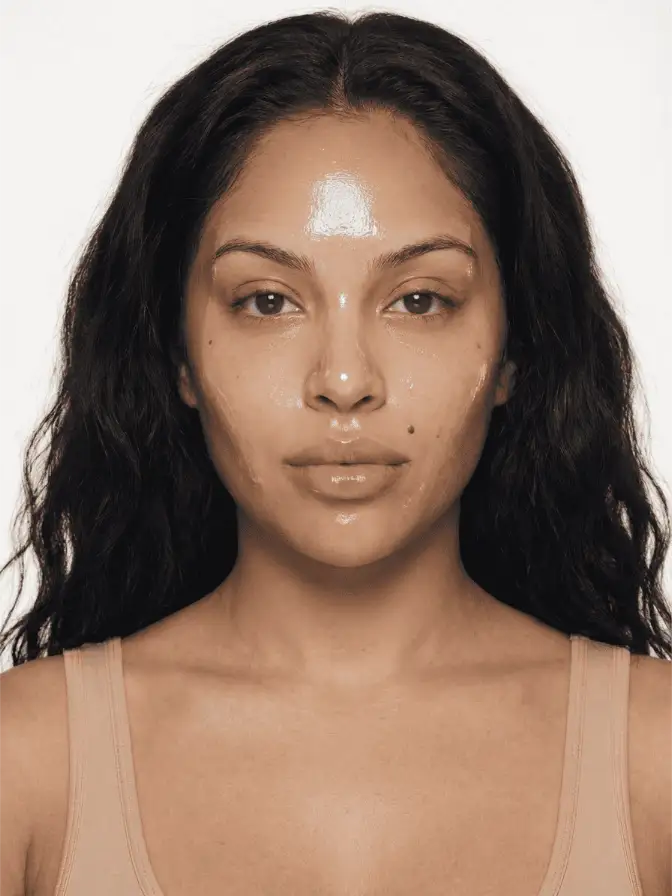
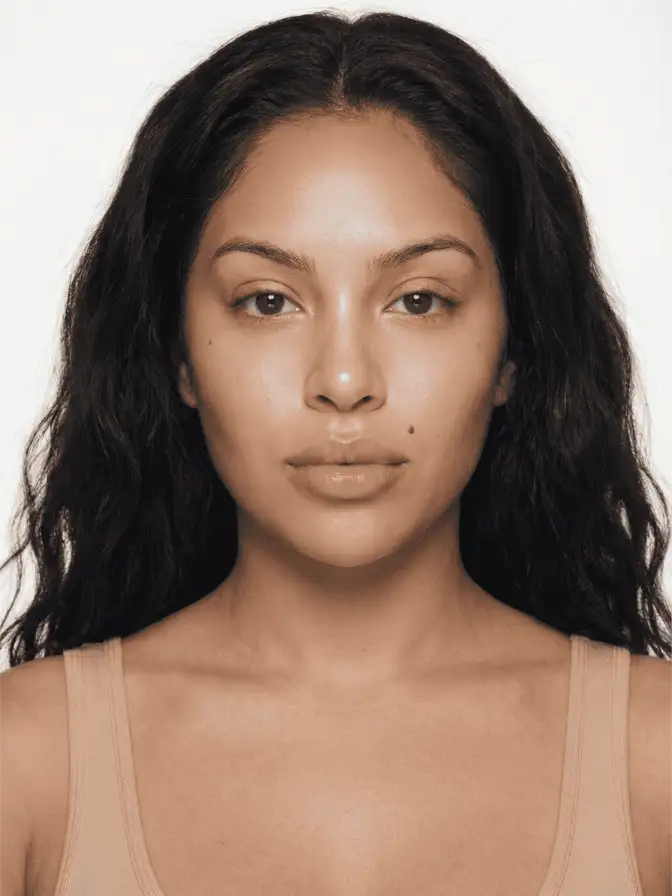
If your routine leans toward dolphin skin or any of the dewy-finish looks where the skin itself is the event, the climate-adaptive category genuinely overlaps. A primer or foundation that holds onto the dew in dry air is doing the same job a glass skin routine asks for, without you reapplying mid-afternoon.
Why now, not five years ago
The boring answer is that the formulation tools matured. Gattefossé’s catalog of thermo-responsive raw materials wasn’t open to most indie brands a decade ago, and humidity-reactive humectant systems came out of food-science labs (think hygroscopic spray-drying for instant coffee) before they showed up in skincare. The less boring answer is that consumer behavior changed.
InsightAce’s report flags two numbers that explain the rest. Fifty-seven percent of beauty consumers now say they will pay more for products that protect against environmental damage. Roughly half say pollution and pollen have changed what they buy. Both numbers spiked after the 2023 wildfire summer in North America and the matching air-quality crises in Seoul and Delhi. A product that promises to deal with climate is no longer a niche eco-pitch; it is a baseline ask.
There is also a TikTok feedback loop. The Qogita roundup of viral 2026 trends puts climate-adaptive beauty alongside skin-health-as-makeup and K-beauty’s high-tech ingredient wave, all of which share the same logic: makeup that does something measurable, not just makeup that looks like something. The under-30 buyer who grew up watching dermatologists explain ingredients on her phone wants the same vocabulary in her foundation aisle.
The honest buyer’s filter
Three questions cut through most of the marketing.
First, does the ingredient list back the claim? A primer marketed as “climate-adaptive” should at minimum have a meaningful humectant blend (glycerin near the top, not the bottom) and either an emollient backbone or a polymer like polyglyceryl-derivatives that can behave differently across temperatures. If the actives are buried below the fragrance, you are buying a sticker.
Second, where do you actually live? The trend exists for a reason: people whose commutes take them through 95-percent humidity in the morning and air-conditioned 22-degree offices by lunch genuinely need different makeup behavior than people in steady mediterranean weather. If you are in a stable climate and your current foundation already lasts your day, the upgrade is mostly cosmetic.
Third, does it photograph the way you want? This is where pearl skin and the broader luminous-finish trends matter. Climate-adaptive bases tend to skew dewy because the technologies are easier in a hydrated, emollient formula than in a dry powder. If your aesthetic is genuinely matte, this category will frustrate you, and a great traditional matte foundation plus a finishing powder is still the right move.
Where this goes next
The category will fork. The genuinely technical end (thermo-responsive polymers, encapsulated actives) will keep climbing prestige and price; the looser interpretation (any product with glycerin and a story) will commoditize at the drugstore. Expect Maybelline’s first explicitly climate-adaptive launch by late 2026, and expect it to be a perfectly fine humectant-heavy primer with a hangtag that overpromises.
The more interesting branch is application. Brands are already piloting AI-driven climate readouts in their apps, where you input your city and your skin and the algorithm tells you which of their products to use that week. Some of this is going to be useful and some is going to be a recommendation engine for whatever they need to move off the shelf. The Ethos coverage of the redesign-for-a-hotter-world thesis treats this as inevitable, which it probably is.
For the next year, treat climate-adaptive as a real but narrow category. The science is honest in primers and foundations from the brands that actually invest in it, and the science is mostly absent from the color products that have rushed to use the phrase. Read the ingredient deck, match it to where you live, and don’t pay a premium for a problem the air conditioner already solved.
Frequently asked
What does climate-adaptive makeup actually mean?
It means the formula contains at least one ingredient designed to behave differently depending on temperature, humidity, or skin moisture. In practice that is usually a thermo-responsive polymer, a humectant blend that swells with ambient humidity, or an encapsulated active that releases when skin warms past a threshold. The marketing claim is broader than what most products deliver.
Are climate-responsive primers worth the money?
If you are choosing between two similarly priced primers and you live somewhere with extreme summer humidity or dry winter heat, the climate-adaptive version is a defensible upgrade. If you live in a steady climate and already have a primer that holds your makeup, you are paying for a problem you don't have.
Which brands make climate-adaptive foundation right now?
Tower 28's SunnyDays SPF Tinted Sunscreen leans on a humectant blend tuned for marine air, Saie's Glowy Super Gel uses a hydration-reactive gel network, and several K-beauty cushion compacts (Hera, Sulwhasoo) market temperature-responsive coverage. Most so-called climate-adaptive foundations are reformulations of existing bases rather than new chemistry.
Continue reading
- trends The Gray Grunge Eye: The Soft Rock-Star Smudge of Summer Black smoke went hard and dated. The gray grunge eye on this summer's runways is smudged, dewy, and cool. Here is why it works and how to wear it.
- trends Butter Yellow Eyeshadow, the Soft Neutral That Isn't Butter yellow ran the runways, then landed in TikTok makeup tutorials. It acts like a warm neutral but reads as color. Here is how to wear it by skin tone.
- trends Sunburn Blush: The Flush That Crosses the Nose The summer 2026 blush trend drags warm color across the nose and upper cheeks to fake a sun-touched flush. Here is where to place it and what holds in heat.