Creative & Theatrical
Kabuki
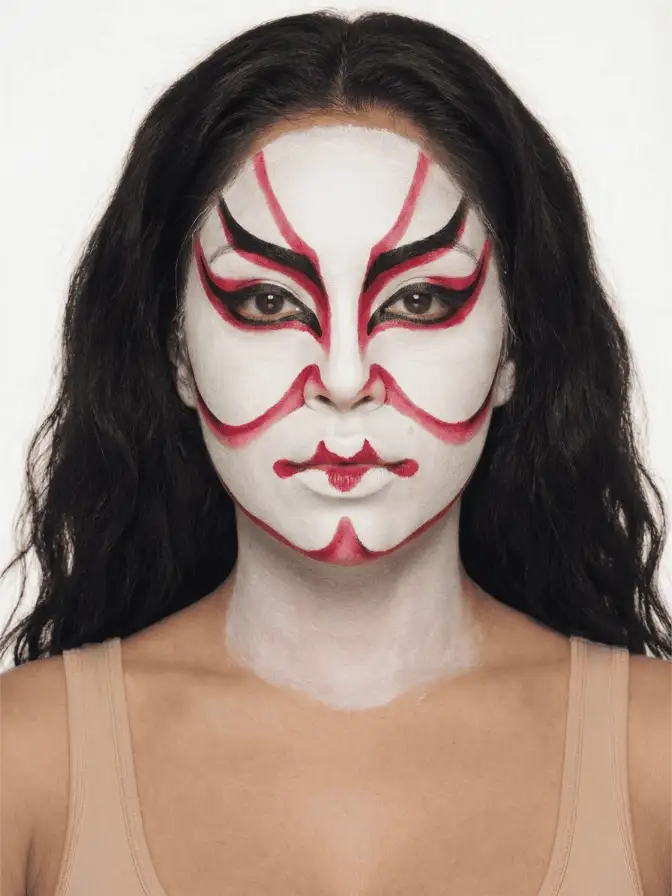
(Japanese Theatre) White rice powder base, red/black distinct lines representing character traits (Kumadori).
Kabuki is a highly stylized form of traditional Japanese theatrical makeup characterized by a stark white face and bold, graphic lines known as Kumadori. Originally created to emphasize expressions and convey specific character traits from a distance, this dramatic look relies on precise color-coding, such as red for heroism and black for villainy. It is primarily used for stage performances, cultural events, and complex costume transformations.
To create Kabuki makeup, begin by blocking out the natural eyebrows and applying an opaque white cream base set with matte powder. Next, use a fine brush to paint high, dramatic black eyebrows and heavily outline the eyes. Finally, sketch and diffuse symbolic red Kumadori lines across the face, finishing with a structured, exaggerated red lip.
The Kit
- Non-Toxic Glue Stick
- Translucent Setting Powder
- White Cream Makeup
- Dense Foundation Brush
- Matte White Setting Powder
- Large Powder Puff
- Black Cream Color
- Red Cream Paint
- Fine Liner Brush
- Small Detailing Brush
- Stiff Smudger Brush
- Vibrant Red Lip Pigment
- Precise Lip Brush
How to Create Kabuki
-
Block the Brows
Flatten your natural eyebrows using a non-toxic glue stick, smoothing the hair upward. Set heavily with translucent setting powder to create a completely blank canvas.
-
Apply White Base
Use a dense foundation brush to apply a thick, opaque layer of white cream makeup evenly across your entire face, over the blocked brows, and down the neck.
-
Set the Canvas
Firmly press a matte white setting powder into the cream base using a large powder puff. This locks the moisture in and creates the traditional matte finish.
-
Draw High Brows
Using a fine liner brush and black cream color, paint thick, dramatic, and sharply angled eyebrows high up on the forehead.
-
Define the Eyes
Outline the upper and lower lash lines heavily with black cream color. Wing the outer corners aggressively upward toward the temples to lift the eye shape.
-
Map Kumadori Lines
With a small detailing brush and red cream paint, sketch bold, symmetrical curves on the forehead, sweeping down the cheeks, and along the jawline to represent character traits.
-
Blend Line Edges
Take a clean, stiff smudger brush and gently diffuse only the outer edge of your red character lines. Keep the inner border sharp to achieve the traditional faded gradient effect.
-
Paint the Lips
Dip a precise lip brush into a vibrant red lip pigment and paint a structured, exaggerated pout. Draw the shape slightly smaller and more pronounced than your natural lip line.
Pro Tips
- When blocking your brows, apply multiple thin layers of glue and comb the hairs completely flat before powdering to ensure the white cream base glides seamlessly over the texture.
- To achieve authentic Kumadori lines, place the opaque red cream first, then use a clean, slightly stiff brush to smudge only one side of the line for a faded gradient effect known as 'bokashi'.
- Use a large velour powder puff to firmly press and roll the white setting powder into the cream base, rather than swiping, to prevent streaking and lock the stark white color in place.
Common Questions
What is Kabuki makeup?
What products do I need for Kabuki makeup?
Is Kabuki makeup suitable for beginners?
What do the red lines in Kabuki makeup mean?
You've Got This
Ready to Master Kabuki?
See exactly how this look appears on your face before picking up a brush. slaye's AI shows you in seconds.
Try on slaye