The Rouge That Vanished: When the Revolution Ended Paint
In 1781, French aristocrats burned through two million pots of rouge a year. By 1795 the painted face had nearly disappeared from polite society.
In 1781, the cosmetics industry of Versailles had a problem none of its powdered patrons would survive. A French treasury accounting from that year, cited by Maison Avine in their history of cosmetics in the royal court, estimated that aristocratic women were consuming two million pots of rouge annually. Each pot retailed for roughly the daily wage of a Parisian seamstress.
Eight years later, the Bastille fell. By the autumn of 1795, with the Reign of Terror in living memory, that same rouge had gone underground. According to Démodé Couture’s history of 18th-century cosmetics, the Directory period saw the painted face fall almost completely out of fashion in respectable French society. A look that had defined an entire aristocratic generation evaporated in less than a decade.
What replaced it was not a different style of makeup. It was the absence of makeup, performed as a kind of public pledge.
The painted court the Revolution destroyed
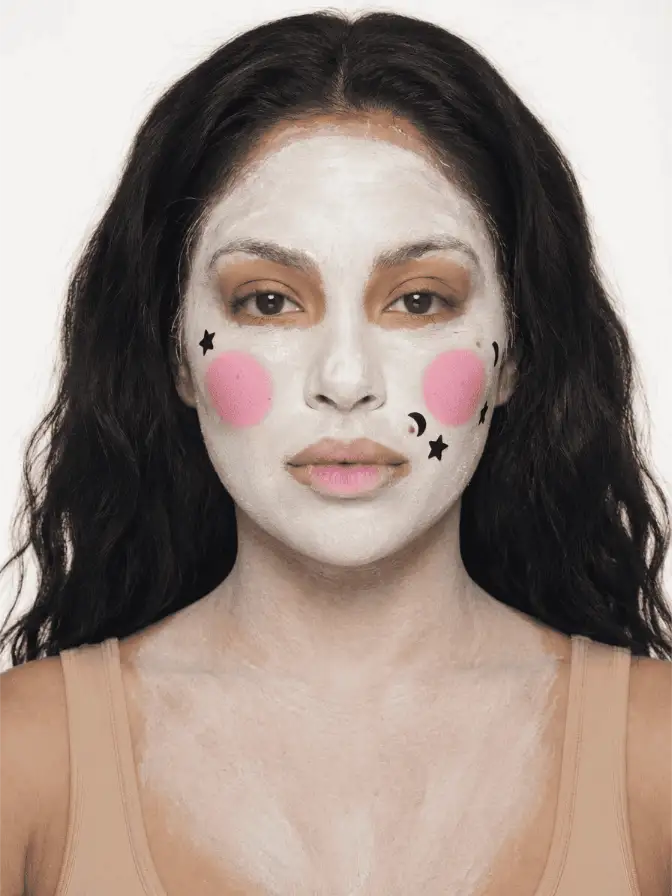
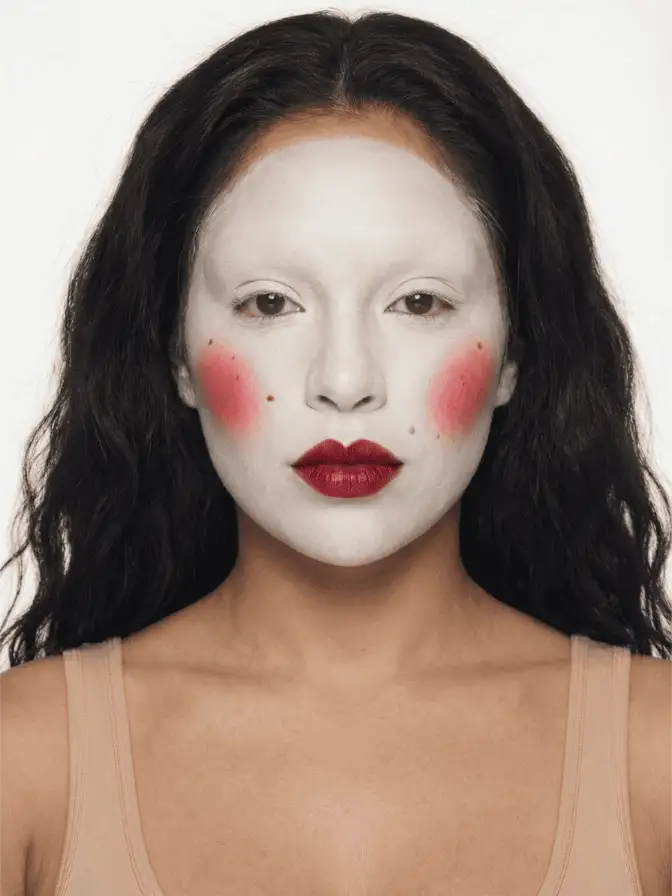
To understand how dramatic the shift was, the pre-revolutionary face has to be specific. Rococo aristocratic makeup, as documented by the Period Styles art history archive, used white lead foundation (cerusa) across the face, neck, and shoulders, applied so heavily it cracked when the wearer smiled. Over that base, women applied wide circles of rouge from the temple down through the cheekbone to the corner of the mouth, in a placement deliberately exaggerated to be visible from across a salon.
The rouge itself came in several formulations. Mercury-based vermilion gave the strongest red but was famously toxic, killing several courtiers who were known by name. Lead-based ceruse de Venise (Venetian white) was paired with carmine, a cochineal-insect dye, for a less murderous combination. The cosmetics shop of Dulac on the rue Saint-Honoré, the most fashionable supplier under Louis XVI, kept eight separate carmine grades for a single shade of red, sorted by light or candle conditions.
The application was a public ritual. The toilette, as documented in the This is Versailles blog’s piece on rouge, was an audience event. Aristocratic women received guests during the application of their face, and the visible exaggeration of the rouge was part of the social performance. A woman whose rouge was not visible from across the room was undressed.
That visibility is exactly what made the look impossible after July 1789.
How the Revolution erased a hundred years of paint
The Revolution did not formally ban rouge. There was no law, no edict from the National Assembly. What there was, beginning in 1790 and intensifying through 1793, was a coding of the painted face as aristocratic and therefore politically suspect.
Republican fashion writers and pamphleteers in Paris began arguing that natural beauty was the visible sign of revolutionary virtue. The unpainted face was framed as honest, the painted face as deceitful. By the time the Committee of Public Safety formalised the Terror in 1793, wearing visible rouge in Paris was a quiet declaration that you had not adapted to the new regime.
The 1980s historical work cited in Démodé Couture’s compilation tracks the rouge consumption decline year by year. From the 1781 peak of two million pots, sales through registered cosmetics merchants fell roughly 60 percent by 1793 and another 40 percent by 1796. Many shops simply closed. Dulac on the rue Saint-Honoré, the eight-grade carmine merchant, went out of business in early 1794.
What the figures do not show is the parallel rise of secret consumption. Surviving Directory-period diaries and the household accounts of women who kept their estates through the Terror, sampled by Maison Avine, suggest that rouge usage among ex-aristocrats did not actually stop. It moved indoors and reduced in intensity. The wide salon circle gave way to a small spot of colour on the apple of the cheek, applied lightly enough that it could be denied as natural complexion if a Jacobin official happened to call.
That move from public exaggeration to private subtlety is the more interesting half of the story, because the technique survived in modified form into the next century.
What survived the transition
The first beauty regime of the Napoleonic period, beginning around 1799, kept the toned-down rouge placement but reframed it as health. The cheek colour was now positioned as the visible result of fresh air and exercise rather than a paint applied in front of mirrors. Carmine still came in pots, still got applied with a hare’s foot or a small camel-hair brush, but the cosmetics industry’s marketing copy had completely shifted.
Joséphine de Beauharnais, who would become Empress in 1804, kept a documented order with the cosmetics merchant Lubin on the rue Croix-des-Petits-Champs for what she called rouge d’Espagne. The household accounts, transcribed in the Maison Avine archive, show monthly deliveries of small pots, several grades lighter than the pre-revolutionary equivalents. She wore it. She did not advertise it.
The other survivor was the technique used to apply it. The hare’s foot, a small swatch of fur attached to a handle and used to feather rouge across the cheekbone, came directly out of the Versailles toilette tradition. It survived because it produced exactly the kind of soft-blurred application the new aesthetic demanded. A hard-edged dab from a brush looked too painted; a feathered swipe from the hare’s foot blended into a wash that could pass as natural flush.
The continuity between this Napoleonic technique and the 18th century French rococo styling of the previous generation is mostly the tools, not the placement. The wide salon-circle rouge died. The hare’s foot survived.
The longer arc
The painted face stayed out of mainstream French society for nearly a century. According to Démodé Couture’s piece on cosmetics through 1850, the Victorian period (which French style largely followed despite the political differences) coded visible makeup as immoral straight through to the 1880s. Actresses wore it. Sex workers wore it. Respectable women did not, or pretended not to.
The shape this took in the British Victorian period, with its associated Victorian beauty regimen of clear skin and bitten lips, was an inheritance of the same revolutionary logic. The face had to read as virtuous, and virtue read as bare. The link between the French Revolution’s politicisation of the painted face and the Victorian morality around it is a direct one, even if the political content was reframed as religious or domestic.
Rouge came back into the mainstream around 1890, alongside the first stirrings of women’s economic independence and a relaxation of the public-virtue framing. It came back differently. The wide aristocratic salon circle of 1780 did not reappear; what came back was a small spot of colour on the apple of the cheek, applied with restraint, recognisable as makeup but not aggressive about it. The application logic of the Elizabethan era and the Versailles court, with their entire-face coverage and visible artifice, was not what won out. The modest restraint of the post-Revolutionary years was.
In other words, the face that walks down the street in Paris today, with its slight wash of cheek colour and its avoidance of obvious paint, is a direct descendant of the look French aristocrats had to invent to stay alive in 1793. The Revolution did not destroy rouge. It compressed it. The shape of the modern blush still carries the political memory of that compression, whether the person applying it knows the history or not.
Continue reading
- history Egyptian Blue: The First Synthetic Pigment and the Glow It Hid Egypt manufactured a blue pigment 5,000 years ago, then the recipe vanished for a millennium. The strangest part is the glow nobody could see until 2009.
- history Cochineal: the bug that colored your red lipstick The deep red in carmine lipstick comes from a cactus insect the Aztecs taxed and Spain guarded for 250 years. How carminic acid reached your lip bullet.
- history Huadian: The Tang Dynasty Flowers Women Wore on the Forehead Huadian were the painted forehead flowers of Tang dynasty China, born from a princess and a plum blossom. The story runs from gold leaf to dragonfly wings.