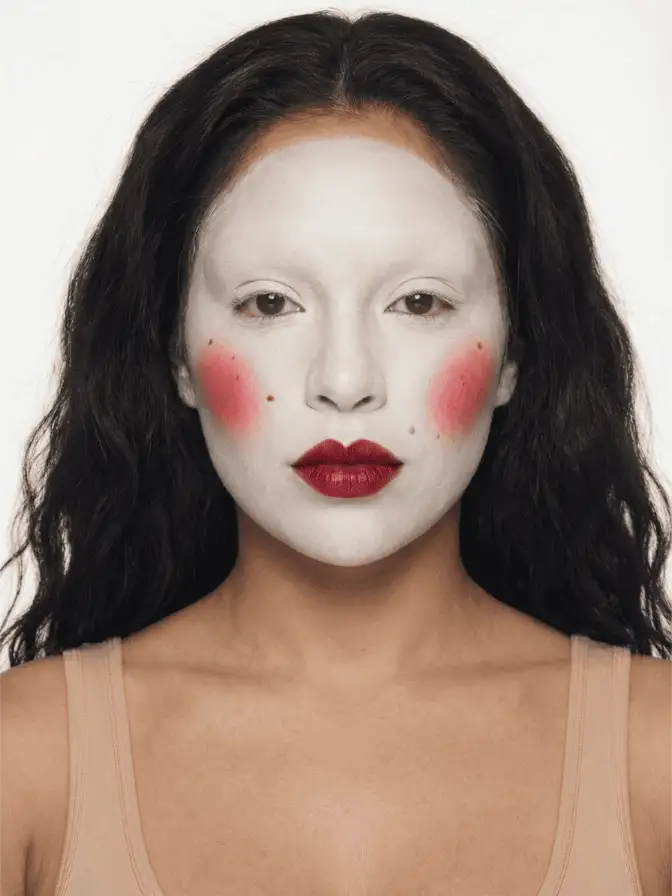
The Edwardian rouge rebellion: when cosmetics came back
Between Victorian disapproval and Hollywood glamour sat a strange Edwardian moment. Rouge was both forbidden and ubiquitous, sold through hidden backdoors.
In March 1909, Harry Gordon Selfridge opened the doors of his new Oxford Street department store and did something quietly radical. He put the cosmetics counter on the ground floor, in the open, near the front. A shopper could walk in off the street, pick up a pot of rouge, try it on her own hand, and pay for it without anyone pretending it was for somebody else.
For an English woman in 1909, this was scandalous. Less than a decade earlier, the same purchase would have required a backdoor entrance, a discreet account at a chemist, and an unspoken understanding that you would never, under any circumstances, admit to wearing the thing.
The decade between the death of Queen Victoria (1901) and the start of the First World War (1914) is the strangest chapter in cosmetics history. Often called the Edwardian period after Victoria’s son, sometimes called the Belle Epoque or the Gilded Age, it is the bridge between the moral horror of Victorian face paint and the open, theatrical makeup of the 1920s. What happened in that bridge is mostly a story about hypocrisy, mass production, and one Chicago-born retailer who decided to stop pretending.
The Victorian inheritance
To understand why Selfridges’ counter was such a break, you have to understand what came before. Victorian respectable opinion held that visible cosmetics were the mark of a prostitute, an actress, or both. Glamour Daze’s history of late nineteenth-century beauty notes that the only women who openly painted in England between roughly 1840 and 1890 were stage performers, sex workers, and a small number of aristocrats who could afford to ignore the rules.
That did not mean respectable women went unpainted. It meant they had to do it secretly. Beautiful With Brains, in its Edwardian beauty essay, describes the elaborate code: rouge was rubbed in until no surface pigment remained; lips were stained with crushed geranium petals or poppy juice that could pass as a natural flush; eyebrows were darkened with burnt cork or a soft pencil that left no obvious line. The objective was not to look painted. It was to look healthy in a way that no genuinely healthy face actually managed.
The Edwardian Promenade’s chemistry essay catalogues a few of the home recipes from period beauty manuals: liquid rouge made from carmine and rosewater, lip pomatum cooked with beeswax and alkanet root, pearl powder for the face (literally ground oyster shell), and burnt cloves used as a kohl substitute. A woman who could afford a French ladies’ maid would have her preparations imported from Paris; a middle-class woman made her own at home from recipes copied out of magazines.
The industrial pivot
What changed in the 1900s was not really attitudes. It was supply. The industrial revolution had hit cosmetics about thirty years late, but by 1900 the technology was finally there. Carmine could be synthesised cheaply; zinc oxide replaced lead-based face powders (some of them, anyway, lead-based cerussa was still around); aniline dyes gave a new generation of cheap lip stains. Vintage Dancer’s beauty archive shows the first mail-order beauty catalogues from companies like the Hudnut Company in New York and Coty in Paris arriving on British doorsteps from roughly 1903 onward.
Mass production meant a working-class woman could afford rouge for the first time. A pot that would have cost a guinea in 1880 cost sixpence by 1910. The middle class, who had always been the most anxious about respectability, suddenly faced a problem. They could afford cosmetics; their daughters wanted them; the goods were sitting in catalogues that arrived through the post. But the moral framework had not budged.
The solution, for a few years, was geography. Chemists like Boots and discreet department stores like Liberty kept cosmetics on the upper floors, in screened-off sections, with separate entrances for the carriage trade. Some London chemists installed back stairs so that a lady could buy a pot of rouge without being seen entering the building. Others sent purchases out in plain wrapping paper, addressed to a Mrs Smith at a poste restante box.
This is the world Selfridge walked into in 1909.
Selfridge’s gamble
Harry Gordon Selfridge had spent twenty-five years at Marshall Field’s in Chicago, where the American attitude to cosmetics was already looser. He arrived in London in 1906 with a plan: build a department store on Oxford Street that worked like a Chicago store, which is to say, with everything on display, every counter open to every customer, and no separate entrances for the carriage trade. He spent two years on the building. It opened on 15 March 1909.
The cosmetics counter was on the ground floor. It carried Coty, Houbigant, and a new American line called Maybelline (which would not really break out until the 1920s, but was already selling its earliest cake mascara). Customers could try on rouge at the counter. They could ask the saleswoman for advice. They could, and this was the part that shocked, leave the store with a paper bag visibly containing beauty products.
Beautiful With Brains cites a Daily Mail article from April 1909 calling the open beauty counter “an American vulgarity that London will not tolerate.” Selfridge sold out of his initial Coty stock within six weeks. Within eighteen months, every other London department store had moved its cosmetics counter to the ground floor too. By 1912, Harrods had a cosmetics hall larger than Selfridges’. The Daily Mail had moved on to a new outrage.
What women actually wore
The looks of the period are best preserved in the postcards of the great Edwardian beauties: Lily Elsie, Camille Clifford, Gabrielle Ray. They share a common technique:
A pale, almost luminous complexion built up with rice powder over a thin layer of cold cream. The skin should look untouched but lit from within, an effect closer to today’s Victorian tutorial than to the heavy stage paint of the 1920s.
A high circle of rouge on the apple of the cheek, blended outward until it became a soft flush. This is closer to what Korean beauty now calls the aegyo sal effect than to a contemporary blush. The placement was deliberately high to push the eye upward and emphasise the youthful roundness of the face.
Lips stained, not coated. The cupid’s bow was traced with a fine brush, often just on the upper lip, sometimes in two distinct peaks that became the Clara Bow shape of the next decade. Geranium juice gave a strawberry stain; the more expensive option was Roger and Gallet’s tinted lip salve from Paris.
Eyebrows that were not, by modern standards, defined at all. The Edwardian ideal was a soft, naturally arched brow, lightly darkened with a hint of pencil but never drawn in. The over-tweezed, pencilled brow is a 1920s and 1930s invention.
Eye makeup that was, for respectable women, almost nonexistent. A bit of vaseline on the lashes for sheen. The bolder set might use a soft kohl, often imported from Egypt or made at home from burnt almond shells, but it was applied so sparingly that it was meant to read as natural shadow. The dramatic kohled eye belonged to dancers like Mata Hari and would arrive in mainstream fashion only with the Ballets Russes’ 1909 Paris run, which gradually trickled into evening looks toward 1913.
The end of the rouge code
Two things finished the Edwardian compromise. The first was the war. From 1914, women entered the workforce in numbers that made the old moral framework around respectable femininity obviously unworkable; a munitions worker did not have time to crush her own geranium petals. The second was Hollywood. Once Theda Bara appeared in A Fool There Was in 1915 with her kohled eyes and her dark cupid’s bow lips, the visual culture of acceptable beauty shifted permanently. By 1920, the women who had once bought their rouge through backdoors were the mothers of women buying lipstick at Woolworth’s.
The Edwardian counter at Selfridges is still there, in a sense. The cosmetics hall is still the first thing you see when you walk in. It is one of the most profitable square footages in any department store in the world. None of that would have been possible if a Chicago retailer had not, in March 1909, decided that the back stairs and the discreet brown paper bags had to go.
Continue reading
- history Egyptian Blue: The First Synthetic Pigment and the Glow It Hid Egypt manufactured a blue pigment 5,000 years ago, then the recipe vanished for a millennium. The strangest part is the glow nobody could see until 2009.
- history Cochineal: the bug that colored your red lipstick The deep red in carmine lipstick comes from a cactus insect the Aztecs taxed and Spain guarded for 250 years. How carminic acid reached your lip bullet.
- history Huadian: The Tang Dynasty Flowers Women Wore on the Forehead Huadian were the painted forehead flowers of Tang dynasty China, born from a princess and a plum blossom. The story runs from gold leaf to dragonfly wings.