Renaissance Rouge: Court Circles, Wide Sweeps, and What They Signalled
Where you put your rouge in 16th-century Europe told everyone whether you were court, provincial, or bourgeois. Two application schools coexisted.
Walk into a French salon in 1685 and you could read a woman’s social position from across the room. Not from her dress, which the sumptuary laws kept relatively consistent across the upper classes. From her cheeks.
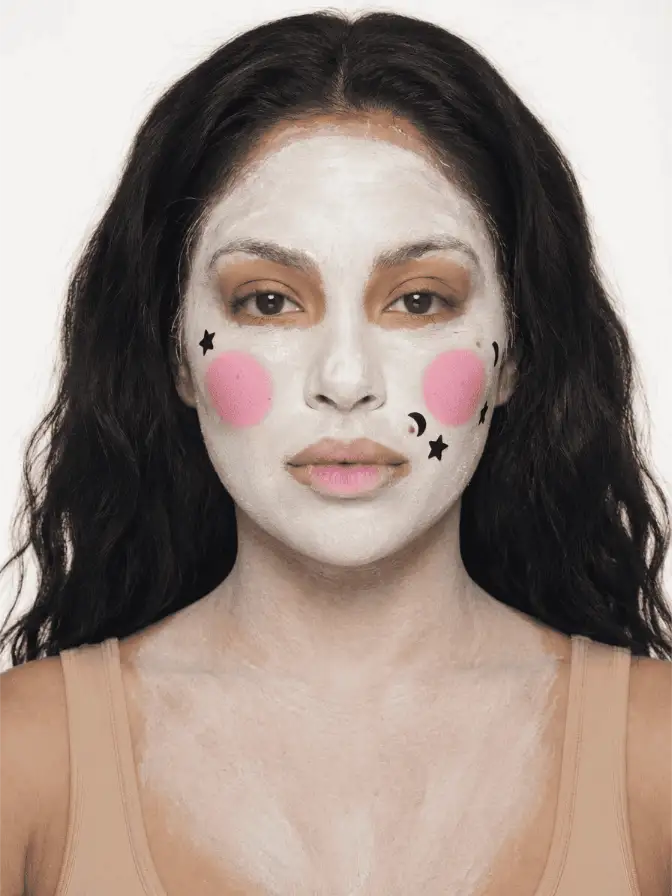
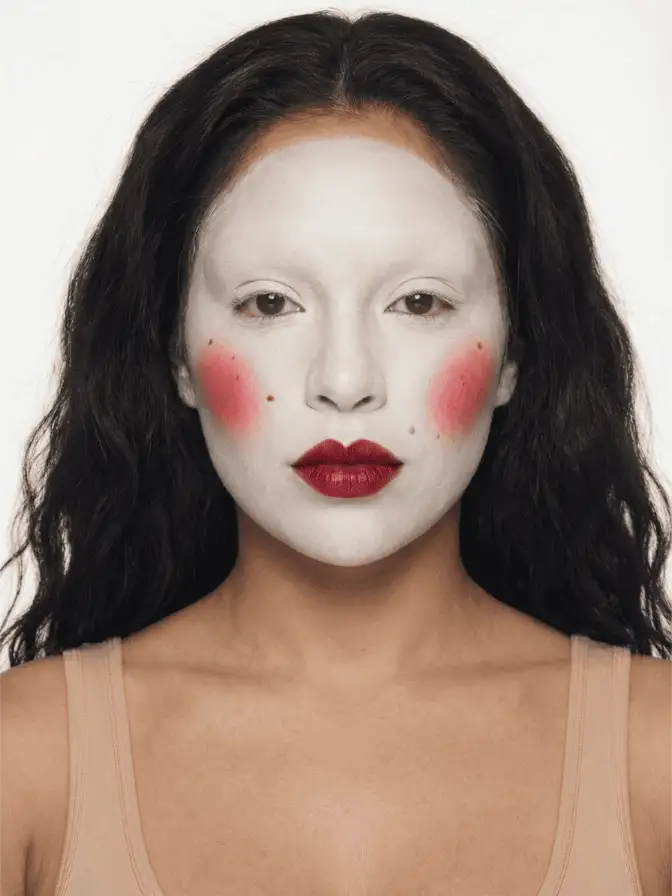
A neat circle of red painted at the center of each cheek, the size of a five-franc coin, meant provincial nobility or wealthy bourgeoisie. A wide swath of color sweeping from the outer corner of the eye down to the corner of the mouth meant court. The two schools coexisted for nearly a century, and the geometry was not casual. It was code.
Two schools, two pigments, two messages
The court school used vermillion, the most expensive pigment available between the Bronze Age and the late Renaissance. Vermillion was synthesized from cinnabar, a mercury sulfide ore mined principally at Almadén in Spain and Idrija in modern-day Slovenia. The pigment was sold by weight in apothecaries and cost roughly the same as silver per ounce. Putting that across an entire cheek was an ostentation, and that was the point.
The bourgeois school used safflower, brazilwood, or sandalwood mixed with grease, all comparatively cheap vegetable sources that ground to a less saturated red. A small circle conserved both pigment and dignity. According to Kasia Gromek’s history of rouge, the bourgeois and provincial nobility “preferred neat circles of rouge at the center of the cheek to highlight the eyes and the skin’s whiteness.” Wide sweeps would have looked grasping. Worse, it would have looked like an attempt at court that everyone could see through.
This was not just a French phenomenon. Court records from the late Stuart period in England describe almost identical distinctions, though the English Catholic nobility leaned harder on the wide sweep in the 1680s as a quiet signal of allegiance to French taste. Queen Elizabeth I a century earlier had famously used cinnabar mixed with egg white as a finishing layer for her ceremonial portraits, but by the time she was an old woman the pigment had eaten visibly into her skin. Mercury poisoning was a hazard everyone knew about, and almost nobody at court treated as a reason to stop.
What the pigment actually was
Vermillion is a mercuric sulfide, HgS, ground from cinnabar ore. The chemistry is straightforward. The toxicity is not. Topical mercuric sulfide is less acutely dangerous than mercury salts (the white-lead-and-mercury “Venetian ceruse” Elizabeth’s contemporaries used for foundation was significantly worse), but chronic application produced a recognizable pattern of skin damage and neurological symptoms. The fact that women kept using it is one of the more sobering data points about the history of cosmetic safety.
The vegetable alternatives were a different story. Safflower (Carthamus tinctorius) produces a soluble red called carthamin that could be precipitated onto a white powder base. Sandalwood gave a more brown-leaning rouge. Brazilwood, ironically named after the country which was named after the wood, gave a brighter pink. All three were mixed with goose fat, beeswax, or rendered tallow to make a paste. Allure-style coverage of Renaissance cosmetics would call them “cream blushes” today, and that’s technically accurate, though the consistency was closer to lipstick than to what a modern hand recognizes.
The richest courts kept vermillion for special occasions and used a vegetable mix for daily wear. The poorer ones used vegetable only and skipped the dangerous pigment altogether. From a public-health standpoint, the bourgeois neat-circle tradition was probably saving lives.
The application techniques
A surviving 1656 manuscript from the Bourbon court describes the wide-sweep application in some detail. The face was first powdered white using a calcium-based base (chalk for the careful, ceruse for the reckless), then the rouge was applied in two passes. The first pass was a base layer of vegetable red rubbed across the upper cheek with a small wool pad. The second pass was a vermillion finishing layer applied over the apple of the cheek with a fine brush, blended outward with the fingertips. The transition between the inner saturated zone and the outer softer zone was deliberate. The effect from a few paces was a glowing cheek with a hard upper edge.
The bourgeois circle was easier. A single vegetable rouge applied with a finger or a small puff at the highest point of the apple, blended into a coin-shape with the same finger. No layering. No graduated edges. The effect read as a deliberate dot of color, which was the look they wanted. The look connects through Eighteenth-century Rococo practice to the Victorian beetroot-rouge tradition centuries later, where a similar single-point application returned among women who could not be seen to be wearing makeup at all.
By the early 18th century, the court sweep had migrated to England (where it became the Whig Beauty style of the 1710s) and to Spain (where it influenced the still-lingering Mantilla traditions). The bourgeois circle remained the dominant style in central and northern Europe, particularly in Protestant cities where elaborate face paint was associated with Catholic or aristocratic decadence.
When the wide sweep died
The French Revolution killed it. Painted faces were too associated with the Ancien Régime to survive the Terror, and the 1790s saw a near-total collapse of cosmetic use across both republican France and the European courts watching what had happened to Marie Antoinette. The neat circle survived a little longer in provincial use, then gave way to the natural look promoted in the early 19th century by figures like Beau Brummell, whose Regency dandyism celebrated apparent sobriety in dress and face.
Cosmetics did not really return as a respectable practice until the late 19th century, when Victorian women began using crushed beetroot as a discreet cheek tint that did not look like rouge at all. The narrative of the Victorian “no-makeup” face was always partly a fiction, but it was a fiction the previous century had made necessary. The Bourbon cheek had become a symbol of everything Revolutionary Europe was trying to forget.
Why the geometry mattered
What’s striking, reading the period sources, is how thoroughly the placement of color was understood as signalling. The Comtesse de Genlis, writing in 1782, devoted a full paragraph in her memoirs to a comment about a woman whose rouge “extended below the cheekbone in the manner of provincial wives.” This was not a comment about beauty. It was a comment about class.
The Elizabethan court a century earlier had similar codings, though the English version emphasized white skin as the primary marker and treated rouge as secondary. By the time of Louis XIV, rouge had become the primary marker, with placement carrying more weight than color saturation.
We have nothing quite equivalent today. The closest modern analogue might be the difference between a blush placed on the cheekbone (the editorial 2026 look) and the apple (the Y2K and Korean-pop influenced “boyfriend blush” of the 2020s). Both are visible from across a room and both signal something about taste. But neither carries the absolute legibility of the Versailles cheek, where you could spot a duchess at fifty paces and know exactly how far from court she lived.
That kind of cosmetic literacy is hard to imagine now. It made the small economic choices of beauty visible in ways our brand-saturated era has lost. The rouge on a 1685 French aristocrat’s cheek was simultaneously a chemical hazard, a public health failure, a statement of allegiance, and a piece of geographic information. There are not many things on a 2026 makeup counter that do all four jobs at once.
Continue reading
- history Egyptian Blue: The First Synthetic Pigment and the Glow It Hid Egypt manufactured a blue pigment 5,000 years ago, then the recipe vanished for a millennium. The strangest part is the glow nobody could see until 2009.
- history Cochineal: the bug that colored your red lipstick The deep red in carmine lipstick comes from a cactus insect the Aztecs taxed and Spain guarded for 250 years. How carminic acid reached your lip bullet.
- history Huadian: The Tang Dynasty Flowers Women Wore on the Forehead Huadian were the painted forehead flowers of Tang dynasty China, born from a princess and a plum blossom. The story runs from gold leaf to dragonfly wings.