Max Factor and the pancake formula that built classic Hollywood
Pan-Cake was Maksymilian Faktorowicz solving a 1937 Technicolor lighting crisis. The formula then shaped what stars looked like on screen for two decades.
In 1937, a chemist born Maksymilian Faktorowicz solved a problem that would otherwise have stopped Technicolor from working on human faces. The film stock was new, the lighting was brutal, and the existing greasepaint, the kind used since vaudeville, photographed as a heavy yellow mask under the high-intensity arcs that Technicolor required. The studios needed a new formula. Max Factor, working out of a building on Highland Avenue that still stands as the Hollywood Museum, gave them Pan-Cake.
The story matters because the formula didn’t just solve a lighting crisis. It changed the visual grammar of the face for the next two decades, and the residue of that grammar still shows up in how foundation is packaged, marketed, and applied today.
The Technicolor problem
Three-strip Technicolor, the dye-imbibition process that made The Wizard of Oz possible, captured a much wider color range than the older black-and-white panchromatic stock. The wider range had a side effect that early Technicolor cinematographers, most prominently Natalie Kalmus, complained about constantly: skin photographed in tones that ranged from sickly yellow to magenta-pink, depending on the actress, the lighting, and the lipstick.
The fix needed to be a foundation that could be color-matched in finer gradations than the existing greasepaints (which came in roughly six shades), applied thinly enough not to cake, and durable enough to survive twelve-hour shooting days under lights hot enough to scorch fabric. Factor had been customizing makeup for stars individually since his arrival in Hollywood in 1908. The studios wanted a product that worked on any star, without the customization, and without his personal supervision.
Pan-Cake, introduced commercially in 1937 alongside the film Vogues of 1938, used a water-soluble cake formula in a flat tin with a dampened sponge applicator. The sponge picked up the color in a controlled amount and laid it onto skin in a thin layer that dried to a near-matte finish. The shade range launched with twelve options, more than double what greasepaint offered, and Factor’s lab kept adding shades as more diverse cast members appeared in productions.
What it actually looked like on screen
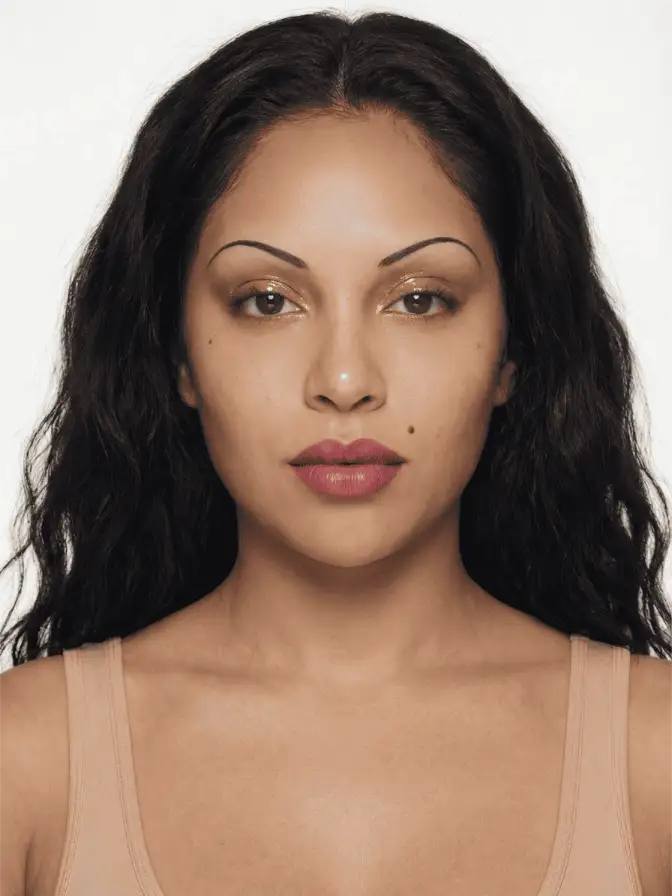
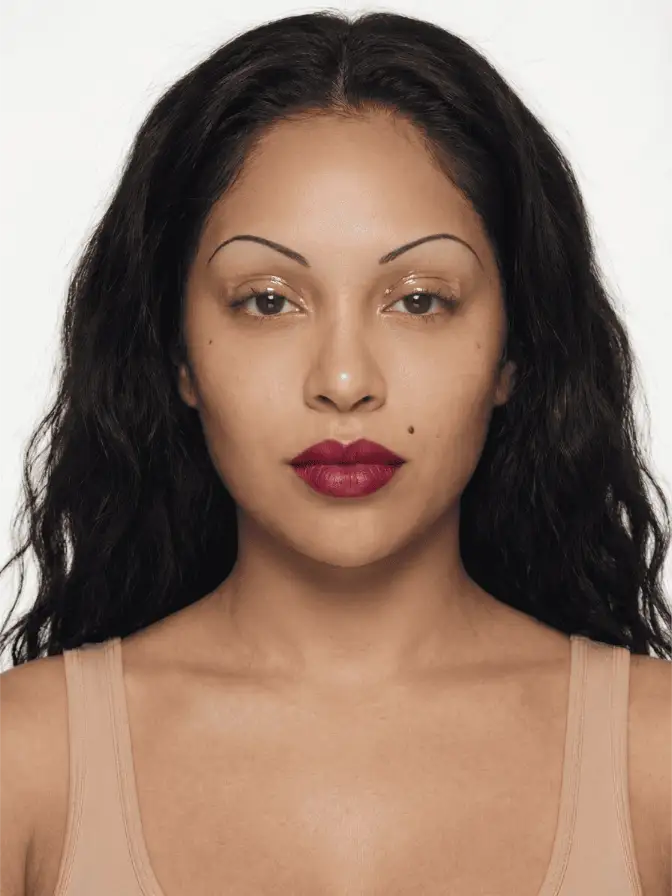
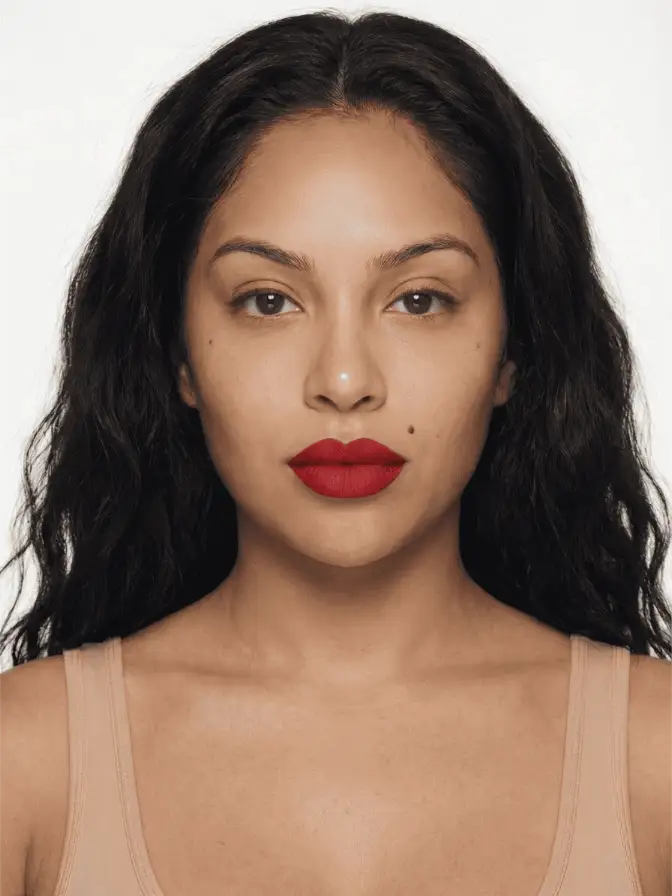
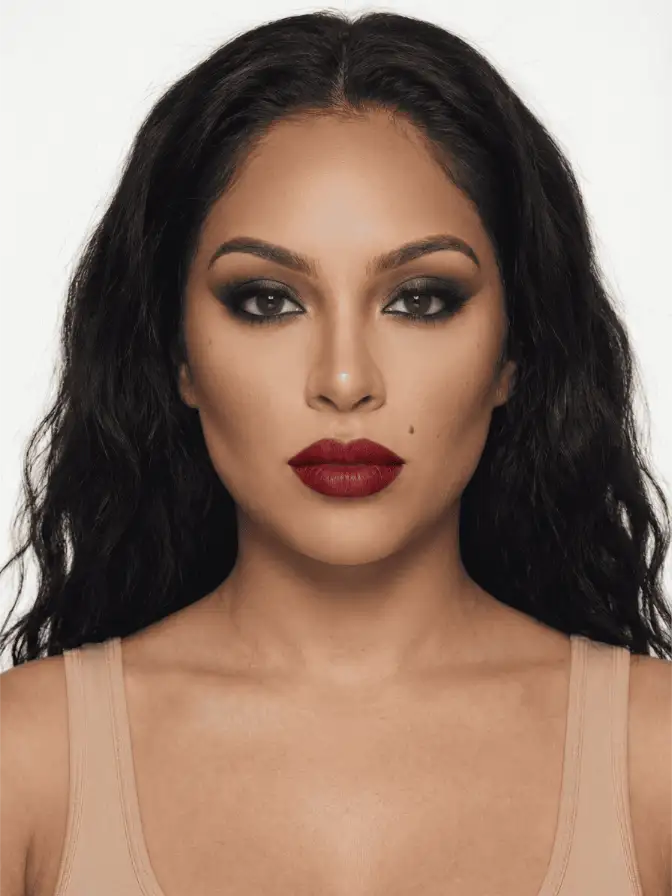
The look that defined the late 1930s and the 1940s, the look you still see in classic Hollywood references and across silver-screen templates, is built on Pan-Cake’s specific properties.
A thin, even base over the entire face with no visible texture. This was the formula’s signature: the cake plus damp sponge gave coverage without shine, and shine was the enemy under Technicolor lighting because it bloomed white on film.
A defined, slightly squared lip with sharp edges. Pan-Cake’s matte finish meant lipstick had a clean canvas to sit on, and Factor’s matching lipsticks (the Color Harmony system he introduced alongside Pan-Cake) were formulated to photograph crisp rather than soft.
Eyebrows drawn in distinct strokes rather than blended in. The matte base let a heavy hand at the brow read as graphic rather than smudged. Joan Crawford’s famously thick 1940s brow is unthinkable without a base that holds the line.
Cheek color applied in a precise placement (usually at the cheekbone, slanting up toward the temple) rather than blended over a large area. Cream blush over a powder-finish base would have looked patchy. The placement was geometric because the surface required it.
The shift in 1940s utility-era makeup, which had to work for women painting their own faces at home rather than in a studio chair, kept Pan-Cake’s structural logic. The Helena Rubinstein and Elizabeth Arden ranges that competed with Factor through the war years all moved toward similar matte cake formulas, packaged for civilian use.
How it actually felt on skin
Watching the 1930s and 1940s films, the faces look porcelain. They did not feel porcelain. Pan-Cake was talc-heavy. Stars who wore it for full shooting days, by their own accounts in interviews and memoirs, found it drying in cold conditions and prone to splitting around the mouth under hot lights. Factor’s lab added emollients in the late 1940s, but the formula remained matte and relatively unforgiving.
The reason it survived as a consumer product, when better-feeling cream foundations existed, was that nothing else photographed as cleanly. Until television in the early 1950s changed what consumers expected from a foundation (cameras saw closer up, and the matte mask looked theatrical at close range), Pan-Cake held the high-fashion and red-carpet position. The look you might still build for a red carpet evening is a softened descendant.
The shade range was a quiet innovation
The twelve original shades, expanded to over thirty by the early 1950s, were the first commercial foundation range with documented effort to match a wider span of skin tones. Factor’s lab notes, archived at the Online Archive of California’s Max Factor Photograph Collection, show shade development sessions for specific actresses including Lena Horne, Dorothy Dandridge, and Hattie McDaniel, with formulations adjusted for warmer undertones than the standard “ivory through tan” sweep that other ranges offered.
The history isn’t tidy. Factor’s range had gaps and the marketing language assumed a white default. But the shade work happened decades before commercial foundation brands generally began addressing brown skin tones with any seriousness, and the cake-and-sponge format made shade extension cheaper to manufacture than emulsion-based liquid foundations.
Where the formula went
Coty bought the Max Factor brand in 1991 and discontinued Pan-Cake in the US market in the early 2000s, while keeping the product available in European markets where it remained popular with professional makeup artists and brides looking for an old-style matte finish. The current Max Factor Pan Stik, a cream-stick foundation introduced in 1948 as a softer companion to Pan-Cake, is the closest surviving relative on shelves.
The formula’s actual technical descendants are in the dual-finish powder foundations that became standard in the 1990s, where a cake-formula powder applies wet for full coverage or dry for sheer wear. Bobbi Brown’s Skin Foundation Stick, Mac Studio Fix Powder Plus Foundation, and Maybelline’s Fit Me Matte all owe a structural debt to the cake-plus-damp-sponge logic that Factor patented in 1937.
The bigger point
Pan-Cake is one of the few products that changed not just how women applied makeup, but what they thought a face should look like. The matte, finished, evenly-toned base became a default expectation. The expectation outlived the lighting conditions that created it.
You can still feel the residue in the foundation aisle today. Three quarters of the products on a Sephora wall in 2026 are some version of the cake idea: a controlled amount of pigment, an even matte finish, a shade range with documented extension. The current generation of “skin tint” launches, the no-makeup-makeup style aiming for visible texture, are explicitly positioned against that default. Which means the default is still Factor’s, almost ninety years after he stopped formulating it.
Continue reading
- history Egyptian Blue: The First Synthetic Pigment and the Glow It Hid Egypt manufactured a blue pigment 5,000 years ago, then the recipe vanished for a millennium. The strangest part is the glow nobody could see until 2009.
- history Cochineal: the bug that colored your red lipstick The deep red in carmine lipstick comes from a cactus insect the Aztecs taxed and Spain guarded for 250 years. How carminic acid reached your lip bullet.
- history Huadian: The Tang Dynasty Flowers Women Wore on the Forehead Huadian were the painted forehead flowers of Tang dynasty China, born from a princess and a plum blossom. The story runs from gold leaf to dragonfly wings.