Jelly blush vs cream blush: which actually melts into skin
Jelly blush searches climbed 1,300% year over year. The jiggly texture behaves nothing like a cream stick, so here is how each formula sits on real skin.
Milk Makeup put its Cooling Water Jelly Tint on Sephora endcaps in 2022, and the tube genuinely looked like a dessert. Three years later, the Pinterest 2026 trend report clocked “jelly blush” search growth at +130% in a single quarter, and NewBeauty’s coverage tracked the broader formula category at 1,300% year over year. The shape of the trend is clear. The chemistry is what people get wrong.
A jelly blush is not a wetter cream. It is a different object.
Two formulas, two physics
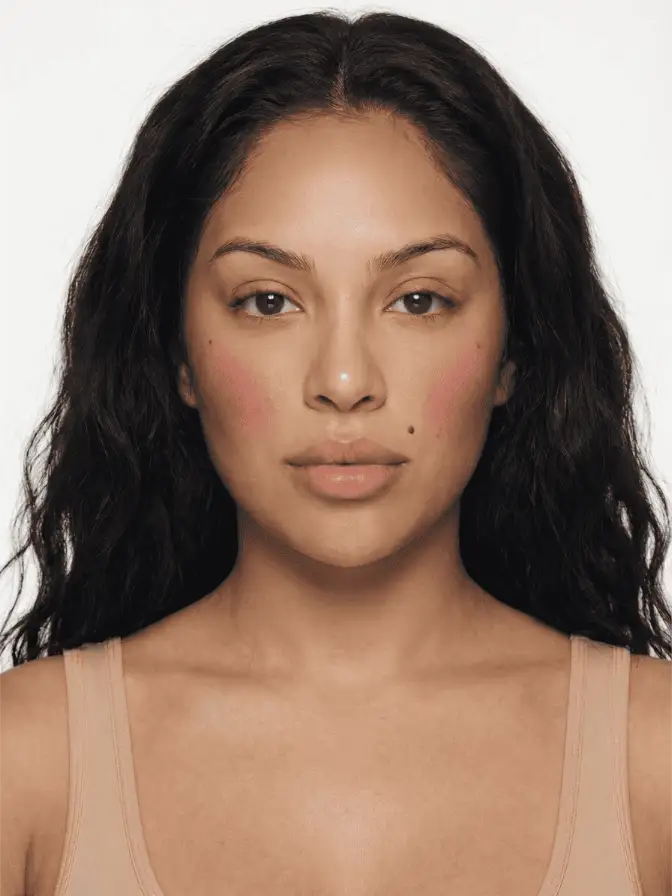
Cream blush, the kind that lives in a Rare Beauty Soft Pinch wand or a Westman Atelier baby cheek stick, is an emulsion or a wax-and-oil paste. Pigment hangs in a base of caprylic triglyceride, jojoba oil, sometimes a silicone like dimethicone, and a structuring wax. It is built to sit on top of skin. The wax holds it where you put it. The oil keeps it pliable enough to blend. When you press a Soft Pinch dollop into your cheek, you are dragging coloured wax across a film of moisturizer, and the result is a soft layer that hovers above the surface.
A jelly blush is closer to a hair gel with a flush. The base is water and glycerin, sometimes seaweed extract or aloe, plus a film former like polyvinyl alcohol or sodium polyacrylate, and pigment in suspension. Milk lists vegan collagen and hyaluronic acid on the Cooling Water Jelly Tint pack, and Tower 28 BeachPlease (the original gel, not the cream stick reissue) leans on glycerin for slip. When you press jelly to skin, the water and glycerin spread, then flash off. What stays is a thin polymer film carrying pigment that has begun to bind to your stratum corneum. That is why it stains.
The practical difference is what each does after sixty seconds. Cream stays movable; you can correct it for the rest of the morning. Jelly commits.
When jelly wins
Combination and oily skin is the obvious case. A wax cream slides off a working sebum t-zone by lunch, especially in the May-to-September window when most readers stop reaching for primer because their face is already producing its own. Jelly bypasses the sebum problem entirely. The water phase evaporates in the first minute, the polymer locks pigment to the corneocyte layer below the oil, and by the time your nose flares with shine the colour underneath has already set.
Humidity is the second case. NewBeauty’s reviewers in Miami consistently rate jelly higher than cream from June onward; the same products flip places by November. Tower 28’s BeachPlease gel was reformulated specifically for that climate.
Layering is the third. A jelly stain dries down too thin to be the entire blush. Pros stack: jelly first as the stain layer, then a sheer cream on top for dimension, then a translucent powder to lock the cream. You can see this in Vogue’s Met Gala 2026 coverage, where Hung Vanngo built Zendaya’s flush in three layers, the deepest being a cherry-red Glossier Cloud Paint stain used as a base.
When cream wins
Dry skin, mature skin, and any cheek that already shows visible pores or texture. Jelly clings to dryness like watercolour clings to paper grain. The same staining chemistry that makes it last on smooth skin makes it look spotty on a flaking cheek or a textured patch around the nose. Cream blush, with its emulsified oils, fills small gaps before pigmenting, which is why something like Westman Atelier Baby Cheeks looks softer on a 50-year-old jaw than Milk Jelly Tint ever will.
Winter is the second case. Once indoor heating drops ambient humidity below 30%, jelly evaporates the moment it touches skin and pigment lays down too fast to blend. Cream gives you the seven or eight seconds you actually need.
Heavy foundation is the third. Jelly will not bind to a matte foundation; it sits on top in beads. If you want a flush over Estée Lauder Double Wear, cream is the only honest answer.
Application order matters more than the product
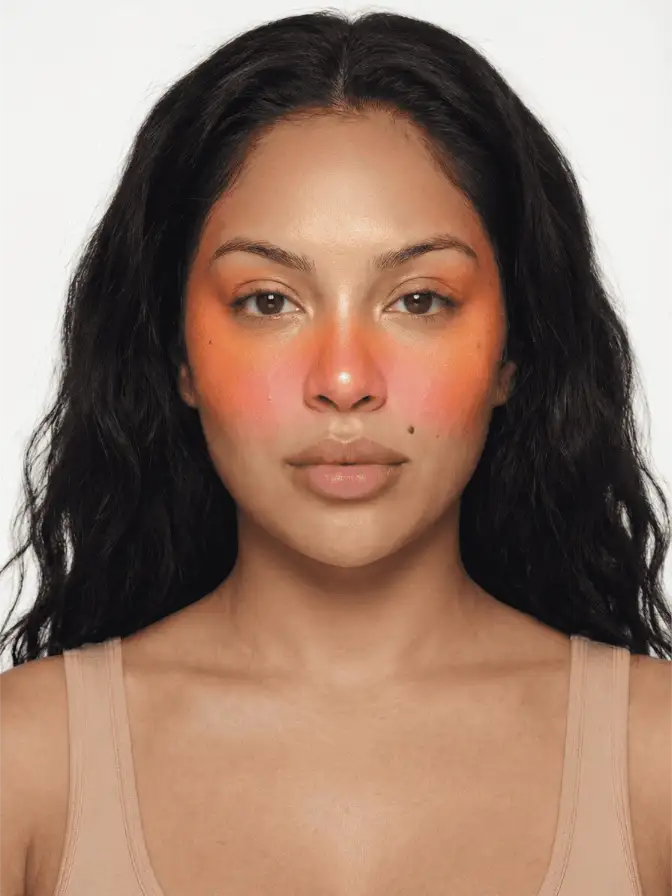
If you are doing a boyfriend blush look, where the colour goes high on the cheekbone and across the bridge of the nose for a windburned effect, jelly is the right tool. The stain mimics the way actual cold flushes the skin: blotchy in places, fading at the edges, never uniform. Pat with the pad of your ring finger; do not drag.
If you are building a sunset blush gradient that fades from peach at the apple to pink near the temple, cream is faster. Two shades, two strokes, blend with a damp Beautyblender. Jelly will not give you the gradient because it dries before you can transition.
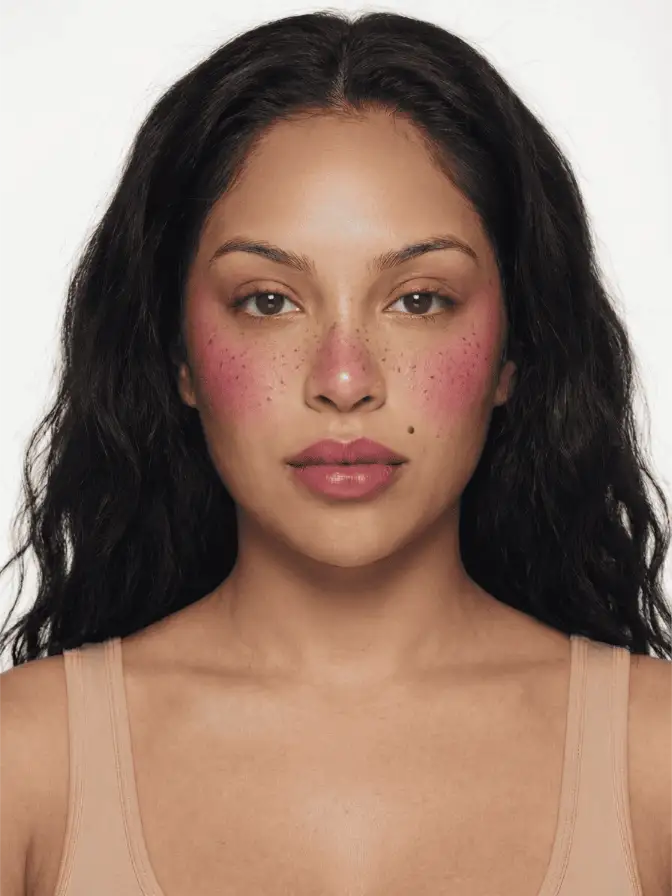
Strawberry girl, the freckle-and-flush look that Hailey Bieber popularised in 2022 and which keeps re-circulating on TikTok, takes both. Jelly stain on the apples for the persistent flush, then a cream on top for the soft halo, then a brown-pink eyeshadow stippled lightly across the nose for fake freckles. The jelly base is what makes the freckles read; without it, the cheek colour washes out by the time you finish your eyes.
What to actually buy
Three jelly products are worth the money in May 2026. Milk Cooling Water Jelly Tint at $24 stays the benchmark; the metal applicator chills the gel, which is gimmicky but real. Tower 28 BeachPlease Tinted Lip + Cheek Jelly at $20 is the better travel option (squeeze tube, no spillage). Glossier Cloud Paint at $20 sits between cream and jelly chemically and gives you the longest blending window if you are new to the format.
Three creams are worth the money. Rare Beauty Soft Pinch Liquid Blush at $24, the wand applicator that built the category. Westman Atelier Baby Cheeks Lip + Cheek Cream at $48 (worth it; the wax structure is unmatched). Tower 28 BeachPlease Cream Blush, the cream stick version of the gel, for $22.
A budget answer exists too. e.l.f. Camo Liquid Blush at $7 is closer to a jelly than a cream, stains hard, lasts twelve hours.
The deeper takeaway is that “blush trend” is not really one category any more. There are three textures (powder, cream, gel), and the smart move is to own one of each, then pick by the weather and the skin in front of you. The Pinterest forecast says cool-toned and frosted blush will rise through summer 2026; whichever shade you reach for, the texture decision is what determines whether the colour lasts past 11am.
Frequently asked
Does jelly blush stain dry skin?
Yes, more than cream does. The water and glycerin base sinks into any rough patch and clings, which reads patchy on a flaking cheek. Prep with a hydrating toner and a thin moisturizer first, then tap the jelly on with a clean fingertip rather than a sponge.
Can you layer jelly blush over cream blush?
You can, but only if the cream has fully set. Apply cream first, wait two minutes, then press jelly on top of the same area for a deeper centre. Doing it the other way around lifts the jelly stain off in patches.
Which blush formula lasts longest in heat?
Jelly stains last longest because the colour binds to the top of the skin once the water flashes off. Cream slides on humid days because the wax base softens. In a Dubai summer or a New York August, a jelly base with a powder set wins by hours.
Continue reading
- trends The Gray Grunge Eye: The Soft Rock-Star Smudge of Summer Black smoke went hard and dated. The gray grunge eye on this summer's runways is smudged, dewy, and cool. Here is why it works and how to wear it.
- trends Butter Yellow Eyeshadow, the Soft Neutral That Isn't Butter yellow ran the runways, then landed in TikTok makeup tutorials. It acts like a warm neutral but reads as color. Here is how to wear it by skin tone.
- trends Sunburn Blush: The Flush That Crosses the Nose The summer 2026 blush trend drags warm color across the nose and upper cheeks to fake a sun-touched flush. Here is where to place it and what holds in heat.