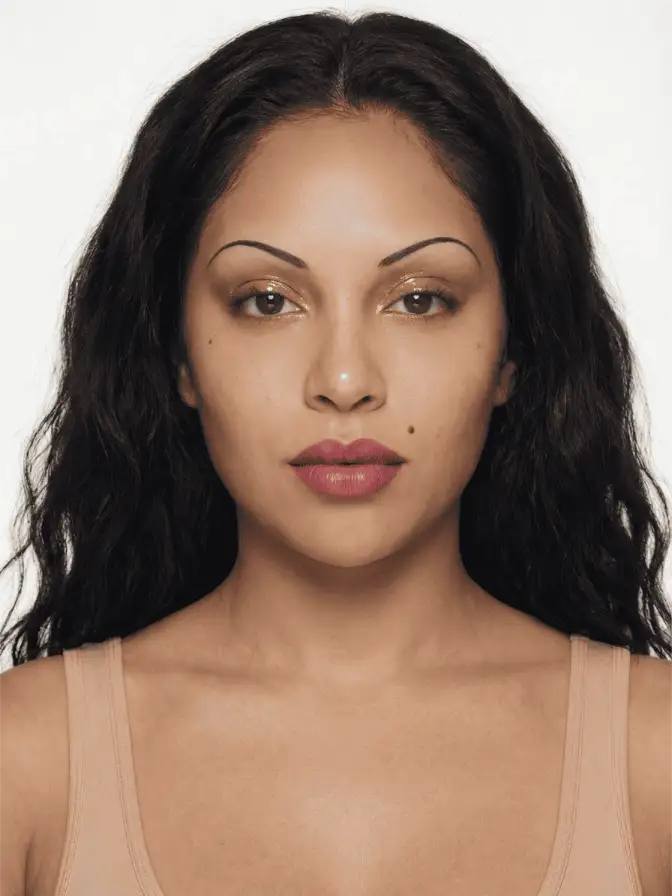
Decade Throwbacks
Ancient Greek/Roman
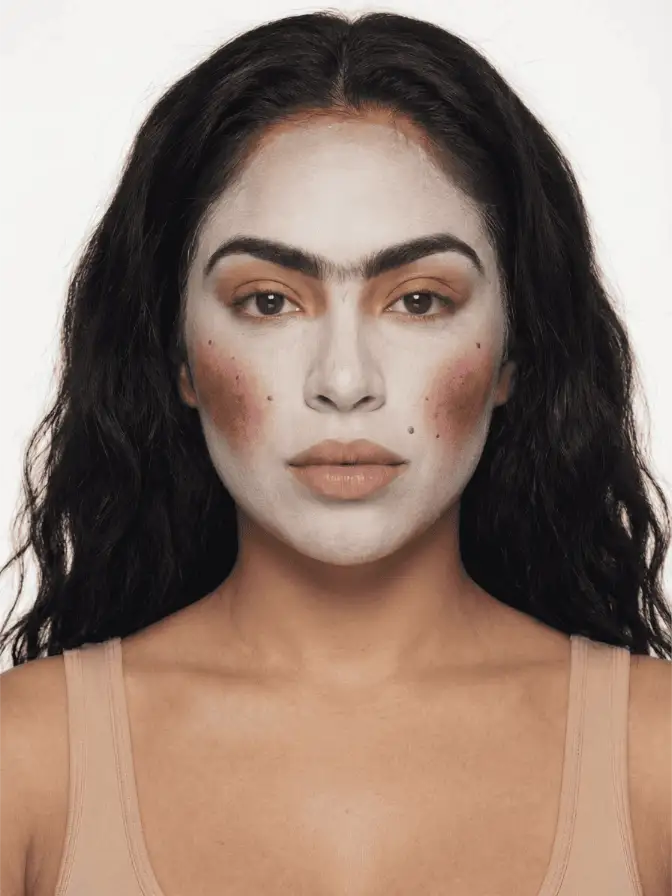
Unibrow (sign of intelligence), pale skin (lead powder), beet-stained cheeks.
Ancient Greek/Roman makeup is a historical recreation style characterized by a notably pale complexion, softly stained cheeks, and the signature unibrow, which was revered as a sign of intelligence and beauty in antiquity. This theatrical look mimics the cosmetic practices of the era, where women used crushed berries for pigment and white lead powder to achieve a porcelain finish. It is ideal for costume events, historical portrayals, or thematic photoshoots where authentic period details are required.
To create Ancient Greek/Roman makeup, apply a pale, matte foundation and set it heavily with translucent powder for a shine-free finish. Next, use a dark brow pomade to sketch hair-like strokes across your nose bridge, forming a realistic unibrow. Finally, dab a deep berry tint onto your cheeks and lips for a historically accurate, diffused flush.
The Kit
- Matte Foundation
- Translucent Matte Setting Powder
- Powder Puff
- Dark Brow Pomade
- Angled Brow Brush
- Berry Liquid Tint
How to Create Ancient Greek/Roman
-
Create Pale Base
Apply a matte foundation that is one to two shades lighter than your natural skin tone to mimic the historical use of lead powder.
-
Set the Skin
Press a translucent matte setting powder all over the face using a powder puff to ensure a completely flat, shine-free finish.
-
Form the Unibrow
Use a dark brow pomade and an angled brow brush to draw upward, hair-like strokes connecting your eyebrows at the bridge of the nose.
-
Stain the Cheeks
Dab a deep red or berry liquid tint onto the apples of your cheeks and quickly tap with your fingers to blend for a natural, beet-stained flush.
-
Tint the Lips
Press the same berry liquid tint into the center of your lips with your ring finger, diffusing the edges for a soft, blotted appearance.
Pro Tips
- When drawing the unibrow, use a very light hand and ensure the strokes mimic the natural growth direction of your brow hairs, angling them slightly upward and inward.
- Work quickly when applying the liquid cheek tint over the heavily powdered matte base, tapping gently with your fingertips so you do not lift or disturb the foundation underneath.
- Instead of buying a completely new foundation shade for a one-time costume, mix a white liquid pigment drop into your everyday matte foundation to achieve the historically accurate pale base.
Common Questions
What does Ancient Greek/Roman makeup look like?
What products do I need for Ancient Greek/Roman makeup?
Is Ancient Greek/Roman makeup good for beginners?
When should I wear Ancient Greek/Roman makeup?
You've Got This
Ready to Master Ancient Greek/Roman?
See exactly how this look appears on your face before picking up a brush. slaye's AI shows you in seconds.
Try on slaye